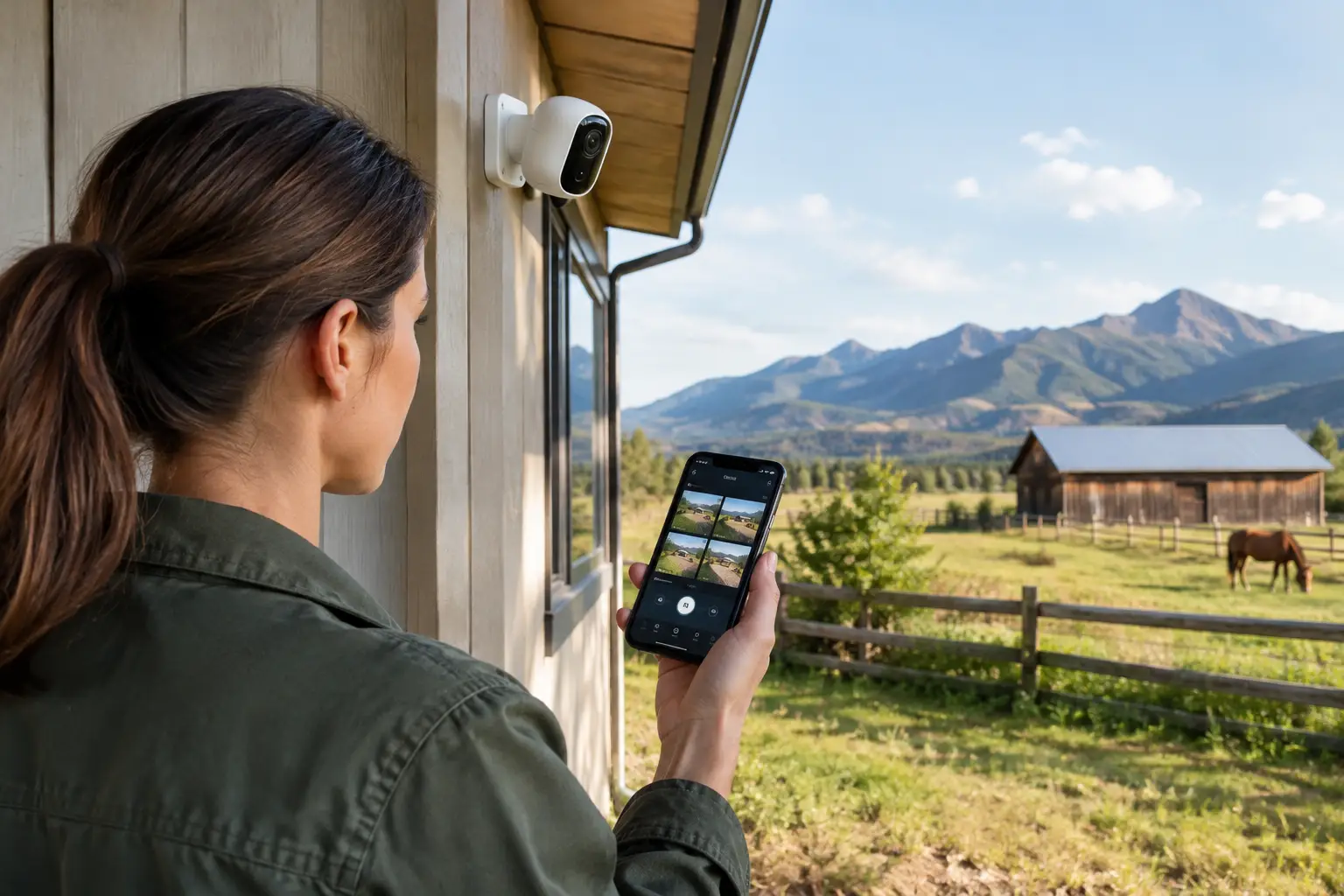
A farmhouse can be occupied one minute and empty the next, while someone checks stock, takes machinery across the yard or heads out to a distant field. That is why home alarms on rural properties need to do more than sound a siren. They need to provide dependable protection around real routines, outbuildings, pets, poor mobile signal and internet connections that are not always dependable.
For many rural homeowners, the right system also needs to work alongside CCTV, gates, lighting and connectivity. A well-planned alarm gives a clear warning if somebody enters the home, while cameras can help show what is happening outside. Neither replaces the other, but together they make it easier to respond sensibly rather than relying on a notification alone.
What rural home alarms need to do
The starting point is not the number of sensors. It is understanding how the property is used. A detached house on a village edge has different risks from a farmhouse with a long drive, a holiday cottage, office space in a converted barn or a workshop attached to the main building.
An intruder alarm should detect unauthorised entry early and reliably, without creating unnecessary false alarms. That usually means protecting the most likely entry routes, such as external doors, accessible windows and internal routes through the property. Door contacts can identify an opening immediately, while movement detectors provide additional cover within key areas.
The best design also allows the property to be used normally. If dogs have free run of the kitchen overnight, a standard movement detector may not be suitable in that room. If family members regularly enter through a utility room, stable entrance or boot room, the system needs simple, repeatable setting and unsetting arrangements. A technically capable system is of little value if it becomes frustrating to live with.
For homes with an attached garage, integral workshop or office, separate alarm areas are particularly useful. This lets you protect the house while leaving a working space available during the day, or set the ground floor when bedrooms are occupied overnight. It can also prevent one part of the property dictating how every other area is used.
Wired, wireless and hybrid alarm systems
There is no single right answer between wired and wireless home alarms. A survey should establish what is practical in the building and what level of future flexibility is needed.
A wired system can be an excellent choice during a new build, renovation or major refurbishment, when cables can be installed discreetly before finishes are completed. It avoids routine detector battery changes and can suit large properties where a permanent infrastructure approach makes sense. Cable routes, however, can be difficult or disruptive in older stone houses with solid walls, listed features or finished interiors.
Wireless devices are often well suited to existing homes because they reduce disruption and allow sensible expansion later. Modern professional wireless systems are designed to supervise their devices and report low batteries or communication issues. They still need correct placement and commissioning. Thick stone walls, metal-clad areas and distant buildings can affect radio performance, so a system should never be specified on the assumption that every signal will travel freely across a rural site.
A hybrid design can be the practical option. It may use wired devices where routes are straightforward and wireless protection where cabling would be intrusive. The important point is that the choice follows the property, rather than forcing the property to fit a pre-selected kit.
Connectivity should support the alarm, not define it
App alerts and remote setting are useful features, particularly for second homes or households that spend long days away from site. But a rural alarm should not rely on one unreliable broadband connection to protect the property.
A professionally specified system can use more than one communication path, such as broadband and a mobile network connection. If the main internet service drops out, the backup route can continue to send alarm signals. The precise arrangement depends on local coverage, the alarm system and whether professional monitoring is required, but resilience is worth discussing at the design stage.
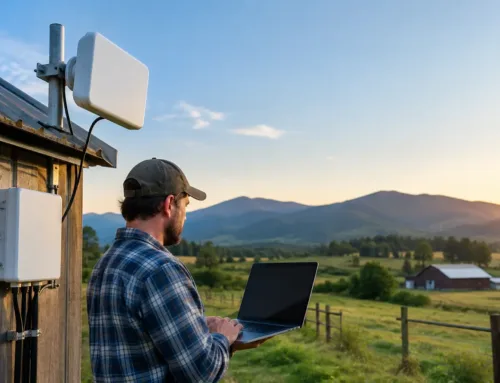
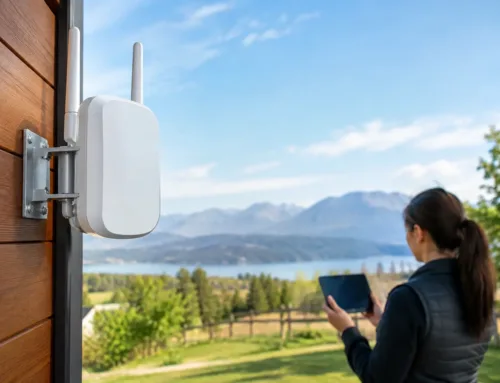
This matters because rural connectivity is variable. Fibre may be excellent at one property and unavailable a mile down the road. Mobile coverage can change between rooms, buildings and fields. Where broadband is weak, a 4G, 5G or satellite connection may improve everyday use of security apps and cameras, but alarm signalling should still have a considered backup plan.
Remote access should be treated as a convenience, not the only response plan. Every household should know who receives alerts, who can attend if needed and what to do if an alarm activates while nobody is nearby. For a property at the end of a long lane, that might mean involving a trusted neighbour, family member or keyholder.
Choosing the right response when an alarm activates
A ringing external siren is a visible deterrent and may attract attention, especially in a built-up area. On an isolated property, its effect can be more limited. That does not make a siren pointless, but it changes the conversation. A loud alarm may encourage an intruder to leave, while a notification gives the owner a chance to check cameras or contact someone locally.
Professional monitoring adds another layer. Depending on the service selected, an alarm receiving centre can assess signals and follow an agreed response procedure. This may include contacting keyholders or requesting police response where the necessary requirements are met. It carries an ongoing cost, so it is most appropriate where the risk, location, insurance conditions or value of the property justifies it.
Self-monitored alarms can suit many households, provided alerts are reliable and someone is able to act on them. The trade-off is simple: a notification is only useful if it is seen, understood and followed up. If a home is regularly empty for extended periods, monitoring may offer greater reassurance.
Do not treat outbuildings as an afterthought
A house alarm can protect the home well while leaving a garage, garden store or adjoining workshop exposed. These buildings often contain tools, bikes, fuel, equipment and access points that could be used to approach the house.
Whether an outbuilding should be included in the same alarm system depends on its distance, construction and daily use. An attached garage is often straightforward. A barn or workshop at the far side of a yard may need its own panel, a wireless bridge, a network connection or a separate security approach. Long distances, thick walls and open yards all affect what will work consistently.
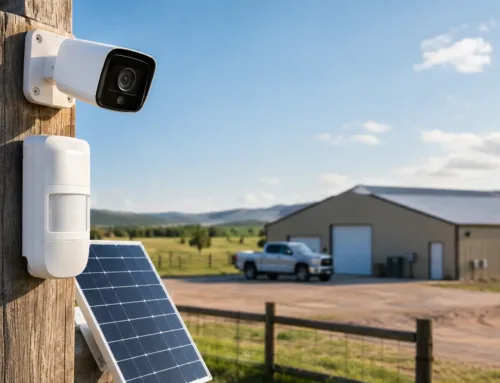
CCTV may be better suited to some external and remote areas, particularly where early visual verification is valuable. AI-enabled people and vehicle detection can reduce irrelevant alerts from livestock, wildlife and moving vegetation when specified and set up correctly. It should complement the alarm design rather than be used as a substitute for securing doors, windows and access points.
A good survey prevents costly compromises
It is tempting to compare alarm packages by sensor count or monthly cost. That misses the details that determine whether a system is dependable. A proper survey looks at how the household arrives and leaves, which rooms are used at night, where pets stay, how visitors access the property and whether there are vulnerable entry points hidden from view.
It should also consider the building fabric. Stone walls, extensions, loft spaces, garages and outbuildings all affect cable routes and wireless performance. On larger rural sites, the survey may extend to internet equipment, CCTV coverage, gates and lighting so that systems work together without creating separate apps, power supplies and support arrangements.
Ask how the system will be demonstrated after installation, who will manage user codes and what support is available if a detector reports a fault. Regular maintenance matters too. Batteries, signalling paths, sirens and detectors need periodic checking, especially in properties affected by dust, temperature changes or occasional occupancy.
Insurance requirements are another reason to plan carefully. If an insurer specifies an alarm grade, monitoring arrangement or maintenance standard, confirm this before installation. Retrofitting a different system later can be more expensive than getting the specification right from the outset.
For rural homes, the most useful alarm is rarely the one with the longest feature list. It is the one that fits the building, works through the realities of daily life and has a clear response behind it. CUBTECH can survey the site and design protection around the home, its connectivity and the wider property, so the system remains practical long after installation day.