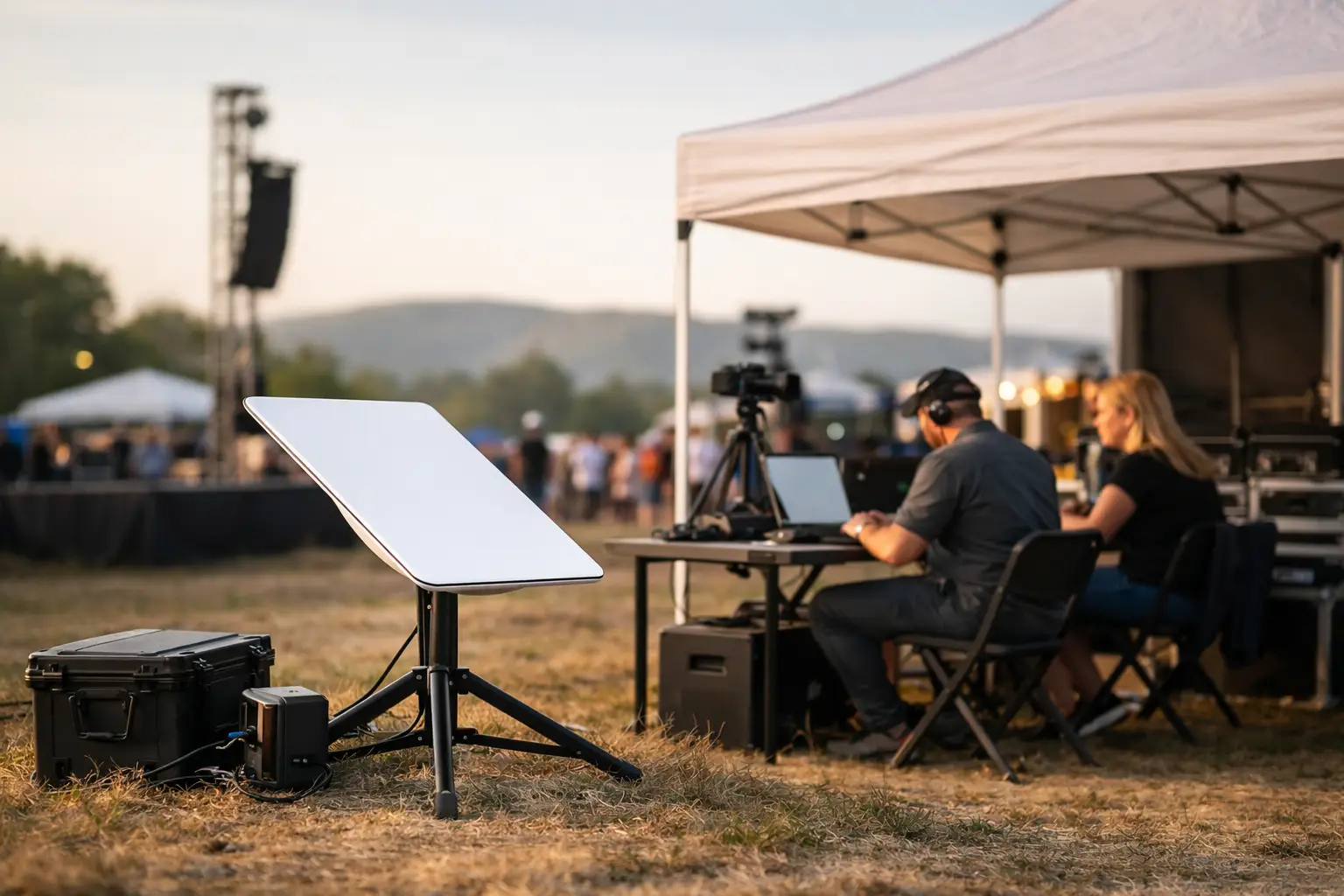
A rural event can look perfectly organised until the gates open and the internet lets it down. Card terminals stop authorising payments, ticket scanners cannot verify bookings, traders lose sales and the production team cannot communicate as planned. A Starlink rental for events gives temporary venues a practical route to fast satellite internet where fixed broadband is unavailable, unreliable or simply too far from the action.
For agricultural shows, weddings on private estates, country fairs, sporting fixtures, corporate away days and seasonal visitor attractions, connectivity is now part of the event infrastructure. It deserves the same consideration as power, access, lighting and safety planning.
When a Starlink rental for events makes sense
Starlink is particularly useful when an event is held beyond the reach of dependable fixed-line broadband. That may mean a field on a farm, a showground, a woodland venue, an estate yard, a temporary marquee or a remote building with poor copper or fibre service.
It can also be the sensible choice where a venue has broadband, but it is not suitable for the demands of a busy event. A standard connection that copes with day-to-day office work may struggle when several ticketing devices, card machines, staff tablets, production equipment and guest devices are all competing for capacity.
The aim is not simply to give everyone Wi-Fi. It is to keep the parts of the event that rely on connectivity working properly. For many organisers, that means dependable access for ticketing, payments, staff communications, event administration and supplier coordination first. Guest Wi-Fi can be added where appropriate, but should not be allowed to compromise essential operations.
What temporary event internet needs to support
Every event has a different mix of users, but connectivity planning should begin with the jobs the connection must perform. At a small wedding venue, the priority may be card payments, music streaming and staff communication. At a larger country show, it may include exhibitors, entrance scanning, welfare teams, live production and security systems.
A properly planned Starlink installation can support a range of temporary requirements, including:
- ticket scanners and online check-in systems at entrances
- card terminals for bars, food vendors, merchandise and admissions
- event office devices, cloud-based documents and staff communications
- production, streaming or media teams that need a working connection on site
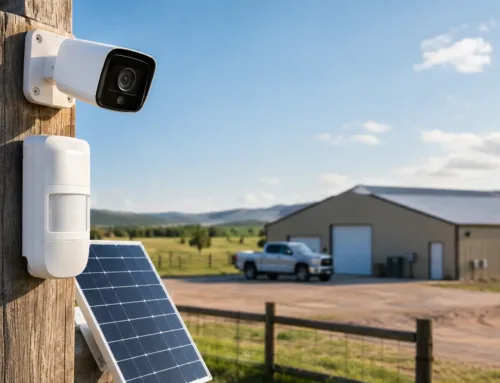
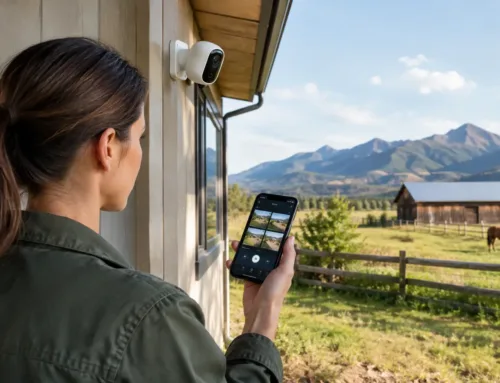
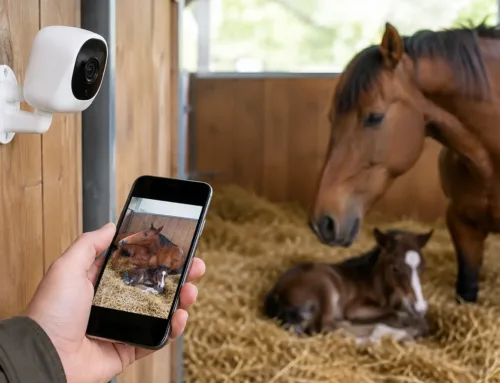
- temporary CCTV, remote viewing and security monitoring where the layout requires it
- controlled Wi-Fi for exhibitors, organisers or guests
These uses do not all need the same level of access. Separating networks is often worthwhile. Payment terminals and ticketing equipment should be prioritised and kept separate from public guest Wi-Fi. This reduces the chance that a busy crowd using social media or uploading videos affects the systems that take money or manage entry.
It is not just about download speed
It is tempting to judge an internet connection by one headline speed figure. At an event, consistency and network design usually matter more. A connection that works well for a single laptop can still become frustrating when dozens of devices join at once, particularly if the Wi-Fi coverage is poor or the router is positioned in the wrong place.
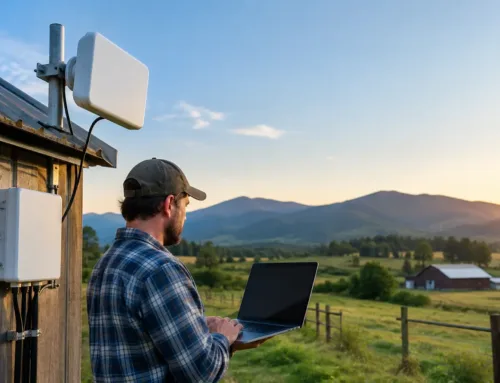
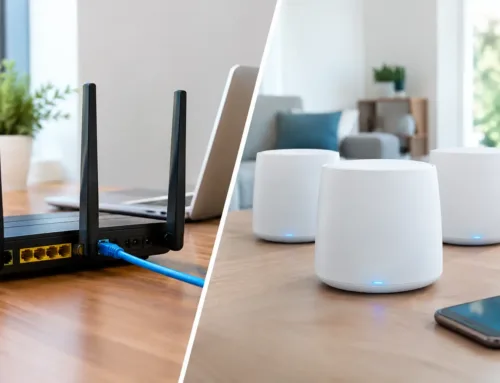
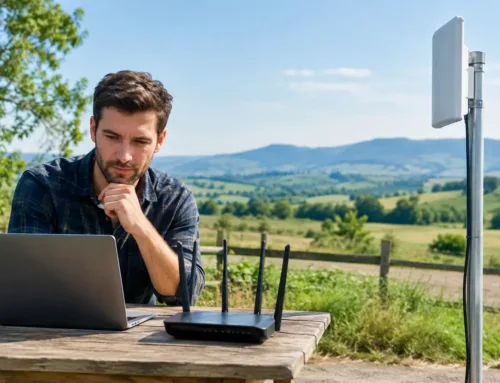
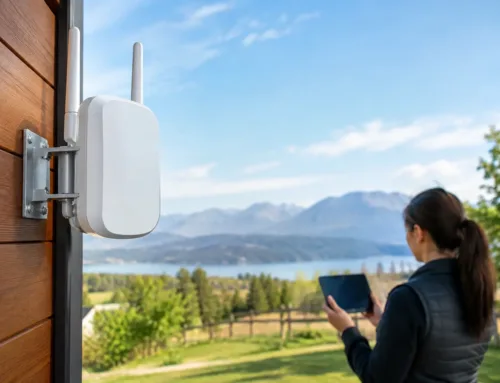
The satellite terminal may provide the internet connection, but the local network distributes it. A large marquee, several buildings or a spread-out showground may need additional wireless access points, cabled runs or point-to-point wireless links to get a usable signal to the gate, bar, event office and production area. One indoor router placed at the far end of a barn will not reliably cover a whole site.
What to check before booking Starlink for an event
Starlink needs a clear view of the sky. Trees, roofs, tall buildings and nearby structures can affect the installation position and performance. An open field may appear ideal, but a line of mature trees around the perimeter can still matter if the dish is mounted too low.
Power is equally important. The equipment needs a stable mains supply or a correctly specified generator arrangement. It is worth deciding early where power will be available, how cabling will be protected and whether the equipment needs to be placed away from public areas. Temporary event sites are busy places, so cables, trip hazards, weather exposure and access for vehicles all need consideration.
Organisers should also be realistic about how many people will connect. Providing open, unrestricted Wi-Fi to several hundred guests is a different requirement from supplying internet to twenty staff devices and a handful of traders. If public access is part of the plan, limits, separate passwords or a managed guest network may be appropriate.
Weather is another practical consideration. Starlink equipment is designed for outdoor use, but an event installation still needs sensible siting, secure mounting and weather-aware cable routing. Strong winds, wet ground and vehicle movements are familiar challenges on rural sites. They should be addressed in the setup rather than left for the morning of the event.
Why installation and site planning matter
A hire kit delivered in a box can be useful for a straightforward location with an open sky, easy power and a single user area. However, it puts the organiser in charge of surveying the site, finding the right position, configuring the network, protecting cables and resolving issues during a busy setup period.
That is not always the best use of an event team’s time. For larger, higher-value or operationally sensitive events, professional installation provides a clearer line of responsibility. A site survey can identify the best dish location, assess obstructions, establish power requirements and map where connectivity is needed. The system can then be installed, tested and commissioned before guests, traders or staff rely on it.
CUBTECH provides short- and long-term Starlink rental for temporary sites and events, with the option to combine the satellite connection with local Wi-Fi, wired networking, wireless links and temporary CCTV. This is useful where the event footprint extends beyond one building or where security and connectivity need to work together.
Build in a sensible contingency
No internet service should be treated as infallible. Satellite connectivity can be affected by the installation environment, equipment placement and wider network conditions. The right approach depends on the consequences of an outage.
For a small event, organisers may decide that a single well-installed Starlink connection is proportionate. For a larger ticketed event with substantial card takings, it may be prudent to retain an alternative connection, such as 4G or 5G, for key devices. Some payment providers can also operate in an offline or delayed-authorisation mode, although this should be confirmed well before event day.
The key is to identify critical services. If ticket scanning and card payments must continue, they should have priority over guest browsing. If a security camera system is required for an unattended gate or equipment compound, its bandwidth and access requirements should be allowed for separately.
A practical timeline for event connectivity
Leaving internet arrangements until the final week can create unnecessary pressure, especially during the busy summer event season. The connection should be considered when the site layout is being planned, not after marquees, generators and traders have already been positioned.
Start by confirming the event location, dates, expected attendance and the services that need internet. Next, assess the site for sky visibility, power and coverage areas. A simple plan showing the entrance, payment points, bar, event office, stage, security position and public areas will quickly reveal whether one Wi-Fi point is enough.
Arrange installation early enough to allow testing with the actual devices where possible. Card terminals, ticket scanners, laptops, printers, CCTV recorders and production equipment should be checked on the network before the event begins. Staff also need to know which network to use and who to contact if a device drops offline.
On the day, keep the equipment area clear, secure and dry. Avoid sharing the essential network password widely, and make sure the event manager has a direct support contact. Those small details can make the difference between a minor issue and a queue building at the gate.
A temporary internet connection should remove a problem, not introduce another job for the organiser. When the site is surveyed properly and the network is designed around the way the event will actually run, Starlink can turn a difficult rural location into a venue that is ready to take payments, manage arrivals and keep the team connected.