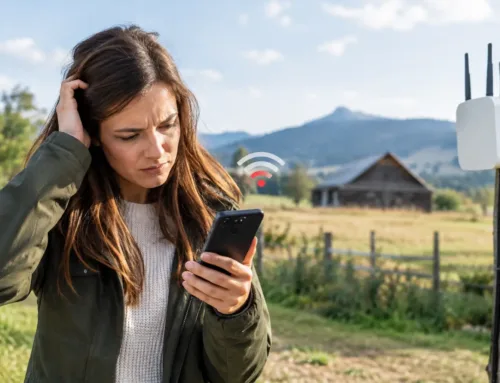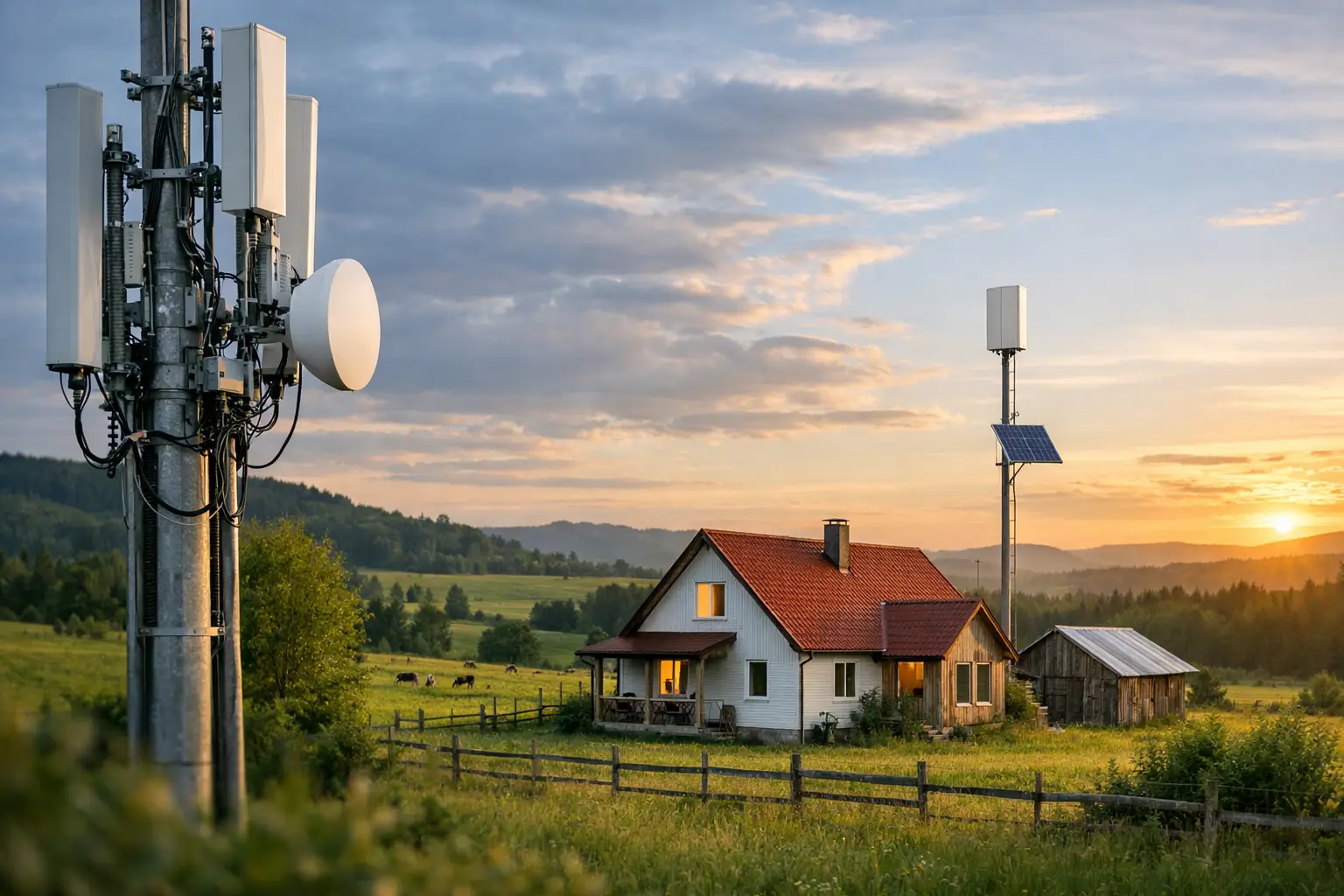
A farmhouse can be less than a mile from a mobile mast and still struggle to load a video call. A cottage at the end of a lane may have an ageing copper line that drops whenever the weather turns. For many properties, 4G broadband for rural homes provides a realistic alternative where conventional fixed-line services are slow, unavailable or simply unreliable.
It is not a universal answer. Mobile coverage varies between networks, buildings can weaken a usable signal, and a connection that works well for browsing may need more careful planning if it is also supporting CCTV, home working, smart heating and a busy household. The right system starts with the site, not a box off the shelf.
When 4G broadband is a good rural option
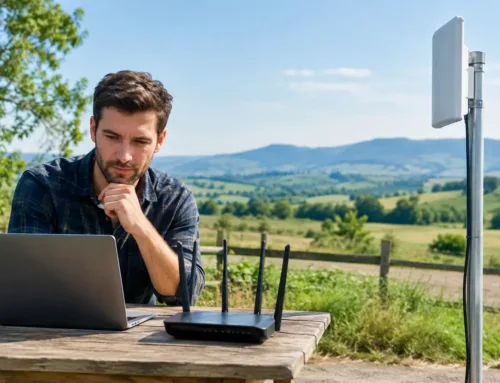
4G broadband uses the same mobile network technology as a phone, but delivers the connection through a dedicated 4G router and, where needed, an external aerial. The router creates Wi-Fi within the home and can also supply wired connections for equipment that benefits from a stable cable connection.
It can be particularly effective where a property has decent outdoor 4G signal but poor fixed broadband. This is a common situation across rural North Yorkshire, especially where homes are set back from the road, served by long copper lines or located beyond the practical reach of fibre.
For a household with ordinary internet use, a well-designed 4G installation can support streaming, online banking, email, video calls and general browsing comfortably. It can also provide the connection needed for a monitored alarm, app-based heating controls or security cameras. The actual experience depends on local signal strength, network capacity and how many people are using the service at the same time.
It is also useful where a connection is needed quickly. Waiting for a new fixed line or fibre build can take time, particularly on an isolated property, while a mobile broadband system can often be installed and configured far sooner once coverage has been assessed.
The difference an external aerial can make
A router placed on a windowsill is a sensible first test, but it is not always a fair measure of what 4G can achieve at a rural property. Walls, insulation, stone construction, metal roofs and the position of the house can all reduce signal indoors.
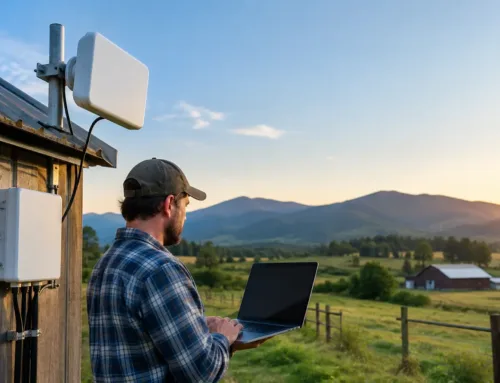
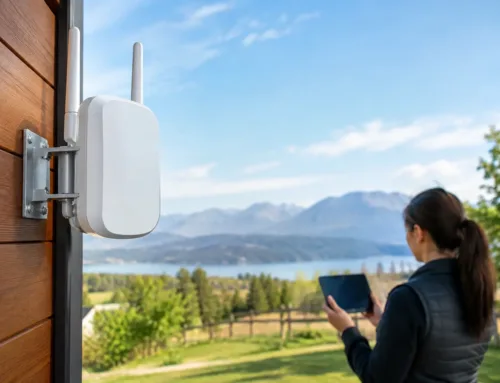
An external, directional aerial installed at the right point on the building can often make a substantial difference. It is positioned to receive the strongest practical signal from the most suitable mast, then connected to the indoor router. This can improve both speed and consistency, which matters far more than a single impressive speed-test result.
A professional survey looks beyond the number of bars on a mobile phone. It checks available networks, signal quality, likely mast direction, potential mounting locations and cable routes. It also considers whether trees, buildings or rising ground may affect performance. On farms and estates, the best aerial position may be on an outbuilding rather than the house, with a network link carrying connectivity back to where it is needed.
What speeds should you expect from 4G broadband for rural homes?
There is no honest single figure. A 4G connection may deliver modest speeds in one village and much higher speeds a few miles away. It can also change during the day if a nearby mast becomes busy.
For most homes, the more useful question is whether the connection will cope with the jobs that matter. A household that checks email, watches one or two streams and joins occasional video calls has different requirements from a family with several people working remotely, gaming online and using cloud backups at once.
Upload speed deserves particular attention. Download speed affects streaming and browsing, but upload speed is important for video meetings, sending large files and viewing CCTV remotely. If cameras are recording to a local recorder and only sending alerts or selected clips off-site, the broadband demand is usually far more manageable than continuous cloud recording from several cameras.
Latency can be another consideration. It is the short delay between sending and receiving data. 4G latency is usually suitable for everyday home use and many security systems, though competitive online gaming and certain business applications may be more sensitive to variation.
Data allowances and fair use
Before choosing a 4G service, check the data allowance as carefully as the advertised speed. Video streaming, software updates, cloud backups and cameras can consume more data than many households expect.
An unlimited-data plan is often the most straightforward choice for a main household connection, but the terms still need checking. Some providers apply traffic management, restrict certain uses or have coverage conditions that affect how a SIM can be used. A cheaper package can become frustrating if it slows down at busy times or reaches a cap halfway through the month.
For properties using 4G as a backup to a fixed line, a smaller allowance may be enough. For a home that relies on 4G every day, it is worth allowing for heavier use than normal in the first few months. Families tend to use more data once the connection is dependable.
Planning Wi-Fi beyond the router
Getting broadband into a rural home is only one part of the job. A thick-walled farmhouse, converted barn or large property may still have weak Wi-Fi in upstairs rooms, offices or the kitchen, even when the 4G connection itself is performing well.
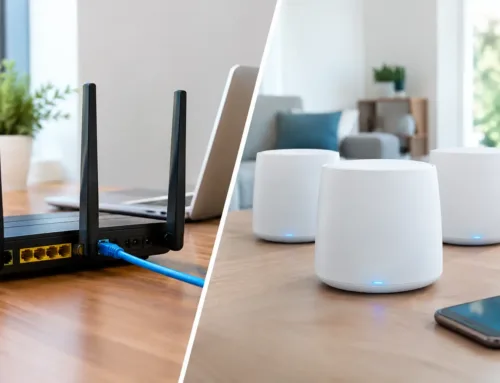
The router should be placed where it can support the internal network, not only where it receives the best signal. With an external aerial handling reception, the router can usually sit in a more useful central location. Additional wired Wi-Fi access points can extend reliable coverage through the house without relying on plug-in boosters that may provide inconsistent results.
This approach becomes more valuable when connectivity needs to reach a workshop, holiday cottage, farm office or outbuilding. Depending on distance and terrain, a wired connection or a point-to-point wireless link can carry the internet securely between buildings. That allows one carefully planned broadband connection to support a wider site.
Using 4G for CCTV, alarms and rural monitoring
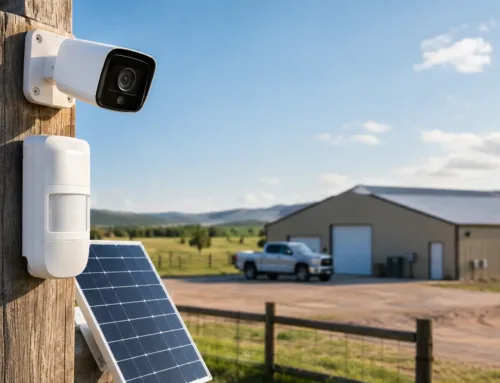
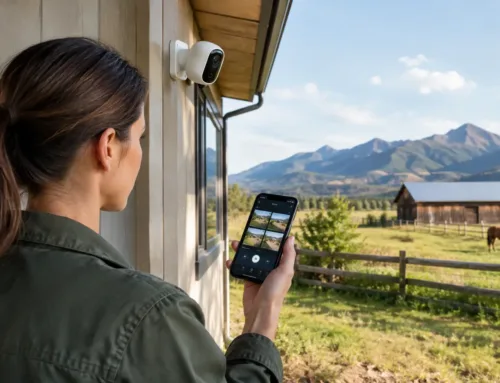
4G broadband can support a wide range of security and monitoring systems, but it should be designed around how those systems operate. A domestic CCTV system with local recording and mobile viewing places a different demand on the connection from a multi-camera farm installation with remote access, AI people and vehicle alerts, or livestock cameras used throughout calving and lambing.
Reliability matters as much as raw speed. Where security is a priority, sensible planning may include a correctly sized router, a stable wired connection to the recorder, a battery backup and secure remote access. On larger sites, cameras can be connected by long-range wireless links rather than relying on weak Wi-Fi at each location.
For critical applications, it may also be sensible to consider resilience. A second mobile network, a fixed line where one exists, or satellite broadband can provide an alternative route if the primary connection fails. The best choice depends on the consequences of downtime, not just the monthly cost.
Four checks before committing
A suitable 4G system should be based on evidence from the property. Before committing, make sure the following points have been considered:
- Network choice: One provider may work well while another performs poorly at the same address. Test the available networks rather than assuming your phone provider is best.
- Signal location: Establish whether the strongest signal is indoors, outside, on the roof or from a particular side of the property.
- Expected use: Account for household devices, work calls, streaming, CCTV and any outbuildings that need a connection.
- Installation quality: Use suitable external equipment, weatherproof cable routes and a properly configured router, especially where the connection supports security equipment.
These checks avoid a common mistake: buying a 4G router because coverage looks promising, then judging the technology on a poor indoor setup.
When another option may suit better
If fibre is available at a sensible cost, it will often offer more predictable performance and higher capacity than 4G. Where 5G coverage is strong, it may provide higher speeds, although coverage should still be tested at the property rather than assumed from a map.
Satellite broadband can be a strong option for very remote homes with limited mobile signal, clear sky visibility and a need for higher-capacity connectivity. It can be especially useful where terrain blocks mobile masts. The trade-off may be equipment position, cost and the need to plan the wider Wi-Fi network properly.
In some cases, the best answer is a combination: fixed broadband as the main connection with 4G backup, or 4G for the home with a separate wireless link serving a remote shed or office. CUBTECH designs these arrangements around the property, its daily use and the systems that need to stay connected.
A reliable rural connection is not defined by the technology printed on the router. It is defined by whether the household can work, communicate, monitor the property and use the internet without having to think about it. A proper site assessment is the practical first step towards that result.