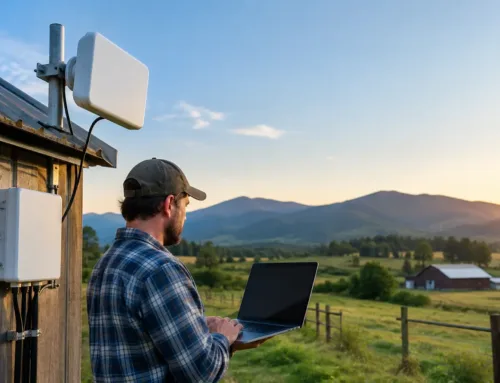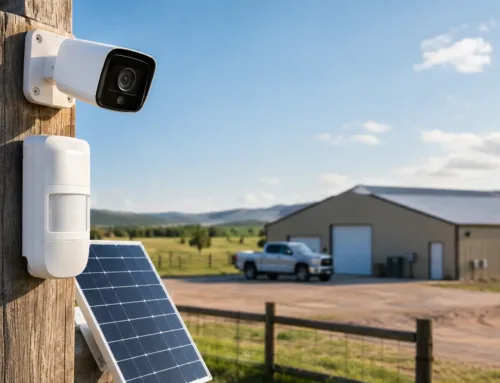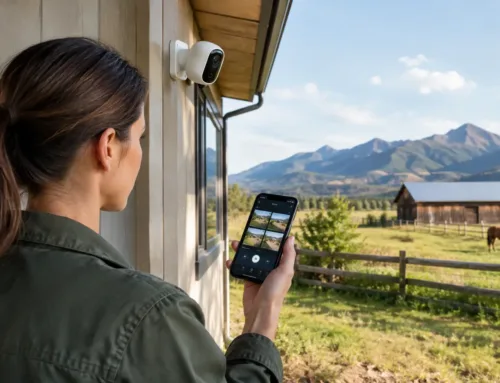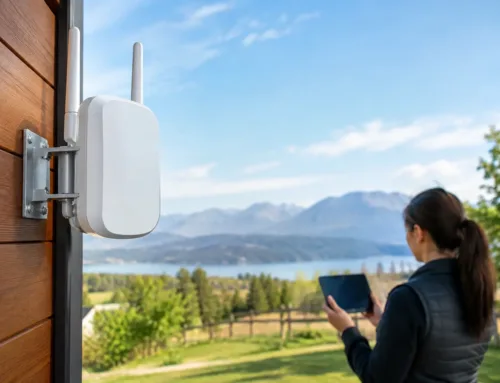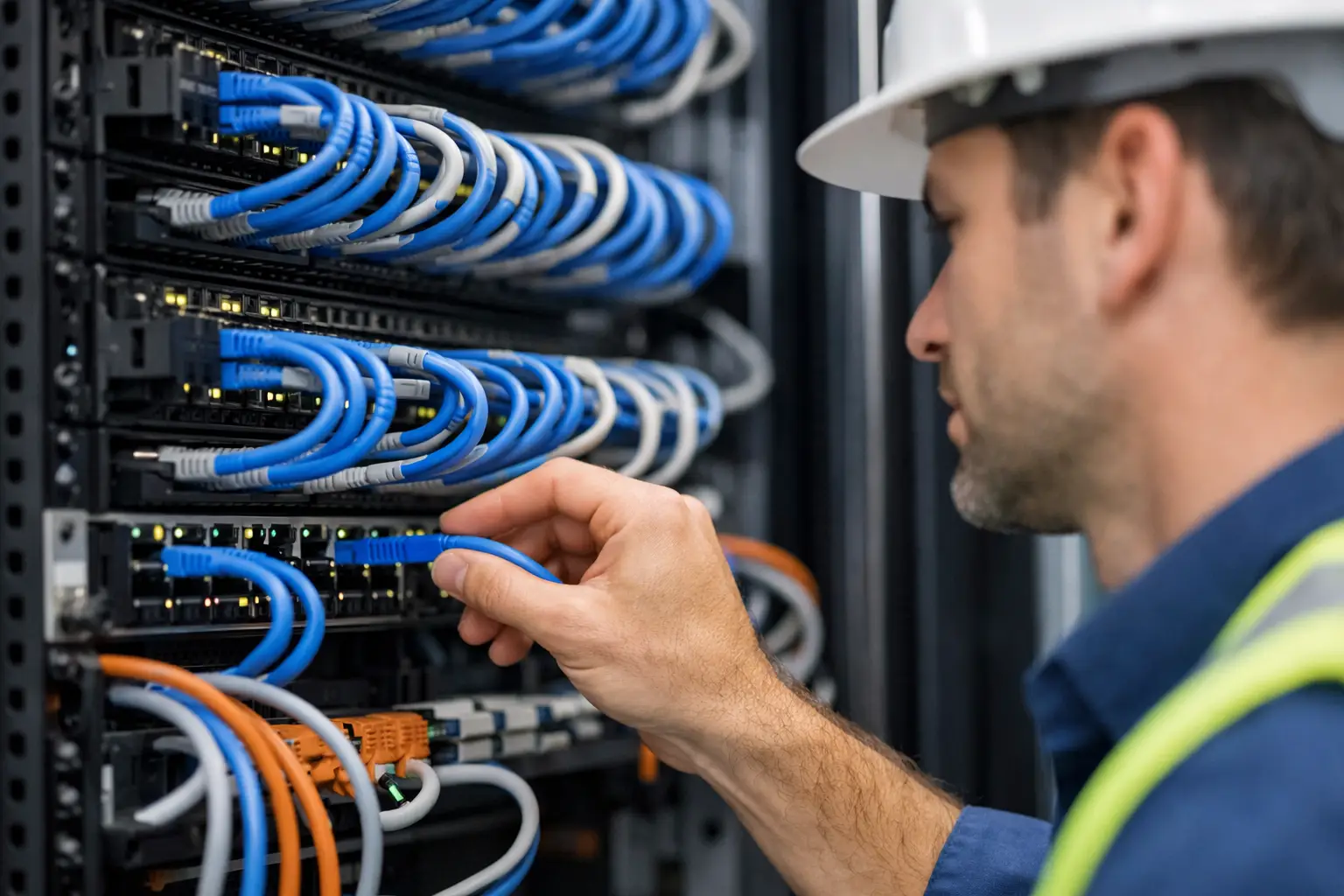
A camera at a remote yard gate, a card terminal in the farm shop and a Wi-Fi access point in the office all rely on the same thing: a dependable physical network. Commercial network cabling installation is the work that gives those systems a solid foundation, rather than leaving day-to-day operations at the mercy of weak wireless signals, ageing cables or temporary fixes.
For a business, farm or estate, cabling is rarely just about connecting computers. It may support CCTV, intruder alarms, access control, telephones, audio-visual equipment, building management systems and internet connections between separate buildings. When it is planned properly, it makes technology easier to run, easier to expand and far less troublesome to diagnose.
What commercial network cabling installation involves
A professional installation begins with the site, not a box of cable. The layout of buildings, distances between them, construction materials, existing routes, machinery, livestock areas and future plans all affect the right approach.
Inside a typical office, workshop or retail premises, the work may include data outlets at desks and workstations, ceiling points for Wi-Fi, cabinet installation, patch panels and labelled connections. On a farm or estate, the picture is often more varied. There may be a main office, several sheds, a dairy, a grain store, staff accommodation, a farm shop and remote gates or yards spread across a large area.
The installation should provide a clear route from each device back to a central network cabinet or communications point. Cables are contained and protected, terminated correctly, labelled at both ends and tested before handover. Those details may not be visible once the job is complete, but they make a major difference when a fault needs tracing years later.
Cabling is not always the answer between buildings
Copper network cable has distance limits. For buildings separated by a yard, track or field, installing a long copper run is often unsuitable and can create electrical risks between structures with different earthing arrangements.
Fibre optic cable is commonly the better choice where a physical route is practical. It carries data over much longer distances, is not affected by electrical interference and is well suited to high-bandwidth links for multiple cameras, Wi-Fi and office traffic. Where digging or installing ducting would be disruptive, a properly designed point-to-point wireless link can be an effective alternative.
The right solution depends on the terrain, line of sight, available routes, budget and the importance of the connection. A survey prevents the common mistake of treating every outbuilding as though it were simply the next room along.
Choosing the right cable for the job
For many commercial installations, Cat6 cable is a sensible starting point. It supports modern business networking and is suitable for many CCTV cameras, access points, phones and connected devices. Cat6A may be worth considering where higher speeds, greater capacity or a longer-term allowance for growth is needed.
The cable category matters, but it is only one part of the decision. The route and environment are equally important. Cable in a clean office ceiling needs different protection from cable installed in a workshop, livestock building or external duct. In agricultural settings, cable routes may need to account for moisture, dust, rodents, cleaning regimes, vehicle movement and the risk of accidental damage.
External-grade cable, conduit, armoured protection or ducting may be appropriate depending on the route. It is better to make these decisions at the design stage than to discover a vulnerable cable after the site is operational.
Power over Ethernet reduces clutter
Many modern devices can receive data and power through one network cable using Power over Ethernet, usually called PoE. This is particularly useful for CCTV cameras, wireless access points, video intercoms and some access control equipment.
PoE can reduce the need for separate local power supplies at each device, which keeps installations tidier and gives greater control from the network cabinet. It still needs careful design. The network switch must provide enough power for the equipment connected to it, particularly where several cameras use infrared lighting at night or where high-powered wireless equipment is installed.
Why a site survey matters
A site survey turns a broad requirement such as “better Wi-Fi in the sheds” into a workable plan. It identifies where connectivity starts, where it needs to reach and what is likely to get in the way.
On a commercial site, this may mean checking ceiling voids, risers, existing containment, fire compartment walls and access for installation. On a farm, it may also mean tracing routes around livestock, grain handling equipment, machinery bays and busy vehicle areas. It is not only about finding the shortest route. The best route is one that is protected, accessible for future work and sensible for the way the site operates.
A survey is also the time to look beyond the immediate requirement. If a new CCTV system is being fitted this year and an access control system is planned next year, allowing capacity in the cabinet and routes now can avoid unnecessary disruption later.
The difference between a tidy job and a dependable network
A network can appear to work on the day it is fitted while hiding problems that will emerge later. Poor terminations, strained cables, undocumented routes and unlabelled outlets all create avoidable call-outs and downtime.
A well-executed commercial network cabling installation should include sensible cable management, protected routes, properly fitted cabinets and clear labelling. Every cable should be tested, rather than assumed to be correct because a device briefly connects. Testing confirms that the cable can carry data as intended and helps identify faults before the installer leaves site.
Documentation is valuable too. A simple record of cabinet connections, outlet locations and links between buildings means another member of staff or support engineer can understand the system without guesswork. This becomes particularly useful on estates and businesses where buildings are altered over time or responsibility changes hands.
Planning for CCTV, Wi-Fi and future growth
The most cost-effective installations are designed around how the site will be used, not just the number of outlets requested on day one. A cable installed for a camera may later support a different device. A cabinet with spare capacity can accommodate an additional switch, broadband router or security recorder without needing to start again.
CCTV places particular demands on a network. A single camera may be straightforward, but several high-resolution cameras recording continuously can create significant traffic and storage requirements. The network needs enough capacity to support live viewing, recording and remote access without making office systems slow or unreliable.
Wi-Fi also benefits from a wired backbone. Wireless access points are only as useful as the connection feeding them. Extenders can help in some situations, but they are not a substitute for properly placed access points connected back to the network by cable or a suitable wireless bridge.
For rural businesses with poor fixed-line broadband, the internal network remains worthwhile. A 4G, 5G or Starlink connection can provide the internet service, while well-planned cabling distributes that connection where it is needed across the property. The two parts need to work together: good broadband cannot compensate for a poorly designed local network, and excellent cabling cannot improve an inadequate internet connection on its own.
When to use one installer for connectivity and security
Cabling often sits between several systems. The same cabinet may contain the internet router, network switch, CCTV recorder, alarm communicator and wireless equipment. Using separate contractors can work, but it can also lead to uncertainty when something fails: is it the camera, the network, the router, the wireless link or the broadband service?
An installer able to assess security, connectivity and the physical environment as one project can design clearer handover points and reduce that fragmentation. At CUBTECH, this can mean assessing a farm CCTV requirement alongside the network link to a remote shed, the Wi-Fi needed for staff and the broadband option available at the main building.
That does not mean every site needs the most elaborate system. A small workshop may need a neat cabinet, a few data points and two access points. A large estate may need fibre between key buildings, outdoor wireless links and networked cameras across several zones. The scale changes, but the principle remains the same: install infrastructure that suits the site and leaves room for sensible change.
A cable route is easy to overlook once walls are closed, ceilings are reinstated and daily work resumes. Taking time to survey it properly, protect it and test it gives your business or farm a dependable base for the technology it relies on every day.