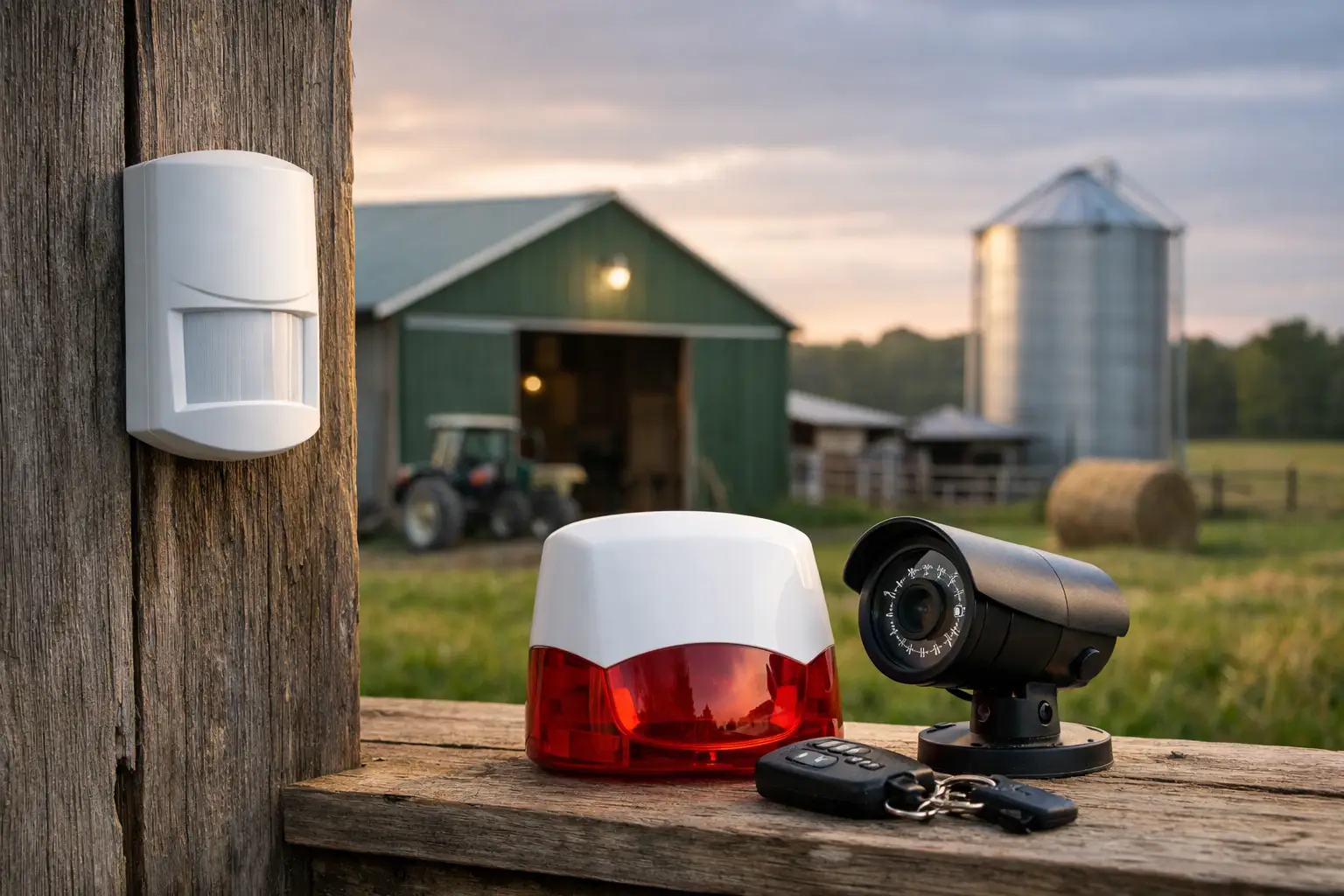
A machinery shed can hold more value than many people realise: tractors, ATVs, tools, fuel, fertiliser, copper cable and parts that are difficult to replace quickly. Yet it may sit several fields away from the farmhouse, with no fixed broadband and little passing traffic. Farm building intruder alarms are designed for this reality, giving you an early warning when a protected building is opened, entered or disturbed.
The right system does more than make a noise at the shed. It identifies the relevant event, sends an alert to the right person and gives you enough information to respond sensibly. On a working farm, that means considering the building, the people using it, the distance to it and the connectivity available – not simply fitting a standard alarm panel and hoping for the best.
Why farm buildings need a different approach
Farm sites are rarely neat, compact premises. A workshop may be close to the yard, while grain stores, livestock buildings, solar equipment, fuel tanks and machinery sheds are spread across a large area. Some buildings have mains power; others rely on a limited supply or none at all. Thick stone walls, steel cladding and long distances can also make wireless signals less predictable.
There is also the issue of normal activity. Staff may arrive before daylight, contractors may need access during the day and family members may collect equipment at irregular times. An alarm that is awkward to set, or that creates false alerts whenever a door rattles in the wind, will soon be ignored. A well-planned installation protects the building without getting in the way of the day’s work.
The consequences of a break-in are not limited to the value of stolen items. Lost equipment can stop fieldwork, delay repairs or leave a business without a key vehicle at a critical point in the season. Damage to doors, shutters and electrical equipment can be just as disruptive. A visible, professionally installed security system also makes a building a less attractive target in the first place.
What effective farm building intruder alarms look like
At the centre of most systems is an alarm control panel, linked to detection devices and a means of communicating alerts. For a smaller outbuilding near the farmhouse, this may be relatively straightforward. For a larger estate or a cluster of remote sheds, the system may need separate alarm areas, wireless expansion, long-range links and alternative communications.
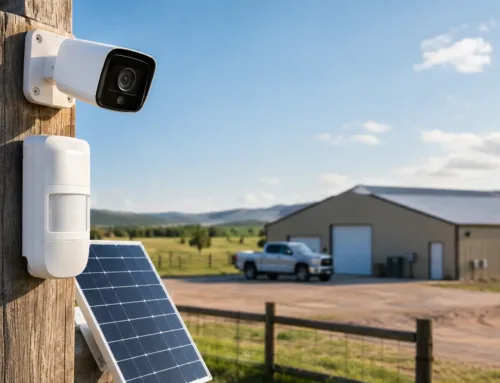
Door contacts are often the first line of detection. They alert when a personnel door, roller shutter, sliding door or hatch is opened while the relevant area is set. They are especially useful where access points are clear and controlled. Vibration or shock detection can add another layer on vulnerable doors, windows or panels where forced entry is a concern.
Internal movement detectors then cover the spaces an intruder is likely to enter. The choice and positioning matter. A standard detector may be suitable in a clean, enclosed workshop, but a dusty machinery shed with high roofs, changing temperatures and occasional birds needs more careful design. Sensors should be selected and positioned to reduce unwanted activation while still covering valuable equipment and likely routes through the building.
For sites with a higher risk profile, detection can be combined with monitored signalling, external sounders and security lighting. The aim is not to install every available device. It is to create sensible layers: delay access, detect entry, make intrusion difficult to continue unnoticed and ensure a meaningful alert reaches you.
Alerts only help if they can leave the site
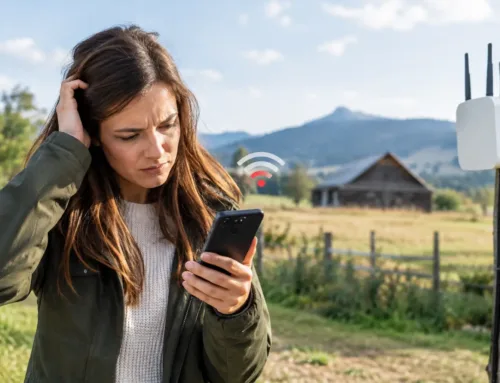
An intruder alarm in a remote building is only as useful as its communications path. Fixed broadband may be available at the farmhouse but not at a shed half a mile away. In some locations, it may be too unreliable to rely upon at all.
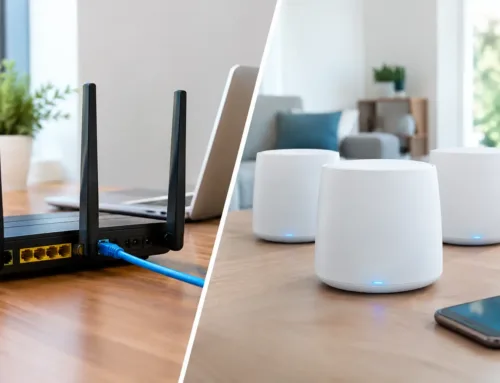
A dual-path alarm communicator using mobile network signalling alongside an internet connection can provide useful resilience where conditions allow. If one route fails, the other can continue to carry alarm events. Where mobile coverage is poor, an external aerial or a different communications design may be needed. This should be tested during a survey rather than assumed from a mobile phone signal at the gate.
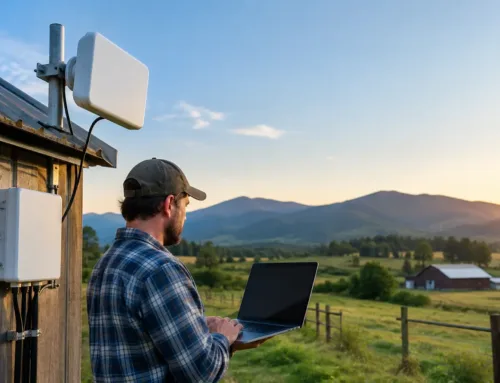
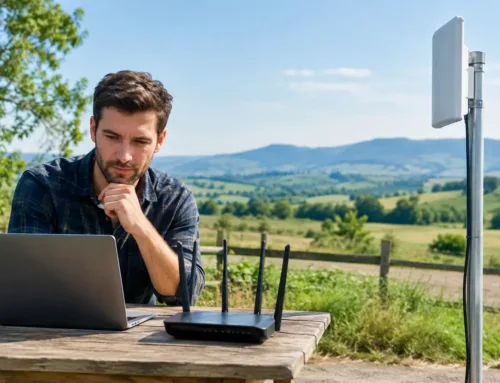
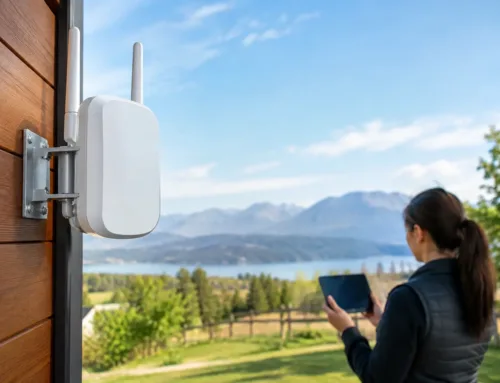
Long-range wireless network links can connect buildings across a farm without the disruption and cost of trenching cable, provided there is a suitable route between them. They can support alarm communication, CCTV and wider site connectivity. In more isolated locations, 4G, 5G or Starlink may provide the connection required for remote monitoring and system management.
This is where an integrated approach has real value. An alarm installer who understands rural networking can design the alarm around the connection actually available, rather than leaving you to coordinate separate security and broadband contractors after the installation.
Alarm, CCTV and lighting work better together
An intruder alarm provides the immediate prompt: something has happened at a specific door, building or zone. CCTV can then help establish whether it is a genuine incident, a member of staff arriving early or an animal triggering activity around the yard.
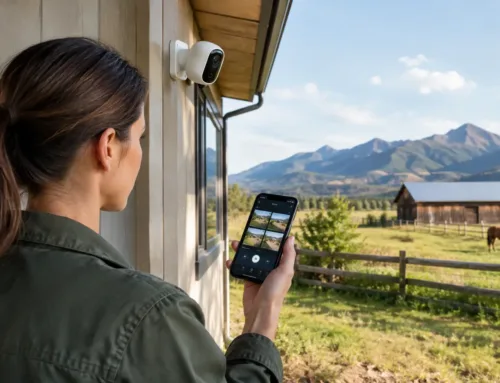
For example, an alarm event at a machinery shed can prompt a notification from an AI-enabled CCTV camera that distinguishes a person or vehicle from general movement. That can reduce unnecessary call-outs and allow a quicker, better-informed decision. It does not remove the need for a properly designed alarm, but it gives valuable context when an alert comes through at night.
Lighting also has a role, particularly around access doors, yards and vehicle areas. It should be planned carefully. Poorly positioned floodlights can create glare on cameras, disturb neighbours or illuminate the very route an intruder wants to use. Controlled lighting that supports camera coverage and safe access is more useful than simply fitting the brightest light possible.
Start with how the building is used
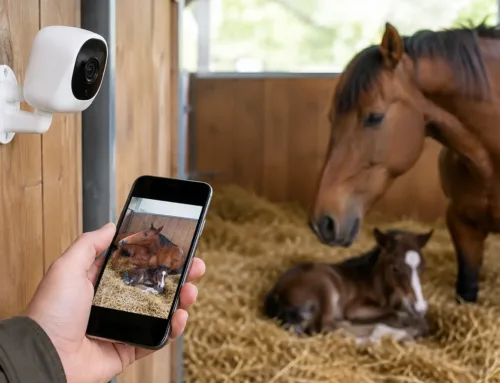
Before choosing equipment, consider who needs access and when. A feed store used every morning has different requirements from a workshop that is locked for days at a time. A building containing livestock may need a different approach again, as movement detection inside may be unsuitable or require carefully defined zones.
It is also worth deciding what should happen after an activation. Some owners want app notifications to nominated keyholders. Others require a monitored response arrangement, particularly where valuable machinery, isolated premises or insurance conditions are involved. The appropriate choice depends on the site, the level of risk and whether someone can realistically respond.
Do not overlook setting and unsetting. Keypads, proximity tags, fobs and app control can all be useful, but access should match the people using the site. Staff access can be managed separately from owners, and individual user records can make it easier to see how the system is being operated. Simple daily use is a security feature in its own right.
A site survey prevents costly gaps
A proper survey looks beyond the building’s floor plan. It assesses the construction, access points, power supply, mobile signal, Wi-Fi coverage, likely cable routes and environmental conditions. It should also identify where valuables are stored, where a criminal is most likely to attempt entry and which areas genuinely need protection.
This often reveals practical decisions early. A wireless system may be the best option for one shed, while a wired connection is more appropriate in another. A remote building may need a long-range link back to the main yard, or its own mobile communicator. A camera may provide better coverage of an exposed fuel area than an additional internal detector.
CUBTECH designs systems around these site-specific factors, then installs, commissions and supports the finished solution. That matters on farms where the security arrangement may expand over time, perhaps with another building, a new workshop, wider CCTV coverage or improved connectivity across the estate.
Keep the system dependable after installation
Like any working piece of farm infrastructure, an alarm needs occasional attention. Batteries in wireless devices and backup supplies should be checked and replaced when required. Doors and shutters can move over time, affecting contacts. Changes to storage layouts, new machinery or a partition wall may alter detector coverage.
Users should also know how to test the system, confirm that alerts are being received and report a fault quickly. If a building changes use, review the protection rather than assuming the original layout still fits. A seasonal store turned into a workshop, for example, may need different access control and detection.
The best time to improve security is before a break-in exposes the weak point. Walk the site after dark, look at the routes into each building and consider how quickly you would know if something was wrong. A tailored alarm system, backed by reliable connectivity and clear support, turns that uncertainty into a practical plan.