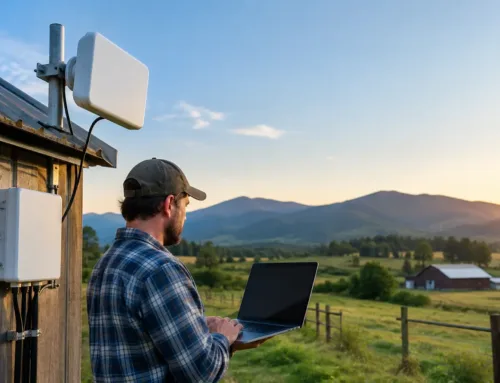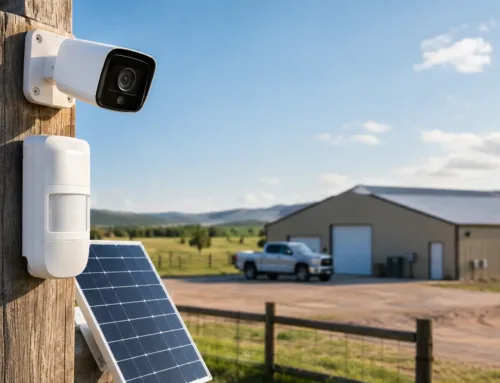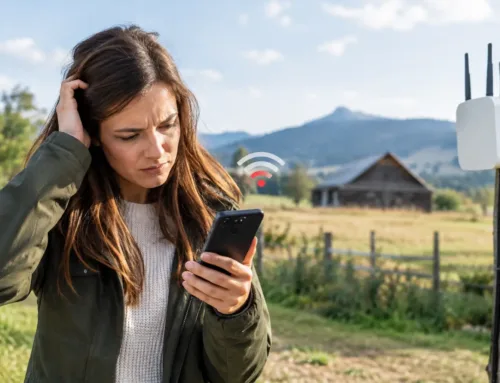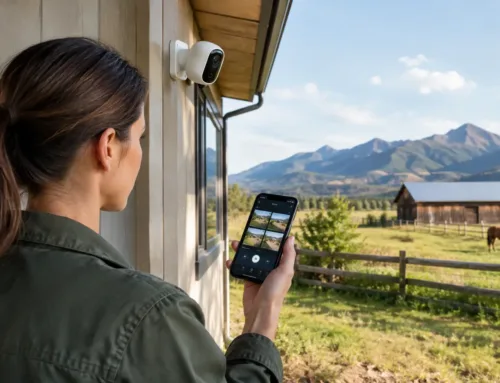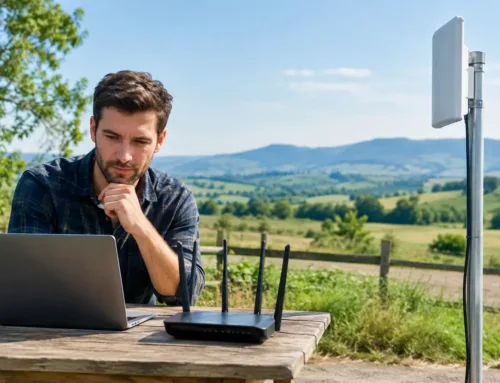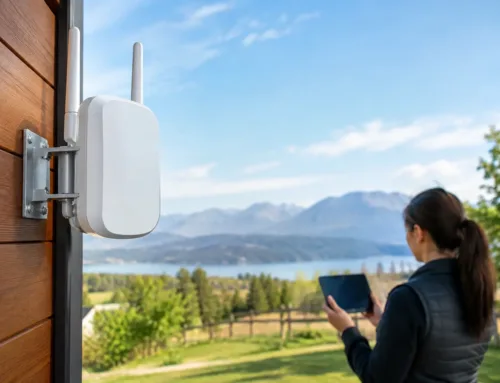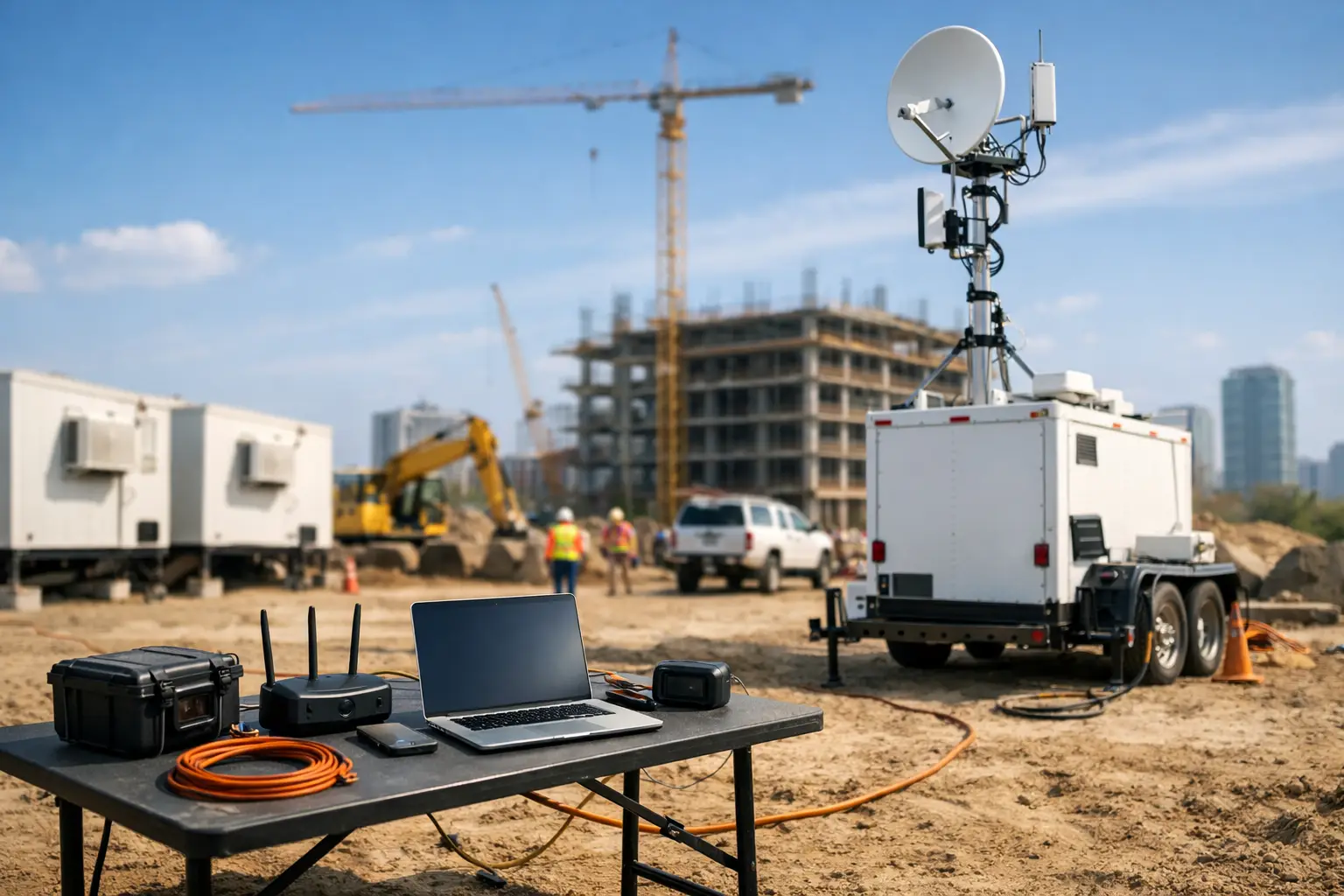
A camera at a remote gate is of limited use if it cannot send an alert. A site office cannot run card payments, cloud records or video calls on a weak mobile signal. And a farm event quickly loses momentum when exhibitors, organisers and visitors have no dependable connection. Temporary site internet solutions are designed for exactly these situations: getting practical connectivity in place where fixed broadband is unavailable, too slow or simply not worth installing permanently.
For rural sites, the right answer is rarely a one-size-fits-all router. Distance from the road, terrain, tree cover, building materials, the number of users and how long the site will operate all affect the best approach. A properly planned temporary connection can support work, security and communication from day one, then be removed, relocated or retained as needs change.
When temporary connectivity makes sense
Temporary internet is useful wherever a site needs to operate before a fixed line is live, or where installing one would be impractical. That could mean a construction project, a seasonal farm enterprise, an estate sale, a rural wedding venue, a machinery compound or an isolated livestock building.
It also provides a sensible contingency where an existing broadband connection is unreliable. A 4G, 5G or satellite service can keep essential systems operating while a fault is investigated, particularly where internet access supports alarms, CCTV, remote access or business administration.
Common applications include site offices and welfare units, temporary accommodation, ticketing and payment terminals, event Wi-Fi, time-lapse or security cameras, remote gates, machinery yards and livestock monitoring. The connection does not have to be public-facing to be valuable. Often, its most important role is giving a manager a reliable way to view cameras, receive alarm notifications and speak to staff across a large site.
Temporary site internet solutions: choosing the connection
The main connection types are 4G, 5G and Starlink satellite internet. Each has a place, and a site survey should establish what is genuinely workable rather than relying on a coverage checker alone.
4G and 5G for quick, flexible deployment
A mobile-data connection is often the fastest route to getting a small or medium-sized temporary site online. With the right external aerial, router and data arrangement, 4G can provide dependable internet where a mobile phone inside a building shows only a poor signal. 5G can offer considerably more capacity where it is available, making it well suited to busy offices, event operations and multiple high-resolution cameras.
The trade-off is that mobile performance can change. Signal can be affected by hills, trees, building cladding and network congestion. A mast that performs well on a quiet weekday may be under more pressure during a local event or holiday period. Positioning the aerial correctly and testing the intended network on site makes a substantial difference.
For a short project, a managed 4G or 5G setup can be an efficient option. It is compact, quick to install and can move with the project. On larger sites, it can also act as the main incoming connection before being distributed by wired cabling or wireless links.
Starlink for locations beyond mobile coverage
Where mobile coverage is inconsistent or non-existent, Starlink can be a practical alternative. It is particularly valuable for remote farms, estates, worksites and outdoor venues where a fixed connection may be miles away or months from completion.
Starlink requires a clear view of the sky, which means tall trees, nearby buildings and the surrounding landscape need to be considered. It also needs sensible mounting, power and weather protection. A dish placed in the easiest spot rather than the best-performing spot may lead to interruptions, so installation detail matters.
For many rural temporary sites, satellite connectivity changes what is possible. It can support office systems, communications and remote viewing of security equipment without waiting for new cable infrastructure. However, it should be specified around actual demand. A single site manager checking a few cameras has very different requirements from a construction compound with multiple users, cloud backups and visitor Wi-Fi.
Internet is only useful if it reaches the right places
Getting a connection into one building is only half the job on a farm or estate. The real challenge is often taking it to a workshop, gatehouse, holiday let, lambing shed, yard or event area several hundred metres away.
Running new underground cable may be appropriate for permanent work, but it is not always sensible for a short-term site. Point-to-point wireless links can carry a connection between buildings or across open ground without trenching, provided there is a suitable line of sight. These links are useful for extending internet to remote CCTV poles, temporary offices and buildings across a yard.
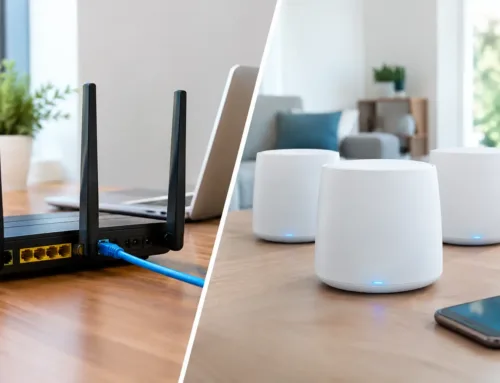
Inside a building, a professionally positioned Wi-Fi access point will generally give better results than relying on the Wi-Fi built into a basic router. Metal-clad sheds, thick stone walls and long buildings all create their own coverage problems. A system should be designed around where people and devices need a signal, not where the incoming connection happens to enter the building.
Plan around the systems the connection must support
Before selecting equipment, start with the site’s day-to-day requirements. How many people will be online at once? Are they sending emails and using card terminals, or sharing plans, uploading footage and making video calls? Will the connection support CCTV, an intruder alarm, access control or remote livestock cameras? Is visitor Wi-Fi required, and should it be separated from operational devices?
Security systems deserve particular attention. Cameras use more bandwidth when several people are watching live footage remotely, while cloud recording and frequent motion activity can increase data use. AI-enabled people and vehicle detection can reduce unnecessary alerts and recordings, but the network still needs to be stable enough for monitoring to remain useful.
A sensible setup separates essential equipment from general user access. For example, CCTV, alarm communications and office devices can be placed on separate network segments. This helps protect critical services if a visitor connects an unsuitable device or if guest usage becomes heavy during an event.
Do not overlook power, resilience and support
Temporary does not mean improvised. External equipment needs weatherproof mounting and protected cable routes. Routers, switches and power supplies should be housed safely, particularly on construction sites and in agricultural environments where dust, moisture and accidental damage are realistic risks.
Power cuts are another consideration. If remote CCTV or an alarm must continue communicating during a short outage, battery backup can keep key network equipment running. For a site with one poor connection route, a secondary mobile connection may also be worthwhile. It depends on the cost of downtime. Losing guest Wi-Fi for an hour is inconvenient; losing sight of a high-value machinery yard may be more serious.
Data allowances should be checked as carefully as signal strength. Video calls, camera footage, software updates and guest devices can consume more data than expected. A suitable plan should account for normal use as well as the occasional busy day.
A practical route from survey to switch-on
The best temporary installation starts with a clear picture of the site. This includes testing available mobile networks, assessing the view needed for satellite equipment, identifying where the connection must be distributed and confirming power availability. It also establishes whether equipment will be required for days, months or longer.
From there, the solution can be matched to the operation: a compact 4G router for a small temporary office, Starlink with managed Wi-Fi for an isolated site, or a wider network with wireless links feeding cameras and multiple buildings. CUBTECH can combine that connectivity work with CCTV, alarms and network infrastructure, giving the site one accountable installer rather than several separate contractors.
The most useful temporary connection is not necessarily the fastest one on paper. It is the one that reaches the right buildings, supports the systems you rely on and remains dependable when the site is busy. Plan it around the work that must happen there, and temporary internet becomes a practical part of keeping the operation moving.