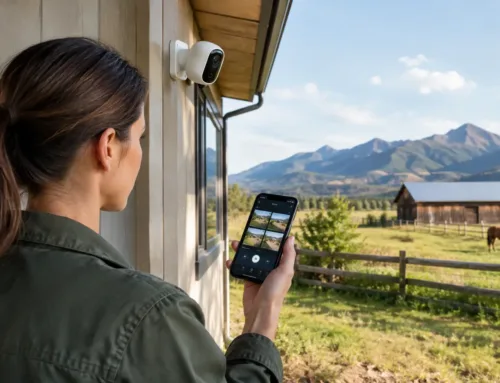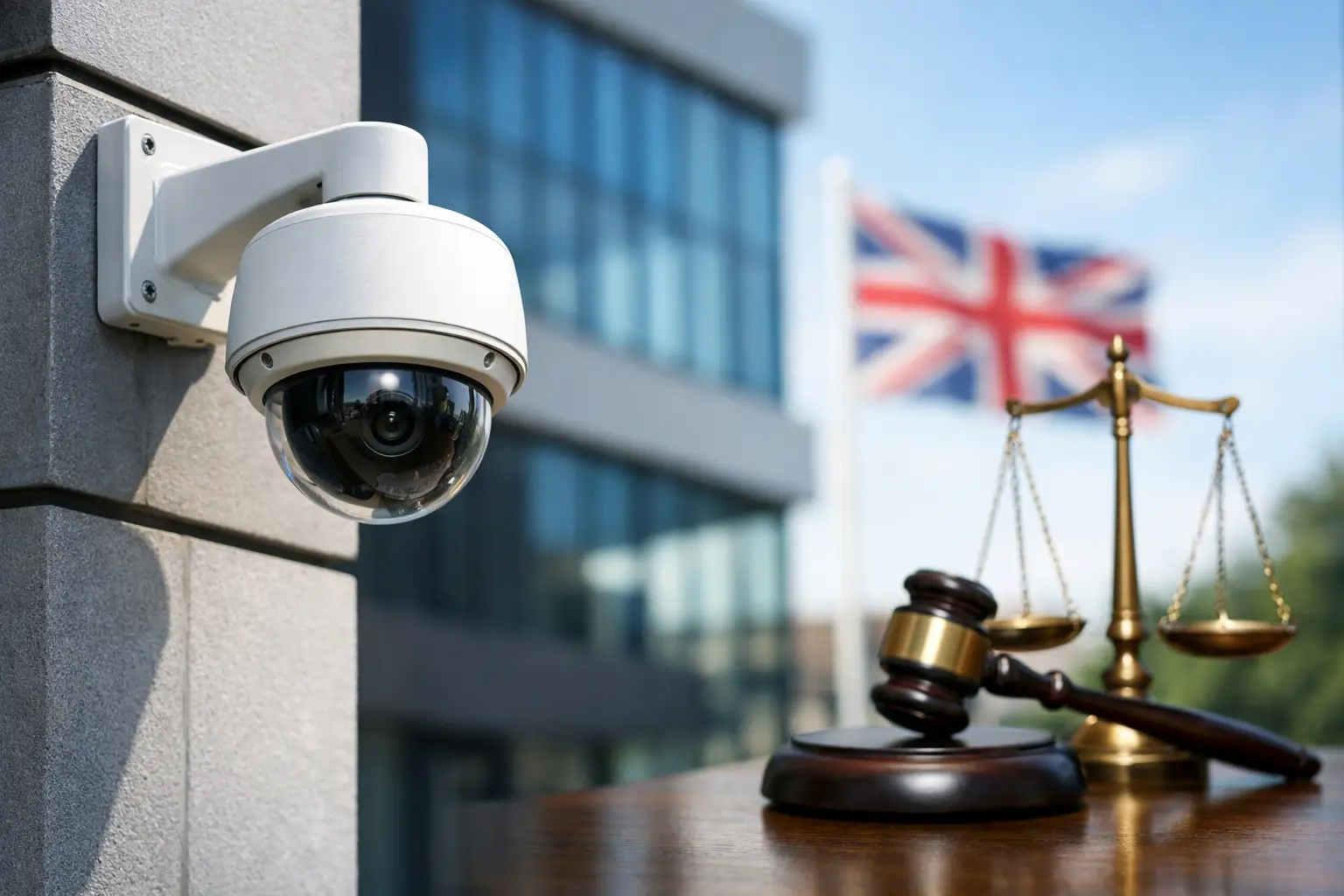
A camera covering a farmyard gate, workshop entrance or trade counter can prevent theft and settle disputes quickly. It can also record staff, visitors, neighbours and passers-by. That is why CCTV privacy rules for businesses need to be considered before the first camera is fitted, not after footage is needed.
For most commercial, agricultural and estate sites, CCTV is a sensible and proportionate security measure. The key is to design it around a clear purpose, keep its field of view under control and manage recordings responsibly. A well-planned system protects the site without making people feel constantly watched.
Start with a clear, lawful purpose
CCTV footage that identifies a person is personal data. If your business decides why and how that footage is collected, it is the data controller and must comply with the UK GDPR and the Data Protection Act 2018.
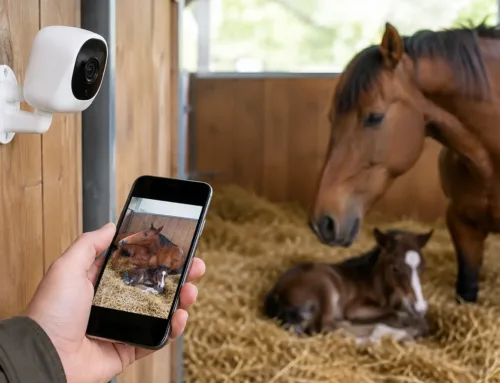
Begin by writing down the reason each camera is needed. Protecting machinery, fuel, livestock, stock, staff or visitors from crime is usually a legitimate reason. Monitoring a remote access road after repeated fly-tipping may be justified too. A camera in a lambing shed can support welfare checks, while one at a warehouse loading bay can help investigate theft or unsafe deliveries.
The purpose should be specific. “General monitoring” is rarely enough on its own. Ask what risk exists, where it occurs and whether the proposed camera is a sensible response. This is particularly useful on a large rural site, where one camera may need to cover a distant gate, machinery compound or isolated building.
For many businesses, legitimate interests will be the most appropriate lawful basis for standard security CCTV. It requires a balancing exercise: your need to protect the site must not override people’s rights and expectations of privacy. The more intrusive the camera coverage, the stronger your justification needs to be.
CCTV privacy rules for businesses: apply the proportionality test
The practical question is not simply whether a camera could see an area, but whether it needs to. Position cameras to capture entrances, gates, high-value assets and relevant approaches rather than wide areas with no security purpose.
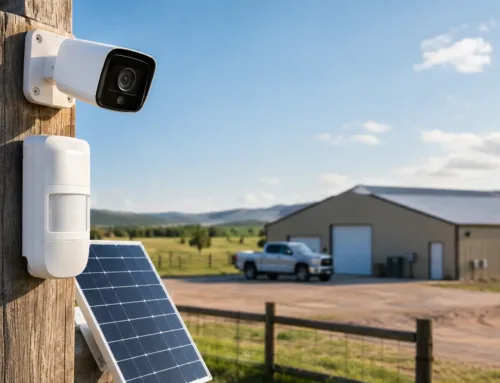
A farm gate camera might unavoidably see part of a public lane. That does not automatically make it unlawful, but it should be angled and configured to minimise unnecessary recording. Likewise, a camera protecting a rural workshop should not routinely point into a neighbour’s garden, staff break area or nearby home. Privacy masking can block out windows, adjoining land and other irrelevant areas while retaining coverage of the risk area.
Cameras in toilets, changing rooms and other places where people reasonably expect privacy are not acceptable. Cameras in staff welfare spaces will be difficult to justify. If you are considering monitoring employees, be clear about why, avoid covert surveillance except in genuinely exceptional circumstances, and make sure staff know what is in place.
Audio recording deserves separate thought. Recording sound is more intrusive than recording video and is seldom necessary for ordinary site security. Disable it unless there is a compelling, documented reason to use it.
Complete a privacy impact assessment when risk is higher
A Data Protection Impact Assessment, usually called a DPIA, helps identify privacy risks before installation. It is required where processing is likely to create a high risk to people’s rights and freedoms. Extensive monitoring of public areas, large-scale workplace surveillance and systems using advanced analytics may meet that threshold.
Even where one is not formally required, a short assessment is good practice. Describe the cameras, locations, people likely to be recorded, security purpose, lawful basis, retention period and safeguards. Consider whether AI people and vehicle detection is used only to reduce false alerts or whether it makes more significant decisions about individuals. The latter requires much closer scrutiny.
For estates, farms and multi-building business sites, the assessment often reveals practical improvements. A wireless link may allow a camera to be moved from an overly broad position to a more precise one. Better lighting may reduce the need for excessive coverage. A camera with appropriate analytics can notify the right person when a vehicle enters a restricted yard, rather than generating alerts for every animal or branch moving in view.
Tell people they are being recorded
Clear signage is not a formality. It is how you give people basic privacy information before they enter the monitored area. Signs should be easy to notice at entrances and around the site, state that CCTV is in operation, identify the organisation responsible and provide a way to obtain further information.
Your fuller CCTV privacy notice can explain the purpose of the system, lawful basis, who receives footage, how long recordings are retained, how people can exercise their data protection rights and how to contact the business. It can be provided in print, at reception or through another accessible route. The point is that it must be available, not hidden away.
If cameras cover a shared yard, business park or tenanted estate, establish who is responsible for the system and the notices. This avoids the common problem of several occupiers assuming someone else is dealing with data protection.
Set sensible access and retention controls
Footage should only be viewed by people who need it for their role. That may be the owner, site manager, security lead or an appointed administrator. Shared logins make accountability difficult, so individual user accounts and strong passwords are preferable. If footage can be viewed remotely, protect the app or recorder with multi-factor authentication where available and keep software updated.
There is no universal legal retention period. Recordings should be kept only for as long as they are needed for the stated purpose. For many sites, 14 to 31 days is reasonable, provided incidents are normally identified within that time. A remote holiday cottage, seasonal farm operation or rarely visited storage compound may have different operational needs, but longer retention should be justified rather than left at a default setting.
When an incident occurs, isolate and preserve the relevant clip before the system overwrites it. Keep a simple record of why it was saved, who has viewed it and when it can be deleted. This is useful if the footage is needed by police, insurers or solicitors later.
Cloud storage can be a practical choice where rural broadband is limited or a recorder may be vulnerable to theft. Check where the provider stores data, what contract terms apply and whether the provider is acting only on your instructions. A professional installer should also explain what happens if the internet connection fails and whether local recording provides a suitable fallback.
Be ready for requests from people in the footage
People can ask for a copy of their personal data, including CCTV footage in which they can be identified. These are known as subject access requests. You will usually need to respond within one month.
The request does not have to use legal wording. A visitor who asks to see footage from a particular date and time may be making one. Ask for enough detail to locate the recording and confirm identity where appropriate. Before sharing a clip, consider the privacy of others shown in it. It may be necessary to blur third parties, provide a still image or explain why disclosure cannot be made in full.
Police may request footage during an investigation. Cooperate appropriately, but record what was requested, the authority relied on and exactly what was provided. Do not hand over unrestricted access to the system simply because someone asks at the gate.
Do not overlook staff and contractor monitoring
Employees should know where cameras are located, why they are used and who can access recordings. Include CCTV in your staff privacy information and ensure managers do not use footage casually to monitor attendance, breaks or performance if the system was introduced for security.
If the intended use changes, revisit the privacy assessment and tell people. Using a camera installed to deter theft as a routine productivity tool can be unfair, even if the camera itself was properly signposted. Contractors, delivery drivers and seasonal workers also need clear notice where they enter the site.
Consider planning and site design alongside privacy
Privacy compliance is only one part of a sound installation. External cameras may also raise planning considerations, particularly on listed buildings, in conservation areas or where equipment projects prominently from a building. Farms and estates can have additional constraints around heritage assets, public rights of way and shared access routes.
A survey is the right time to resolve these details. It allows camera positions, wireless links, lighting, network capacity and recorder location to be planned together. On sites with poor fixed-line broadband, the design may also need a reliable 4G, 5G or Starlink connection for remote viewing without exposing the system to unnecessary risk.
The best CCTV systems are not those that record the most. They are the ones that capture the right evidence, give the right people timely visibility and respect the privacy of everyone passing through the site. A proper survey and documented setup make that balance much easier to maintain as your business changes.