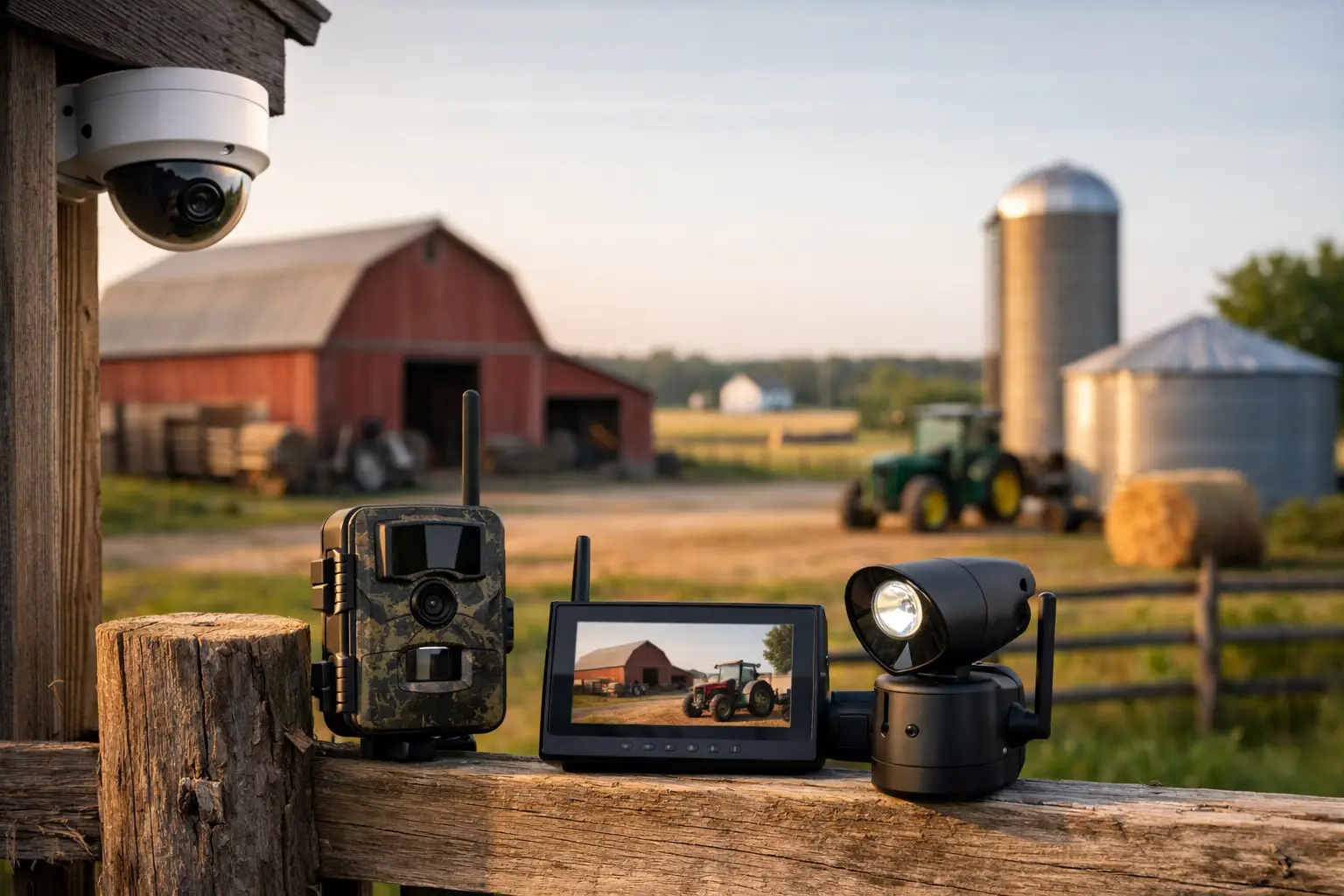
A farm is rarely one building behind one gate. It may be a yard, workshops, livestock sheds, grain stores, isolated field entrances and machinery parked a mile from the farmhouse. That is why farm security systems need to be designed around how the site actually operates, not simply around a box of cameras or an off-the-shelf alarm.
The most effective approach combines visible deterrence, useful evidence, early warning and dependable connectivity. It should help you see what matters when you are away from the yard, while avoiding constant alerts every time a sheep, bird or tractor passes a camera.
Start with the risks on your own farm
The first question is not which camera to buy. It is what needs protecting, where the weak points are and how quickly someone could respond. A compact dairy unit, a mixed farm with several outbuildings and a large estate will each need a different layout.
Machinery, diesel, tools, quad bikes and trailers are frequent targets because they can be moved quickly and are difficult to replace. Fuel tanks and chemical stores need a clear view, while workshops often benefit from both CCTV and a properly specified intruder alarm. Remote gates, tracks and entrances can be just as important, particularly where unauthorised vehicles can enter without passing the main yard.
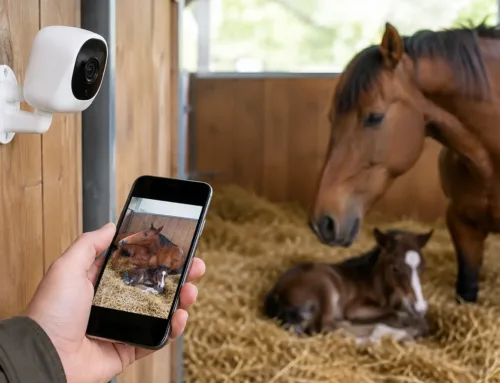
Livestock creates a separate requirement. Cameras in calving, lambing or foaling areas are not a substitute for stockmanship, but they can give an owner or farm worker a timely view of an animal that needs attention. The priority here is clear, reliable viewing rather than a security-style floodlight or an alarm notification at every movement.
A proper survey should identify sightlines, lighting, building construction, power availability and the distance between locations. It should also establish whether there is broadband where cameras are needed, rather than assuming the farmhouse connection will reach every shed.
Farm security systems need more than cameras
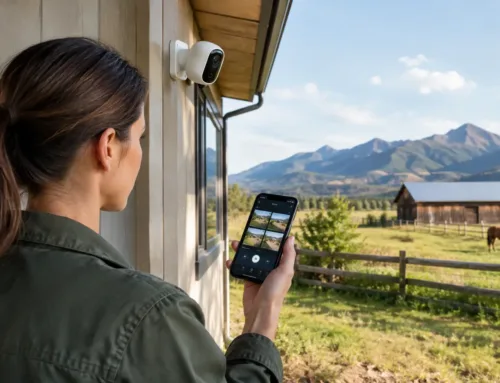
CCTV is often the starting point, and for good reason. Well-positioned cameras can deter opportunists, show what happened after an incident and allow you to check the yard from a phone or computer. However, a camera pointed vaguely at a large open area is unlikely to provide the detail needed to identify a person, vehicle or registration plate.
The useful question is what each camera is expected to do. At a gateway, it may need to capture vehicles arriving and leaving. At a workshop door, it may need a close, identifiable view of anyone approaching. In a livestock shed, a wide-angle image may be more suitable for checking pens and animals.
AI-enabled people and vehicle detection can make a significant difference on rural sites. Instead of receiving notifications for rain, shadows, wildlife or moving branches, the system can be set to alert when a person or vehicle enters a chosen area. It is not infallible, and settings need to suit the site, but careful commissioning reduces nuisance alerts and makes notifications worth acting on.
An intruder alarm adds a different layer of protection. Cameras record and notify, whereas an alarm can provide an immediate audible warning when a protected building is entered. Workshops, offices, stores and compounds are common candidates. On some sites, the right answer is CCTV at the perimeter and alarm protection inside the buildings where high-value equipment is kept.
Lighting also deserves thought. Bright lights can help when arriving home after dark, but poorly placed lighting can create glare and reduce camera performance. Infrared CCTV can monitor areas without lighting them up, while appropriately positioned security lighting can act as a deterrent in entrances and working yards. The best choice depends on the location, neighbours, wildlife and the task the camera needs to perform.
Connectivity is often the deciding factor
A security system is only as useful as its connection. Farms commonly have metal-clad sheds, thick stone walls, long distances between buildings and poor fixed-line broadband. Standard domestic Wi-Fi rarely reaches reliably across a working yard, let alone to remote buildings or field entrances.
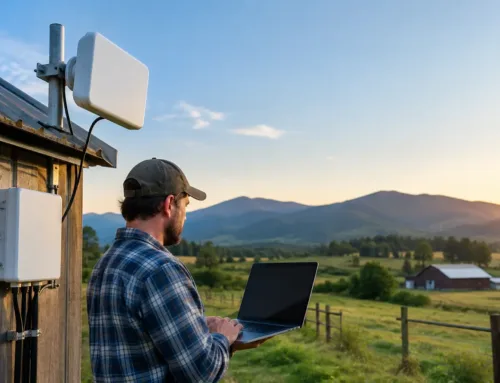
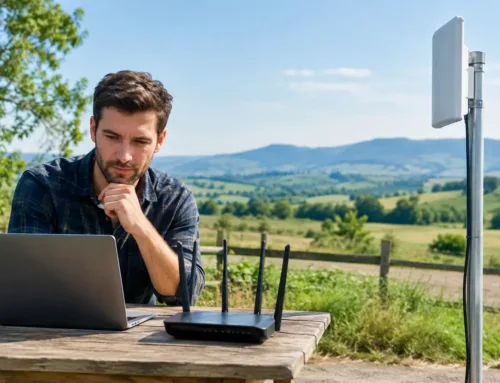
This is where wireless links and wired network infrastructure become part of the security design. A point-to-point wireless link can carry a secure connection from one building to another without the disruption and cost of digging long cable routes. Where trenching is practical, a cabled connection may be the better long-term option. The correct answer depends on distance, terrain, obstructions and future expansion plans.
For farms with weak or unavailable fixed-line broadband, 4G, 5G or Starlink can provide the connection needed for remote viewing, alerts and system management. These options are not identical. Mobile connectivity depends on local signal strength and network capacity, while satellite internet needs a suitable clear view of the sky. Both can be highly effective when assessed and installed properly.
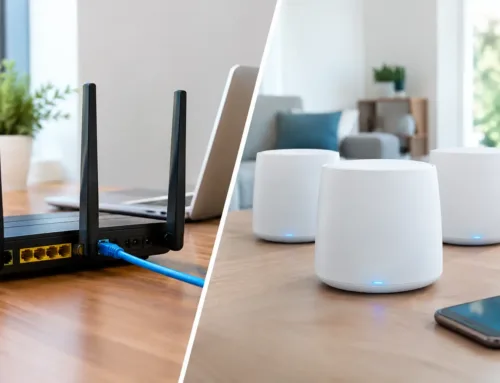
It is also worth separating security traffic from general household or business use where possible. A busy family Wi-Fi network, office video calls or guest access should not compromise the connection used by key cameras and alarms. A planned network gives the whole site a stronger foundation, including future CCTV, smart controls and farm office connectivity.
Design for coverage, not camera quantity
More cameras do not automatically mean better protection. A smaller number of correctly located cameras is more useful than several that produce poor images or leave blind spots at doors, gates and access routes.
A practical design usually begins at the perimeter and works inward. Consider vehicle entrances, pedestrian access, boundaries near public roads, vulnerable storage areas and the routes someone would use to remove machinery or fuel. Then consider daily use. Cameras should not obstruct vehicle movements, create maintenance difficulties or require farm staff to remember complicated routines before they can start work.
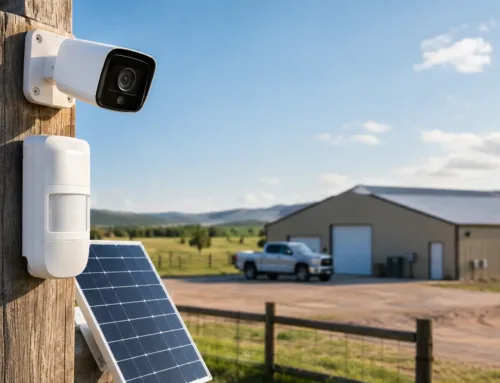
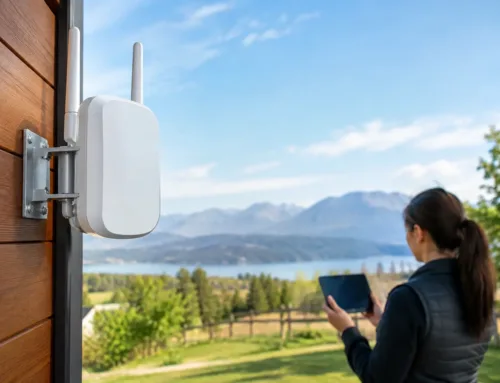
For larger sites, wide-area wireless CCTV can extend coverage to yards, barns and entrances that would otherwise be expensive to connect. Solar-powered options may suit certain isolated locations, although they need careful consideration of winter daylight, power demand, viewing requirements and ongoing maintenance. They are not automatically the answer for every remote gate.
Recording is equally important. Footage should be stored for an appropriate period and be easy to retrieve after an incident. The required retention time varies with the site and risk, but it is sensible to consider how long it may take to notice a theft from a remote store or seasonal building. Secure recording equipment, user access controls and properly configured remote access all help protect the system itself.
Make monitoring workable for the people using it
A farm security system should fit around real routines. If alerts arrive constantly, they will be ignored. If accessing cameras requires several passwords and an unreliable app connection, the system will not be checked when it matters.
Set notifications around meaningful events and locations. A people or vehicle alert at the workshop after hours may be useful; the same alert at a busy yard entrance during the working day may not be. Schedules, detection zones and user permissions should reflect who needs access and when.
The same principle applies to livestock monitoring. A camera positioned to view a calving pen, with a clear image at night and reliable connection to the farmhouse, can save unnecessary trips to the shed while still allowing close observation when required. It should be installed to suit the building and animal welfare, with protected cabling and equipment located out of reach where necessary.
Professional installation matters because rural sites are demanding environments. Equipment is exposed to weather, dust, vibration, changing light and occasional interference from machinery. Cable routes, mounting positions, network protection and power arrangements all affect reliability. A system also needs commissioning, with camera views, alert settings and remote access tested before it is handed over.
A joined-up approach gives you more control
Using separate contractors for broadband, Wi-Fi, CCTV and alarms can leave gaps between systems, particularly when a remote camera drops offline or a new shed needs connectivity. Working with one provider that understands security and rural networking makes it easier to plan the whole site and diagnose issues later.
CUBTECH designs farm security around those practical connections: surveying the property, identifying priority areas, extending connectivity where it is needed, installing the equipment and providing support once the system is in use. That can include security cameras and alarms alongside wireless links, 4G, 5G or Starlink where fixed broadband is not up to the job.
Before investing, walk the farm after dark and look at it as an intruder might. The gaps are often more obvious then: an unlit side entrance, a workshop door beyond the reach of Wi-Fi, or a remote shed with valuable equipment and no way to raise an alert. Addressing those points with a tailored system gives you useful visibility every day, not just after something has gone wrong.