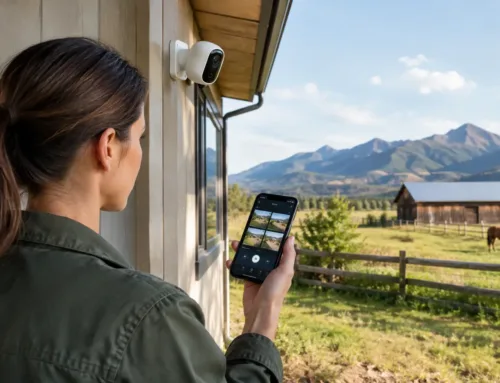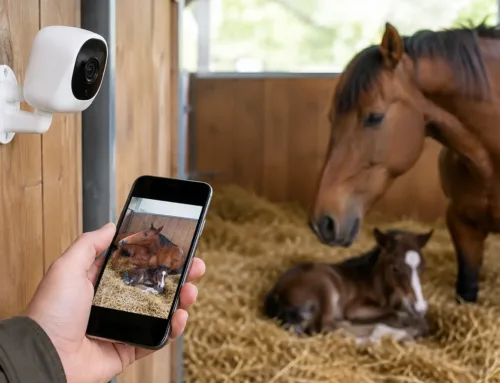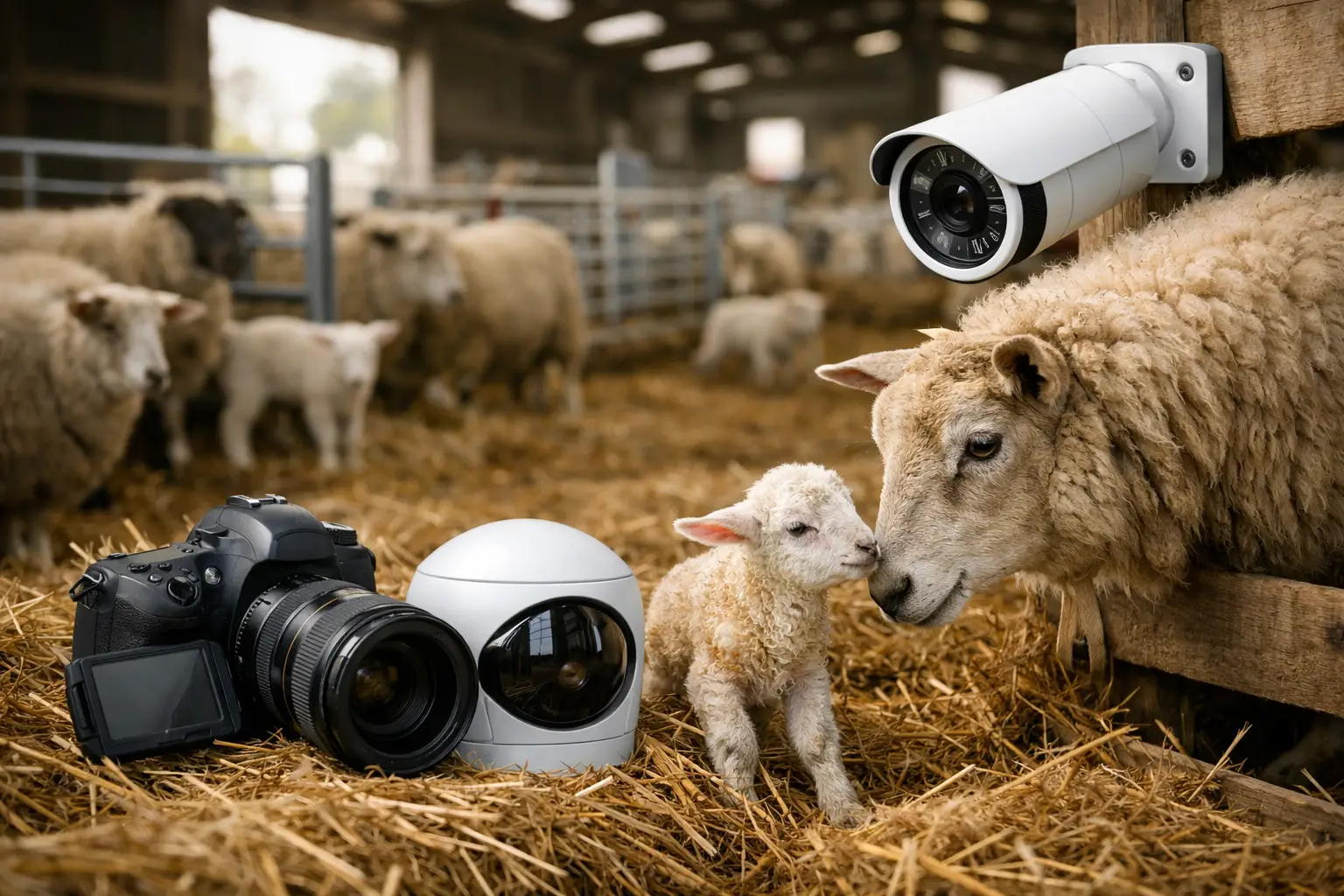
A camera in the lambing shed earns its keep at 2am, when a ewe is unsettled, a lamb has arrived unexpectedly, or weather makes another walk across the yard less appealing. The best cameras for lambing are not simply the ones with the sharpest picture. They are the systems that let you see clearly in low light, receive a dependable feed where you need it and keep working through a demanding season.
For most farms, the right answer starts with the shed, the distance to the farmhouse and the internet available on site. A useful lambing camera system should reduce unnecessary checks without replacing regular stockmanship. It gives you an earlier view of what is happening, helping you decide when a visit is needed and when a ewe can be left to settle.
What makes the best cameras for lambing?
A good lambing camera must cope with conditions that are very different from a tidy indoor security installation. Sheds can be dusty, humid and poorly lit. Pens may be spread across a long building, while the place you want to view footage may be a farmhouse, office or bedroom some distance away.
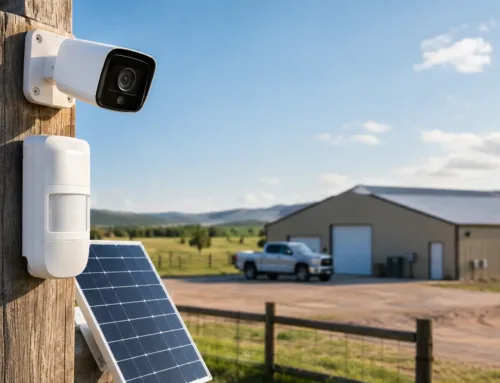
Clear night vision is usually the first priority. Infrared cameras produce a monochrome image in darkness and are often well suited to lambing sheds, provided their infrared range matches the size of the area. A camera advertised with night vision is not automatically suitable for a large barn. In a deep shed, a unit placed at one end may show the nearest pens well but leave the far end lacking detail.
Image quality matters, but more megapixels do not always solve the problem. A well-positioned camera with a suitable lens and even illumination is more useful than a very high-resolution camera mounted too high or too far away. You should be able to identify whether a ewe is in labour, has lambed, is attending to her lamb or needs closer attention. That normally calls for a practical overview of several pens, with closer coverage where individual observations are especially important.
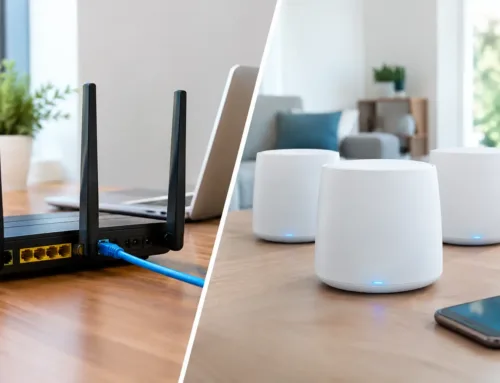
Reliability is equally important. A lambing system should use equipment intended for continuous operation, have a stable power supply and be installed so that cables, fixings and camera housings are protected from livestock, rodents and everyday work in the shed. Consumer Wi-Fi cameras can be useful in a small building close to the house, but they can become frustrating where signal strength is marginal or the installation has to cover several sheds.
Choose the system around your shed and routine
There is no single best setup for every flock. The most suitable approach depends on the size of the shed, how many pens need viewing, whether you need live viewing only or recording as well, and the connectivity between the building and your viewing point.
Wired IP cameras for permanent lambing sheds
Where cable routes are practical, wired IP cameras are often the most dependable option. A network cable can carry both data and power using Power over Ethernet, avoiding the need for a separate mains socket at every camera. This makes for a neat, stable installation and removes the risk of each camera relying on a weak wireless signal.
A wired system is particularly worthwhile in a permanent shed with several cameras. It can record footage to a local recorder, provide secure remote viewing and be expanded as requirements change. The trade-off is installation work: cables need to be routed carefully, protected properly and planned around access, machinery and future alterations to the building.
Wireless links for distant buildings
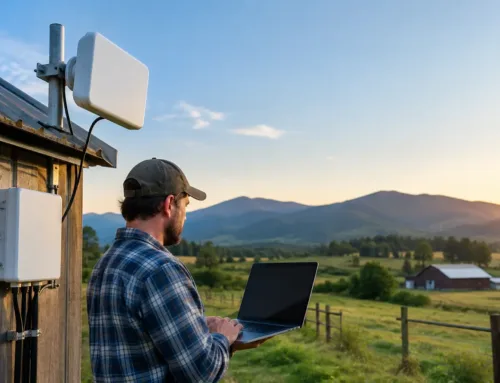
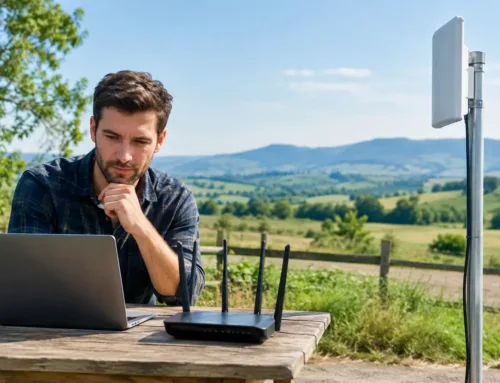
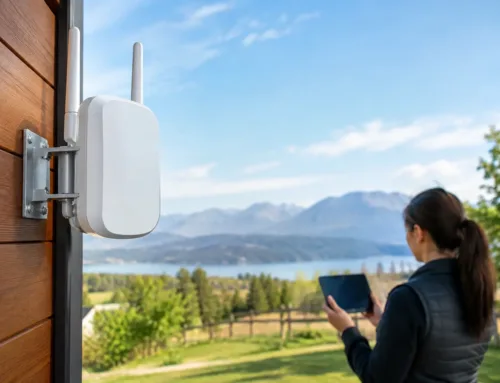
If the lambing shed is a few hundred metres from the farmhouse or farm office, a properly designed point-to-point wireless link can be a better answer than trying to stretch ordinary Wi-Fi across the yard. These links use directional equipment to create a stable connection between two buildings, subject to a suitable line of sight.
This allows cameras in the shed to operate as part of the main farm network, even where laying a cable underground would be disruptive or expensive. Terrain, trees, roof lines and metal-clad buildings all need consideration. A site survey is useful because a link that appears simple on a map can be affected by obstructions and interference in practice.
4G, 5G and Starlink where fixed broadband is poor
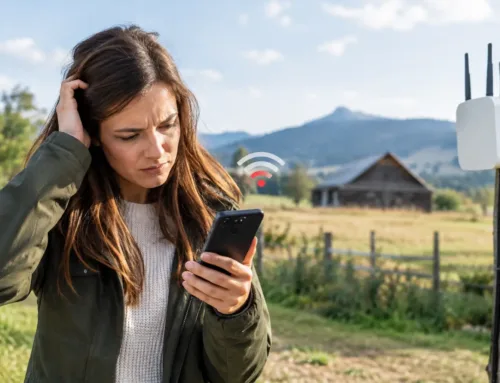
Poor fixed-line broadband does not rule out remote lambing monitoring. In some rural locations, a 4G or 5G router can provide enough connectivity for live camera viewing, particularly when the system is configured sensibly. In more remote areas, Starlink can provide a practical connection where mobile coverage and conventional broadband are limited.
The key is to set realistic expectations. A live feed from several high-resolution cameras uses data and upload capacity, so the connection must be tested rather than assumed. Local recording is sensible because it means footage is retained even if the external connection drops. Remote viewing can then resume when the service returns.
Night vision, lighting and picture quality in real sheds
Infrared night vision is a sensible starting point, but the camera position and shed surfaces affect the result. Bright reflective gates, galvanised panels or white walls close to the lens can bounce infrared light back and reduce detail elsewhere in the image. Dust and cobwebs directly in front of a camera can also become surprisingly visible after dark.
For larger sheds, a combination of cameras is often more effective than expecting one unit to cover everything. An overview camera can show the general activity across a bank of pens, while a second camera gives closer coverage of a priority area, such as individual lambing pens or a hospital pen.
Visible low-level lighting may improve colour images, but it needs to suit animal welfare and the working routine of the shed. Avoid placing lights directly towards the camera lens, as glare can spoil the picture. Where lighting is already present, testing the camera at night before finalising its position is time well spent.
Placement matters more than the camera box
Mount cameras high enough to keep them out of reach and away from knocks, but not so high that the view becomes too wide to be useful. Looking across pens from a modest height often provides better behavioural detail than a straight-down view from the roof structure.
Aim to cover entrances, lambing pens and areas where ewes are most likely to be close to lambing. Think about the daily view you need on a phone or monitor: can you quickly tell which pen requires a visit? If the answer is no, the camera may need repositioning or the area may need another angle.
Do not place a camera where it will be regularly blocked by gates, feed bags, machinery or staff working in the shed. It is also sensible to keep lenses away from areas prone to condensation and to allow safe access for occasional cleaning. A small amount of maintenance during lambing can prevent an otherwise useful camera becoming a blurry, unusable feed.
Recording, alerts and remote viewing
Live viewing is valuable, but recording adds context when you arrive after an event. It can help confirm when a ewe lambed, whether a lamb was slow to get up, or whether an issue occurred during a gap between checks. For livestock monitoring, continuous recording is often more useful than security-style motion alerts, as subtle movement in a pen does not always trigger an alert reliably.
Alerts can still have a place, especially at shed doors or around machinery and feed stores. The important point is to configure them carefully. A system that sends constant notifications for normal animal movement will soon be ignored. Separate livestock views from perimeter security alerts where possible.
Remote access should be set up securely and tested on the devices you will genuinely use. A clear feed on the farmhouse Wi-Fi is helpful, but it is worth checking mobile viewing too, particularly if more than one person shares lambing responsibility. Staff or family members should know how to open the right camera view without needing to navigate a complicated system at the busiest time of night.
Questions to ask before buying a lambing camera system
Before choosing equipment, establish how many areas need coverage, whether the cameras will be seasonal or permanent, and where footage must be viewed. Measure approximate distances between buildings and identify power availability in the shed. It is also worth considering whether the same network could later support yard CCTV, calving cameras, access control or better Wi-Fi in workshops and offices.
Ask how footage is stored, how long it is retained and what happens if the internet connection fails. Check that the equipment is suitable for the environment, rather than designed only for a warm domestic room. Finally, look beyond the initial camera cost. A system that is difficult to view, poorly connected or unsupported in the middle of lambing is rarely good value.
CUBTECH designs livestock-monitoring systems around the practical realities of each farm, including long distances, difficult buildings and limited rural broadband. The aim is not to add technology for its own sake, but to give you a clear, dependable view when it makes a difference. A well-planned camera system will not replace a careful eye in the shed, but it can help ensure that eye is in the right place at the right time.