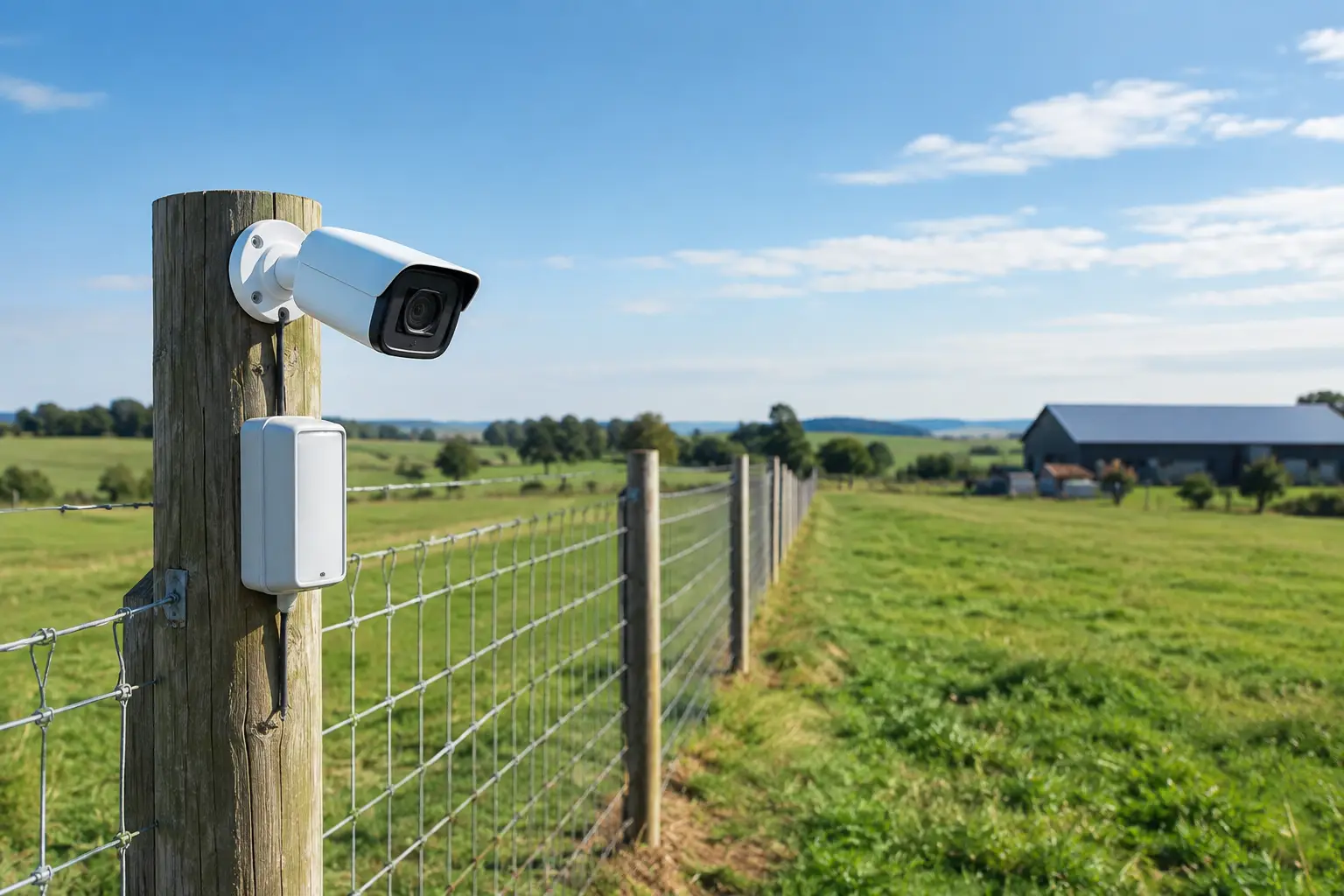
A missing quad bike, a gate left open, fuel taken from a yard or an unfamiliar vehicle near a livestock shed are rarely problems that begin at the building itself. They begin at the edge of the site. This guide to perimeter security explains how farms, estates, rural homes and business premises can create earlier warning, better visibility and a more practical response when something is not right.
Perimeter security is not about turning a working farm or rural property into a fortress. It is about understanding how people, vehicles and animals move around the site, then putting sensible measures in place at the points that matter most. A good system should deter opportunist crime, provide useful evidence when needed and avoid creating a daily nuisance for staff, family members or contractors.
What perimeter security means in practice
The perimeter is the outer boundary of a property, but on a rural site it is rarely a neat line. It may include field entrances, long driveways, yard gates, tracks, workshops, machinery sheds, stables, livestock buildings, fuel stores and isolated outbuildings. The boundary that needs protecting is often the operational one: the point at which an unauthorised visitor can get close enough to cause a problem.
For a domestic property, the priority may be a driveway, side access and rear garden. For a farm, it could be a combination of the main entrance, a less visible track used by contractors, the diesel tank and a machinery yard. A commercial yard may need controlled access for deliveries while keeping staff vehicles and stock areas secure.
That is why perimeter security starts with a site survey rather than a box of equipment. Distance, terrain, hedges, lighting, mobile signal, existing broadband and power availability all affect what will work reliably.
Start with the risks, not the camera catalogue
Before choosing CCTV, gates or alarms, consider the realistic risks on your site. Theft of tools, plant, fuel and livestock may require different coverage from trespass, fly-tipping or unwanted access to a private home. The likely time of an incident also matters. A busy daytime entrance may benefit from clear vehicle identification, while an isolated shed needs dependable overnight detection and alerting.
Walk the site as an intruder might. Ask where a vehicle could enter without being seen, where someone could approach under cover, and which routes are easiest to leave by. Look for blind spots created by buildings, trees, parked machinery or changes in ground level. Also consider legitimate access. A system that triggers every time a neighbour, delivery driver or stockperson arrives will soon be ignored.
It is useful to rank areas by consequence. The main gate may be highly visible but low risk, while a side track leading to fuel or valuable machinery may deserve more attention. This approach helps direct budget towards meaningful protection rather than spreading equipment too thinly across a large site.
Build your perimeter in layers
The strongest arrangements use several connected layers. A boundary fence or hedge may define the site, but it will not tell you who has entered. A locked gate delays access, but it cannot record a number plate. CCTV can provide visibility, while lighting makes activity harder to hide. Combined properly, each measure supports the others.
Physical measures should come first where they are practical. Secure gates, suitable locks, protected hinges, clearly defined vehicle entrances and sensible storage arrangements make opportunist access more difficult. Consider whether keys, fobs and gate codes are controlled properly, particularly where contractors or seasonal staff need access.
Lighting is equally useful, but it needs careful positioning. Well-placed lighting can remove dark approaches and improve camera images. Poorly aimed lighting can create glare, disturb neighbours or livestock, and actually reduce what a camera can see. Motion-activated lighting is often appropriate at a house, workshop or small yard, while consistently used entrances may suit controlled dusk-to-dawn lighting.
CCTV that detects the right activity
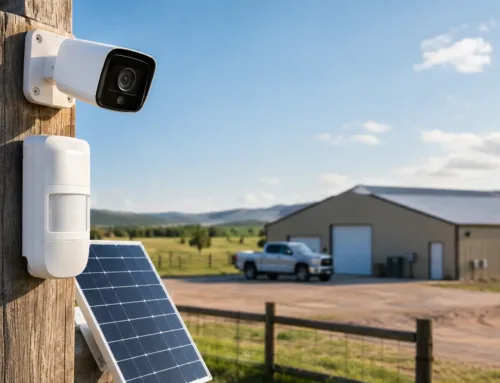
A perimeter camera should do more than produce a wide view of a gate. It needs to capture useful detail at the moment it is needed. A camera covering an entrance may be set up to identify people, distinguish vehicles and capture number plates where site conditions allow. A wider camera can then provide context, showing the direction of travel and what happened around the event.
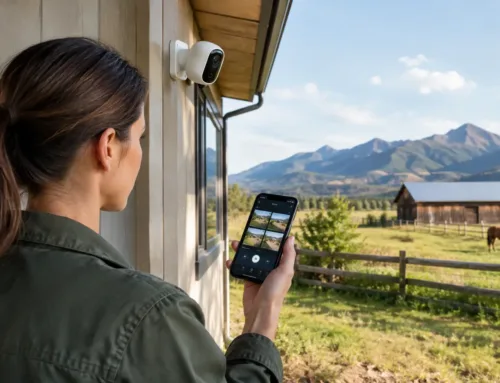
AI-enabled people and vehicle detection can be particularly valuable in rural locations. Rather than receiving a notification every time branches move, rain passes through the image or an animal crosses a yard, the system can be configured to focus on people and vehicles in selected areas. It is not faultless, and settings need to reflect the site, but it can greatly reduce nuisance alerts.
Camera placement is a trade-off between coverage and detail. One high-mounted camera may show a large yard, but it may not provide a usable face or registration mark. Several focused views may offer better evidence, provided the network and recording capacity support them.
Alarms, access control and response
Intruder alarms remain an effective part of perimeter protection, particularly for buildings and enclosed yards. External detection can give earlier warning, but outdoor sensors need professional positioning to reduce false activations from wildlife, weather and normal farm activity. In many cases, protecting the approach to a building and the building itself is more dependable than attempting to detect every movement across an open field.
Access control is worth considering where a gate is used frequently. Keypads, fobs, intercoms and automated gates can make entry easier to manage while creating a clearer record of who has permission to enter. The right choice depends on how many users there are, whether visitors need to call someone, and what happens during a power or communications failure. Manual override and safe exit arrangements should always be planned from the outset.
An alert is only useful if somebody can act on it. Decide who receives notifications, what they should check first, and when to contact a neighbour, keyholder or the police. For a large estate or business, a simple written response process prevents uncertainty when an alert arrives outside normal hours.
Connectivity is part of the security design
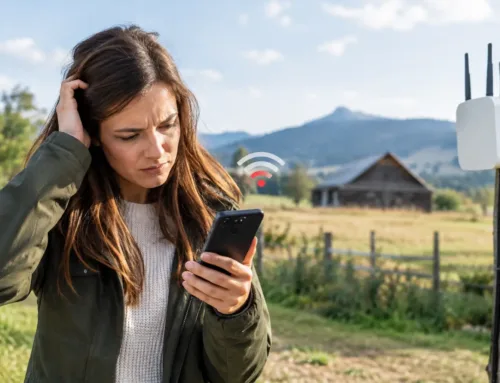
On many rural sites, the main challenge is not the camera itself but getting a stable connection and power to where the camera is needed. A shed at the far end of a yard may be beyond the reach of the house Wi-Fi. A gateway camera on a lane may be several hundred metres from the nearest building. Long cable runs are sometimes possible, but they are not always the best answer.
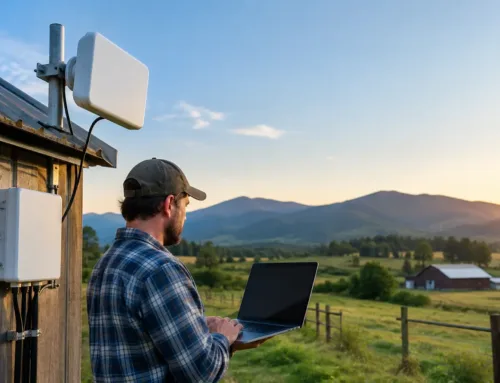
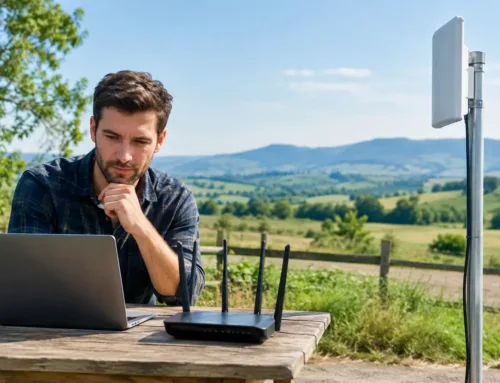
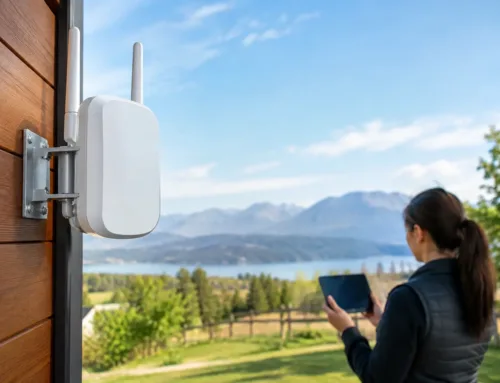
Wireless point-to-point links can extend a network between buildings or across a yard where there is clear line of sight. They can carry CCTV footage, alarms, access control and general connectivity without digging extensive trenches. Where no suitable fixed broadband is available, 4G, 5G or Starlink can provide the connection needed for remote viewing, alerts and cloud-enabled services.
However, remote monitoring should not rely solely on internet access. A well-designed CCTV system records locally, so footage remains available if a broadband connection drops. Internet connectivity then supports remote access and notifications rather than becoming a single point of failure.
Power also deserves attention. Cameras, wireless equipment, gates and lighting all need a reliable supply. For isolated locations, suitable solar and battery solutions may be possible, but winter daylight, equipment load and maintenance requirements must be assessed honestly. In some cases, moving the detection point closer to available power is the more dependable option.
A practical guide to perimeter security by site type
A rural home often benefits from a clear driveway view, coverage of side and rear approaches, lighting around vulnerable areas and an alarm protecting the building. The aim is reassurance without constant alerts from family, pets or passing wildlife.
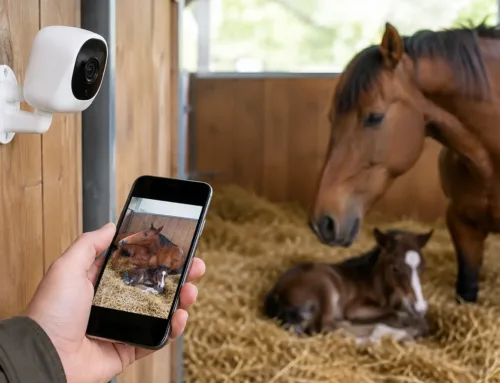
A farmyard usually needs a broader plan. Main and secondary entrances, machinery storage, fuel, workshops and livestock buildings may all be priorities. Livestock-monitoring cameras can support welfare during calving, lambing or foaling, but they should be treated as a separate operational need alongside security coverage. One camera position rarely performs both jobs perfectly.
For estates and large commercial sites, distance changes everything. Separate buildings may need wireless links, independent recording and carefully chosen camera locations rather than a single central system stretched beyond its limits. A phased installation can be sensible: protect the highest-risk assets first, then expand the network and coverage as budgets allow.
Maintain the system after installation
Perimeter security is only effective if it continues to work on a wet January night, not just on commissioning day. Keep camera lenses clean, trim vegetation before it enters the image, review recordings periodically and test alerts with the people expected to receive them. Check that time settings are accurate and that recordings are retained for an appropriate period.
Review access when staff change, contractors finish work or a property changes use. Gate codes and passwords that have been shared too widely can undermine otherwise good security. It is also sensible to revisit camera views after new buildings, grain stores, containers or machinery parking areas alter the layout of a site.
For properties with difficult terrain, remote buildings or poor broadband, an experienced local installer can bring the security and connectivity plan together. CUBTECH designs systems around how rural sites actually operate, from the first survey through installation, setup and ongoing support.
The best perimeter is one that fits the way you work: visible enough to deter, intelligent enough to alert you, and dependable enough that you trust it when the yard is quiet.