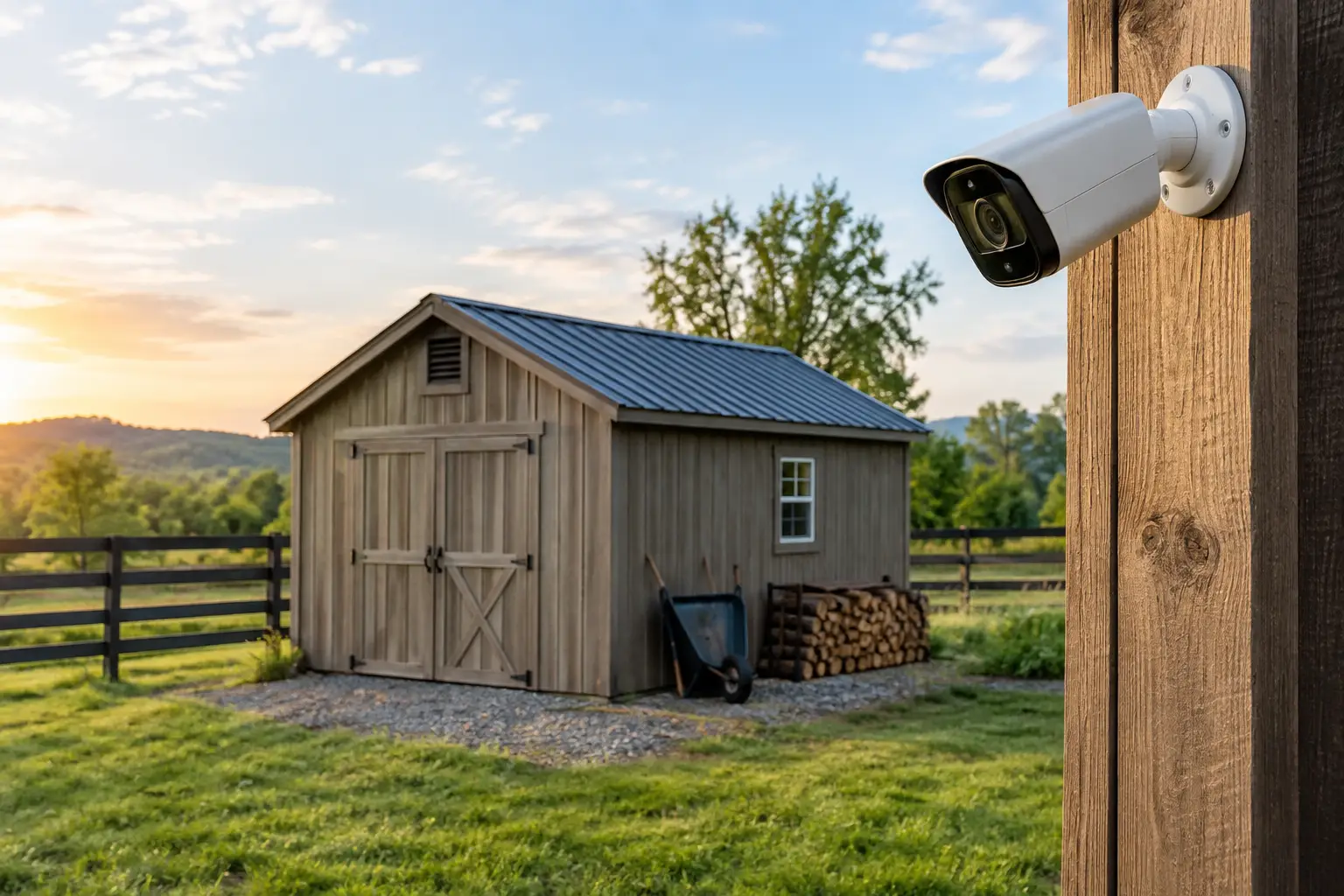
A machinery shed at the far end of a farm, a stable block beyond the house, or a workshop on an estate can be difficult to keep an eye on. These buildings often hold valuable equipment, fuel, tools, feed or livestock, yet may sit beyond the reach of household Wi-Fi and regular footfall. Knowing how to secure remote outbuildings means looking beyond a single lock or camera and building protection around the realities of the site.
The right setup depends on what is stored, how often the building is used, its distance from occupied premises and whether dependable power and internet are available. For many rural properties, the most effective answer combines sensible physical security with monitored detection, clear video evidence and a reliable connection back to the main site.
Start with the risks at your specific building
Remote outbuildings are not all exposed in the same way. A field shelter used for lambing has different priorities from a locked storage barn holding quad bikes and power tools. A commercial yard may need a record of vehicle movements and out-of-hours access, while a domestic garage may simply need early warning if someone approaches.
Walk the route a would-be intruder would take. Consider access from public roads, footpaths, gateways, neighbouring land and tracks that are rarely used at night. Look for blind corners, unlit doors, weak cladding, vulnerable windows and places where a vehicle could be loaded without being seen.
Also assess what a break-in would actually cost. The loss of a few tools is disruptive; the loss of a telehandler attachment, fuel supply, pedigree livestock or essential farm equipment can stop work altogether. This helps determine whether a visible deterrent is sufficient or whether the building needs active detection and remote monitoring.
Make forced entry harder and slower
Physical security remains the first layer. A camera is far more useful when it captures an intruder struggling to gain access than when it records an already-open door.
Check doors, frames, hinges and padlock points before adding technology. Steel security doors may suit higher-risk stores, but a sound timber door with reinforced hinges, a protected hasp and a quality closed-shackle padlock can be appropriate for lower-value buildings. Hinges exposed on the outside should be secured with hinge bolts or security studs, so removing the hinge pins does not release the door.
Windows are another common weakness. Fit internal grilles where appropriate, especially on workshops and stores with accessible windows. For buildings with plastic rooflights or lightweight cladding, consider whether an intruder could enter without touching the main door. Strengthening every surface is not always practical, so the aim is to protect the most likely entry points and ensure any attack creates noise, delay or an alarm activation.
Do not overlook keys. Leaving keys in a tractor, ATV, plant cab or nearby key safe can defeat otherwise good security. Keep an up-to-date record of keys and codes, remove access when staff or contractors leave, and avoid using the same padlock key across every building on site.
Use lighting that supports security, not just visibility
A well-placed light makes a remote building less attractive to approach and gives cameras a better chance of producing useful footage. Motion-activated LED lighting is often a practical starting point around doors, yards and vehicle bays. It avoids lighting an area unnecessarily through the night while making unexpected movement immediately more visible.
Position lights carefully. A fitting pointed directly into a camera can create glare and wash out faces or number plates. It is generally better to light the approach and entry point from the side, while cameras look across the scene rather than directly at the light source.
For sites with no mains power, solar lighting may help as a deterrent, but it should not be treated as the sole security measure. Winter daylight, shaded locations and battery performance can all limit reliability. Where dependable operation matters, a site survey can establish whether a wired supply, a suitable solar-and-battery system or another approach is realistic.
Choose CCTV around the question you need answered
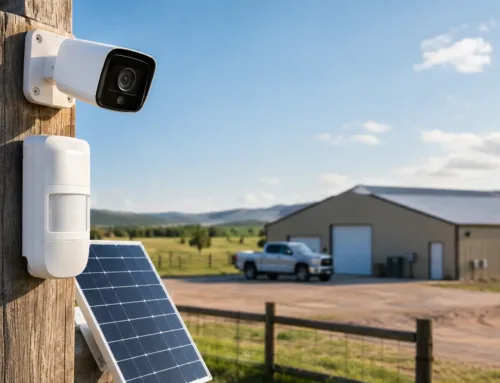
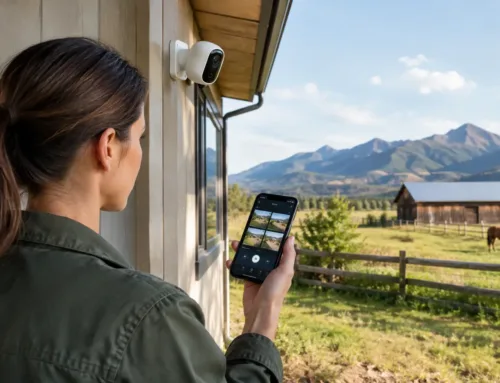
CCTV should be designed around what you need to see, not simply mounted wherever a camera can be fixed. At a remote outbuilding, the key questions are usually: who approached, which way did they come, did they enter, what did they take, and where did they go afterwards?
A single camera over a door may identify someone at close range, but it may not show the vehicle they arrived in. Equally, a wide view of a yard can show activity without providing enough detail for identification. A useful system often pairs overview coverage of the approach or yard with closer views at doors, gates, fuel tanks or equipment stores.
AI-enabled people and vehicle detection can make a major difference on rural sites. Rather than receiving repeated alerts for wind-blown branches, livestock or general movement, the system can be configured to notify you when a person or vehicle enters a defined area. It is not infallible, and settings need adjustment for each location, but it can make alerts more meaningful and easier to act on.
Night performance matters just as much as daytime image quality. Infrared cameras can cover many unlit areas, while additional lighting may be required where colour images, facial detail or vehicle identification are needed. Camera height also involves a trade-off: mount too low and equipment is easier to tamper with; mount too high and faces may be recorded only from above.
How to secure remote outbuildings without fixed broadband
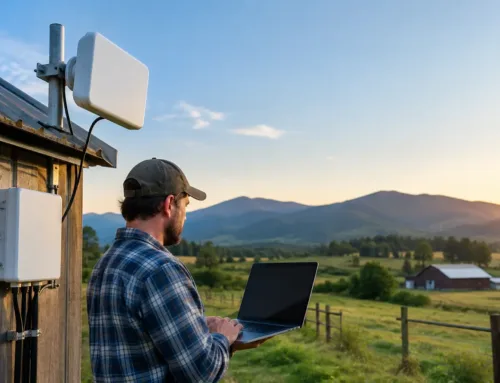
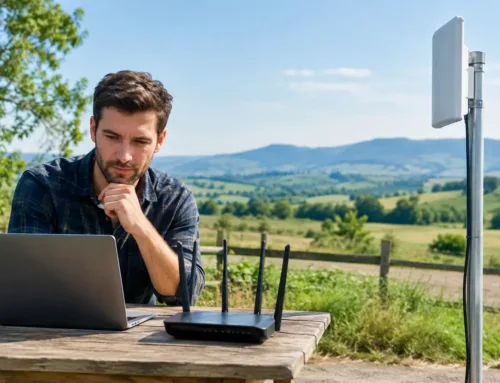
Poor broadband should not prevent a remote building from being protected. The connection between an outbuilding and the main house, office or recording point can often be created using a point-to-point wireless link. These links use directional equipment to carry network connectivity across yards, fields or estate land, avoiding the cost and disruption of digging long cable runs where a clear route is available.
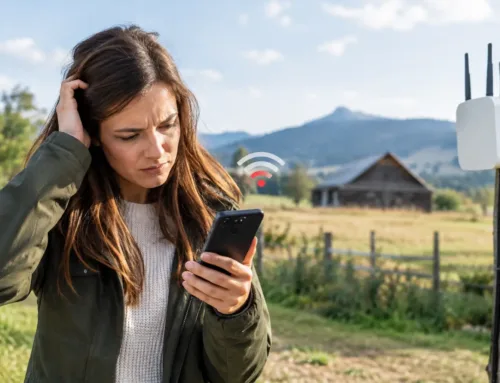
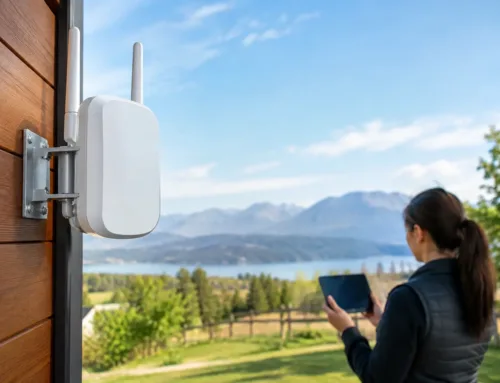
Where there is no suitable fixed connection at all, 4G or 5G may provide a workable route for CCTV alerts, remote viewing and alarm communication. Coverage must be tested at the building itself, not assumed from a mobile phone signal at the farmhouse. External antennas and correctly positioned equipment can significantly improve results in difficult locations.
Starlink can also be a suitable option for isolated sites, temporary compounds and locations where mobile coverage is poor. It needs a clear view of the sky and an appropriate power arrangement, but it can provide the connectivity needed for live monitoring where conventional broadband is unavailable.
Every option has practical limits. Wireless links need a viable path between buildings, mobile services depend on local signal conditions, and satellite connectivity can be affected by installation position and power availability. The value of a proper survey is that it identifies these constraints before equipment is chosen.
Add an intruder alarm for immediate warning
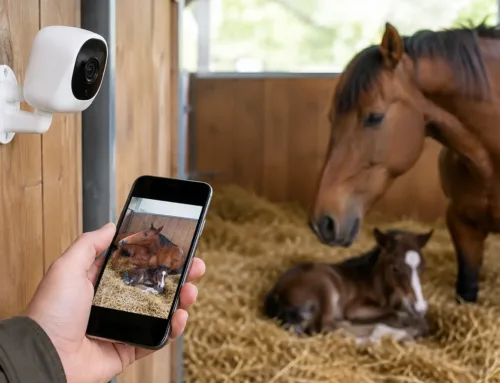
CCTV provides visibility. An intruder alarm provides a prompt response when somebody enters or attacks a protected area. For an isolated workshop, store or stable block, door contacts and motion detectors may be enough. Larger buildings can be divided into zones, allowing separate protection for offices, stores, workshops and livestock areas.
The right detection method matters. Standard motion sensors may not suit a barn with freely moving animals, birds or significant temperature changes. In these settings, perimeter protection, door contacts, beam systems or carefully selected detectors may be more reliable. Alarm design should reflect how the building operates, including early starts, staff access and regular deliveries, otherwise false activations quickly become a nuisance.
Consider how alarm signals will reach you. A system may notify keyholders through an app, use mobile communication as a backup, or integrate with a monitored response arrangement where appropriate. If the building is a considerable distance from the house, an audible siren alone is rarely enough.
Protect the wider site, not only the shed door
The best opportunity to detect unwanted visitors may be at the gate or track, well before they reach the outbuilding. Cameras covering entrances, gates and vehicle routes can provide earlier warning and a clearer record of movements. On larger farms and estates, this wider view also helps manage legitimate deliveries, contractors and staff.
Keep boundaries and approaches practical but controlled. Secure gates, maintained fencing and clear signage will not stop every determined intruder, but they define access points and make unauthorised entry less convenient. Avoid allowing vegetation to grow across camera views or around doors, where it can provide cover and create false alerts.
For valuable machinery, fuel and portable equipment, use additional layers. Mark and record serial numbers, keep equipment out of sight where possible, secure fuel tanks, and consider tracking for high-value mobile assets. Security is strongest when the loss of one layer does not expose everything at once.
Plan for daily use and ongoing support
A system that is awkward to operate will eventually be bypassed. Make sure the people who open the building know how to set and unset the alarm, view relevant cameras and report a fault. Decide who receives alerts, what they should do when one arrives, and who can attend if you are away.
Maintenance is equally practical. Clean camera lenses, trim vegetation, test alarm operation, check backup power where fitted and review footage quality as seasons change. A camera that worked well in summer may face low sun, mud, cobwebs or darkness in winter.
CUBTECH designs security and connectivity systems around the full site, from a single remote shed to a farm or estate with multiple buildings, long distances and limited broadband. The aim is not to add technology for its own sake, but to give you dependable visibility and early warning where it is genuinely needed.
A remote outbuilding should not become a blind spot simply because it sits beyond the yard lights or the home Wi-Fi. Start with the building, the route to it and the consequences of a break-in, then put in place security that remains useful on an ordinary wet Tuesday night as well as when an alert demands your attention.