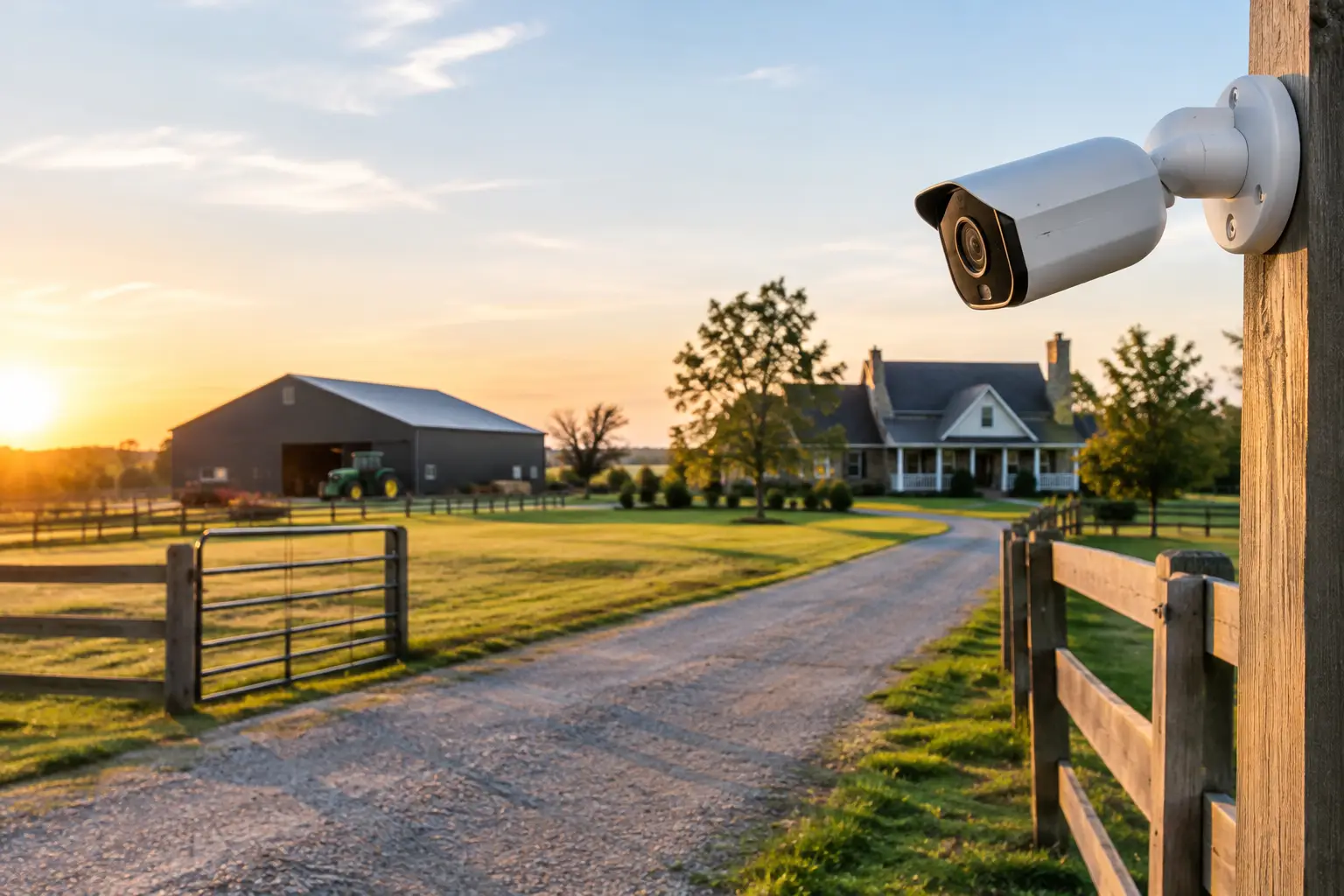
A gate left open after a delivery, a workshop standing empty overnight, or a calving shed out of sight from the farmhouse can create the same problem: you cannot respond to what you cannot see. This rural property security guide sets out a practical way to protect farms, estates, rural homes and business premises without assuming that every building has mains power, strong broadband or a clear cable route.
The most effective rural security is rarely a single camera on a wall. It is a considered combination of visible deterrence, early warning, reliable recording and connectivity that works across the whole site. The right arrangement should fit the way you actually use the property, from early starts in the yard to machinery movements after dark.
Start with the places that matter most
Rural sites are often spread over a large area, with a farmhouse, sheds, workshops, grain stores, livestock buildings, fuel tanks and remote gateways all carrying different risks. Trying to cover everything equally can waste budget and still leave critical areas exposed.
Begin with the assets, routes and activities that would cause the greatest disruption if they were compromised. For a farm, that may mean machinery storage, diesel tanks, chemical stores, livestock buildings and the main entrance. For an estate, it could be plant yards, outbuildings, staff accommodation, stables, access roads and vacant properties. A rural home may need particular attention around detached garages, workshops, driveways and rear access.
Think about what needs to happen when something is detected. Do you need a clear image of a vehicle entering the yard? An alert when someone approaches a closed building at night? Evidence of an attempted break-in? Or a quick visual check on livestock during lambing or calving? Those outcomes determine camera position, lighting, alarm coverage and the type of connection required.
A proper site survey is valuable here because rural locations introduce complications that are easy to overlook on a plan. Mature trees can obscure a view in summer, a dip in the land can block a wireless signal, and a gate that seems close by can be hundreds of metres from the nearest usable power or network point.
Build security in layers, not as isolated devices
Physical security remains the first layer. Good locks, secure doors, protected keys, sensible lighting and clear boundary management make opportunistic access harder. Cameras and alarms work better when they support these basics rather than trying to compensate for weak doors or unmanaged entry points.
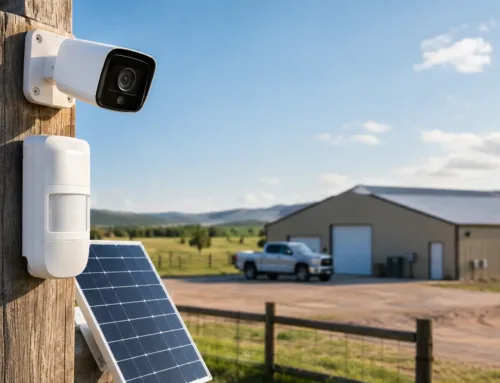
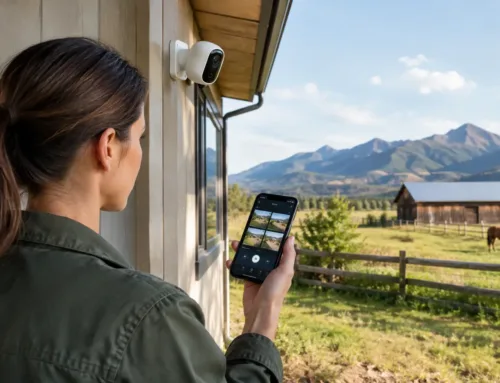
CCTV then provides visibility and evidence. The most useful systems are designed around key approaches and working areas, rather than simply covering every wall. A camera at a gateway can identify vehicles arriving and leaving. Coverage around a workshop or machinery shed can help verify activity and deter theft. Cameras inside livestock buildings can reduce unnecessary journeys and offer reassurance when animals need closer observation.
For many sites, AI-enabled people and vehicle detection is more useful than basic motion detection. Traditional motion alerts can be triggered by rain, branches, wildlife and changing light. Detection that distinguishes people and vehicles can make notifications more relevant, provided it is correctly set up and tested for the conditions on site. It is not infallible, particularly in poor weather or where visibility is limited, but it can greatly reduce the constant false alerts that lead people to ignore their system.
An intruder alarm adds a different form of protection. Cameras show what is happening; an alarm can provide immediate warning when a protected building or area is breached. Workshops, offices, stores and unoccupied houses are often suitable alarm priorities. The design should account for how staff, family members, contractors and cleaners access the building, otherwise an alarm becomes inconvenient and is less likely to be used consistently.
Good external lighting can strengthen both deterrence and image quality, but it needs careful positioning. Poorly aimed lights can create glare in camera footage, disturb neighbours or shine into a driver’s view. The aim is to make approaches and entrances visible without creating new blind spots.
Connectivity is part of the security system
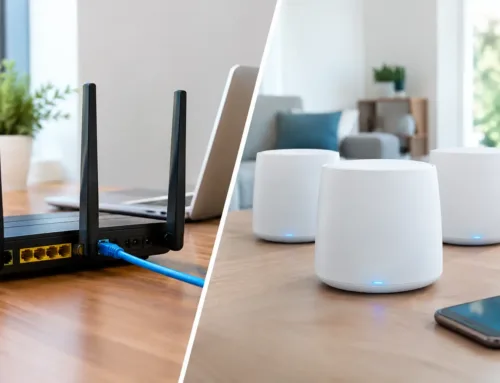
A camera system is only as useful as its ability to record, notify and be viewed when required. This is where rural security often differs from an ordinary domestic installation. Fixed-line broadband may be slow or unavailable, outbuildings may be beyond practical cable distance, and mobile coverage can vary across the same property.
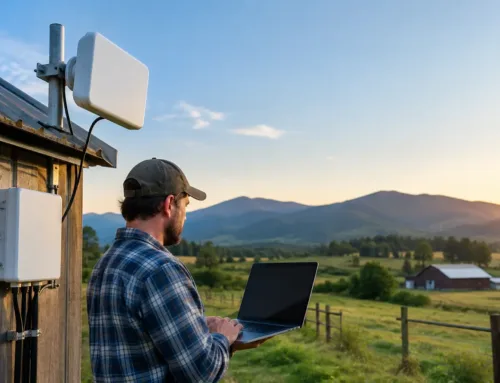
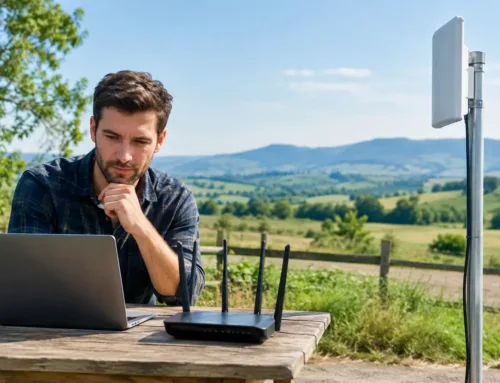
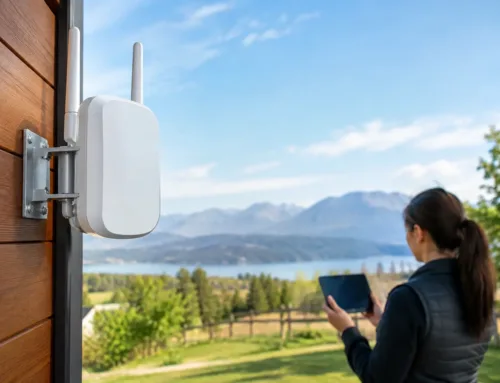
Where buildings are separated, a point-to-point wireless link can extend the network from the main property to a barn, gate, yard or remote office without trenching long cable runs. It needs a clear path between locations and a stable mounting point, so terrain and tree growth must be considered before installation. When it is suitable, wireless networking can provide a dependable way to connect CCTV, access points and other equipment across a larger site.
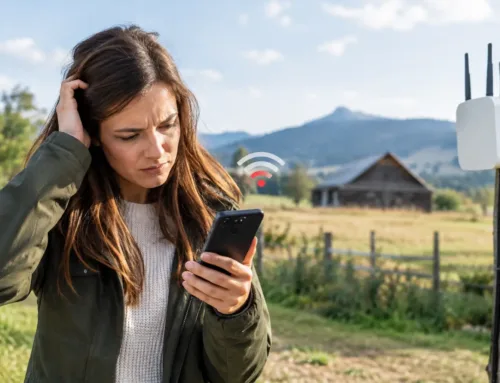
In locations with poor fixed broadband, 4G, 5G or Starlink can provide the connection needed for remote viewing, alerts and off-site access. The best option depends on local signal strength, data demands, building position and how critical continuous remote access is. A camera system can still record locally during an internet outage, but you may not receive live notifications or be able to view footage remotely until the connection returns.
That distinction matters. Local recording protects evidence; reliable connectivity gives you timely awareness. For a remote livestock shed or an isolated machinery store, both are usually worth planning for.
Make camera coverage useful after dark
Night-time performance is where many poorly planned systems fall short. A wide view of a dark yard may look impressive on a screen but provide little detail when you need to identify a person, vehicle or registration mark.
Place cameras according to the job they need to do. Overview cameras are helpful for monitoring activity across a yard, while more focused cameras can cover entrances, gateways or high-value storage. The height and angle need to balance tamper resistance with clear facial and vehicle views. Positioning a camera too high often results in footage of hats, roofs and bonnets rather than useful identification.
Infrared cameras can perform well in darkness, but nearby reflective surfaces, cobwebs, dust and heavy rain can affect the image. External lighting may improve colour footage, yet it should be selected and installed to suit the environment. Test views at the times when the risk is highest, not only on a bright afternoon during installation.
Protect livestock, people and day-to-day operations
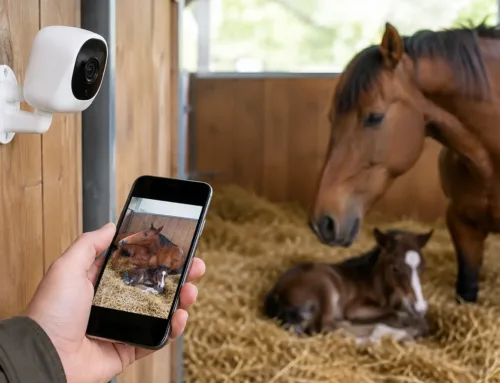
Security cameras on rural sites are not solely about crime prevention. A well-positioned camera in a calving, lambing or foaling area can help reduce unnecessary checks while still allowing close observation when it matters. The objective is better visibility, not replacing good stockmanship or regular physical checks.
For staff safety, cameras can also provide oversight around isolated work areas, loading zones and entrances. If lone working is common, consider how an alarm, lighting and communication plan supports the person on site. Technology is most helpful when everyone understands what it does, when alerts are acted on and who has responsibility for responding.
Privacy also needs thought. Cameras should be directed at your own property and operational areas, not unnecessarily into neighbouring homes, public roads or private spaces. Clear signage can act as a deterrent and helps make the presence of surveillance transparent. If staff are recorded, explain why the system is in place and how footage is handled.
Keep the system dependable
A rural security installation should be treated as working equipment, not a fit-and-forget purchase. Lenses need cleaning, vegetation needs cutting back, batteries and backup power need checking, and camera views should be reviewed as buildings, gates and machinery layouts change.
Set up sensible user access from the start. Household members, farm managers and key staff may need different levels of access. Remove access promptly when someone leaves, use strong individual passwords, and keep recording equipment in a secure location. If a recorder is easily found and removed during a break-in, valuable footage can disappear with it.
It is also worth agreeing what an alert means in practice. A notification at 2am is only useful if someone knows whether to check live footage, contact a neighbour, attend safely or call the police. Do not put yourself at risk by confronting an intruder. Record what you can, prioritise safety and report suspicious activity through the appropriate channels.
A rural property security guide should begin with a survey
The right specification depends on the site. A compact rural home may need a small number of carefully positioned cameras and an alarm, while a working farm could require multi-building CCTV, wireless links, network infrastructure and an alternative broadband service. Adding equipment gradually can be sensible, but the first stage should allow for future expansion rather than creating disconnected systems.
CUBTECH approaches this by surveying the property, identifying the practical limitations and designing security and connectivity together. That avoids a common rural problem: installing cameras first, then discovering there is no reliable way to view them at the buildings or locations where they are needed.
Start with the area that would worry you most on a dark winter evening, then work outward from there. A clear view, a dependable alert and a connection you can rely on are often the difference between simply owning security equipment and having genuine confidence in your property’s protection.