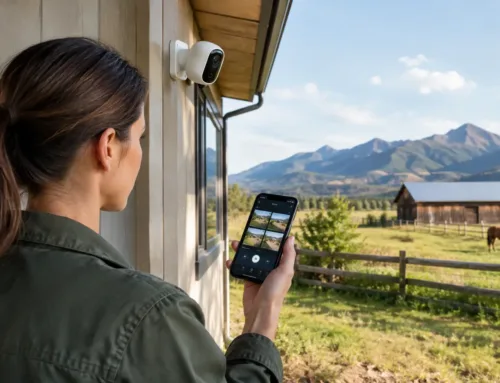
A farm office with 20Mbps broadband can feel manageable until the CCTV footage will not load, the card machine drops out and the family’s devices come online after school. That is where the fibre versus 5G decision becomes more than a question of advertised download speeds. It affects security monitoring, livestock cameras, office work, guest Wi-Fi and whether remote buildings can operate properly.
For many North Yorkshire properties, the right answer depends less on which technology is ‘best’ and more on what is physically available at the site, how the connection will be used and how much downtime the operation can tolerate. Fibre is usually the first choice where full fibre is available. 5G can be an excellent alternative where it is not, particularly when installed with the right external equipment and tested properly on site.
Fibre versus 5G: the practical difference
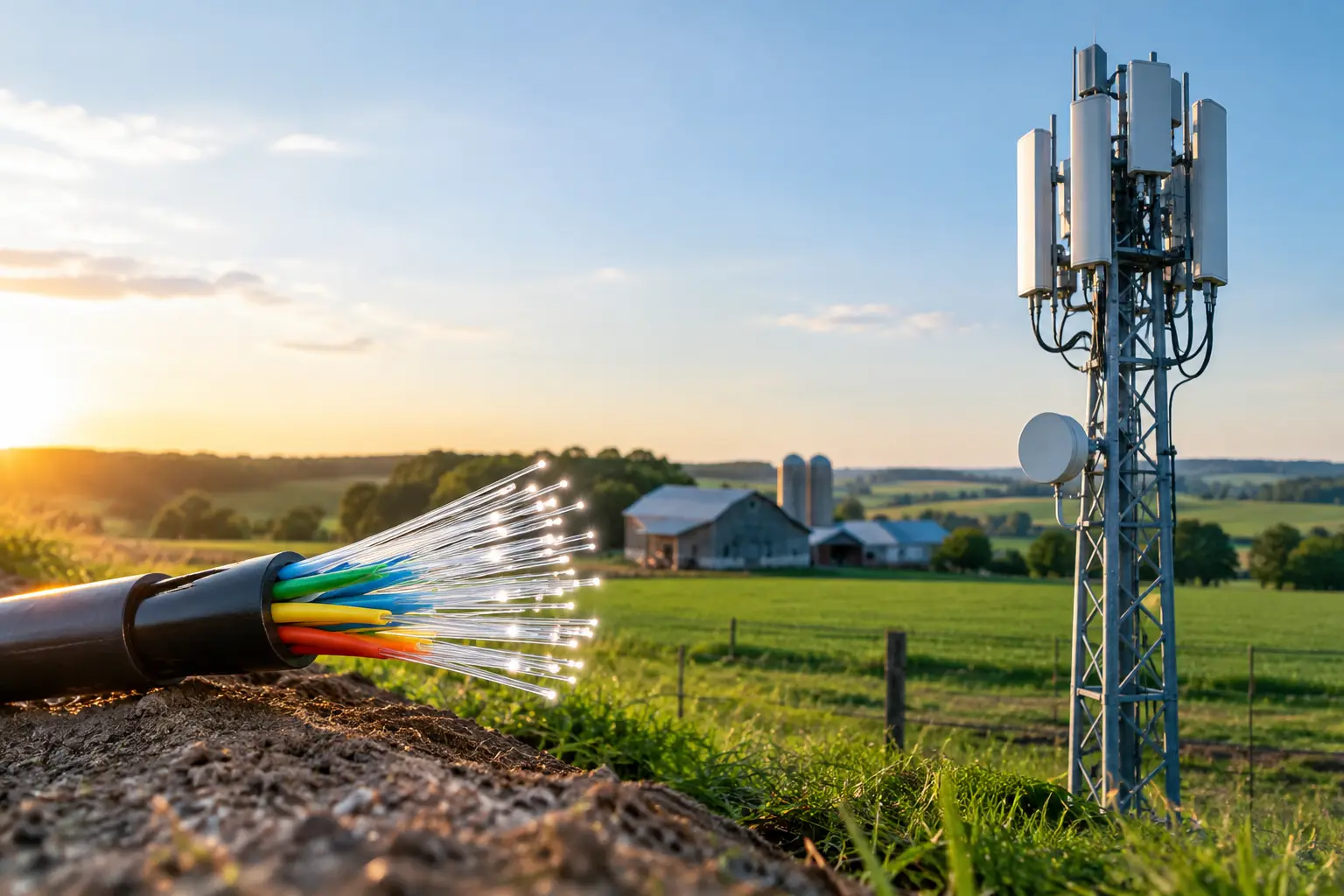
Fibre broadband carries data through a physical cable. Full fibre, also known as fibre to the premises or FTTP, runs fibre optic cable all the way to the building. It is generally very consistent, offers high capacity and is not affected by mobile network congestion in the same way as wireless services.
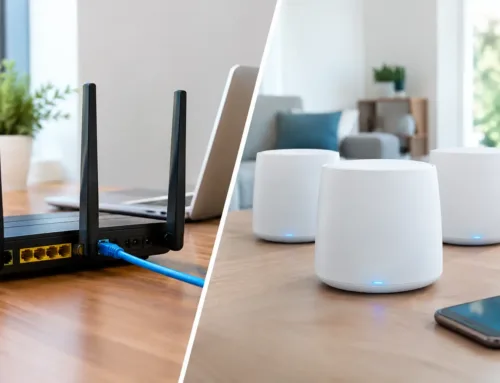
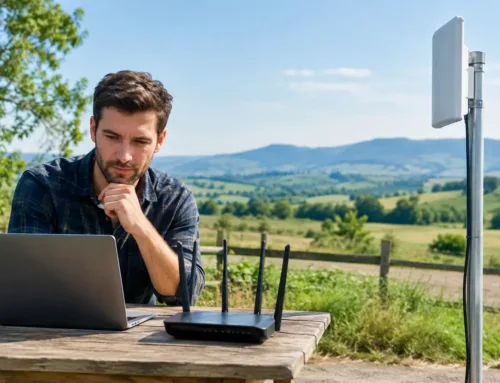
5G broadband uses the mobile network. A 5G router receives a signal from a nearby mobile mast, then distributes internet around the property by Wi-Fi or, preferably for fixed equipment, wired Ethernet. It can provide very strong speeds in rural areas with good coverage, but results vary with distance from the mast, terrain, building materials, local demand and the quality of the installation.
There is also a significant distinction between full fibre and part-fibre services. Some connections advertised as fibre use fibre only as far as the roadside cabinet, with older copper cable completing the route to the property. This is commonly called fibre to the cabinet, or FTTC. It may be a useful improvement on older broadband, but it does not offer the same performance or future capacity as FTTP.
When fibre is the better choice
Where full fibre is available and can be installed at a sensible cost, it is normally the strongest primary connection for a home, farm office or commercial premises. It is particularly suited to sites that rely on cloud systems, regular video calls, large file transfers or multiple users online at once.
The upload speed matters as much as download speed for many rural customers. A CCTV system sends footage and alerts out from the property. Livestock cameras need to transmit live video. Backing up files off-site, accessing a desktop remotely and hosting calls from an office also depend on upload capacity. Full fibre commonly provides much better and more predictable upload performance than older copper broadband, and it can be more consistent than a mobile connection during busy periods.
Fibre is also a sound choice when the connection will support several systems at once. A farmhouse may have family devices and smart TVs, while the wider site has office users, a card terminal, cameras at the workshop and a wireless link to another building. With appropriate network design, fibre gives the site a dependable foundation to build from.
That does not mean fibre automatically reaches every useful location. The main building may have fibre while a cattle shed, holiday cottage, gatehouse or machinery store sits hundreds of metres away. Running cable can sometimes be right, but trenching across yards, fields or driveways is disruptive and expensive. A point-to-point wireless link can often extend the fibre connection to those buildings without the civil works, provided there is a clear and stable path between them.
Fibre limitations on rural sites
The issue with fibre is often availability rather than performance. A property can be only a short distance from a village with full fibre and still face a long wait or a high excess construction charge. The last section of the route is usually the difficult part, especially where there are private tracks, scattered buildings or wayleave considerations.
Installation times can also be longer than customers expect. A provider may need to survey the route, arrange network work or bring service across land before the final appointment can take place. If connectivity is urgent for a new office, temporary event or security installation, waiting for fibre alone may not be practical.
When 5G makes better sense
5G is often the most effective answer for sites with poor fixed-line broadband but a usable mobile signal. It can be installed far more quickly than a new fibre service and, under the right conditions, can deliver speeds that transform everyday use.
It is particularly useful for farm offices, rural homes, holiday lets, portable cabins, gatehouses and sites where digging a route for fibre is unrealistic. It can also provide internet for a temporary requirement, such as an event, building project or seasonal operation.
The crucial phrase is ‘under the right conditions’. A phone showing a 5G symbol indoors is not enough evidence to choose a service. Phones move around, use different antennas and may switch between network bands without making it obvious. A proper survey considers the available networks, signal strength, signal quality, likely mast direction, obstructions and the best location for the receiving equipment.
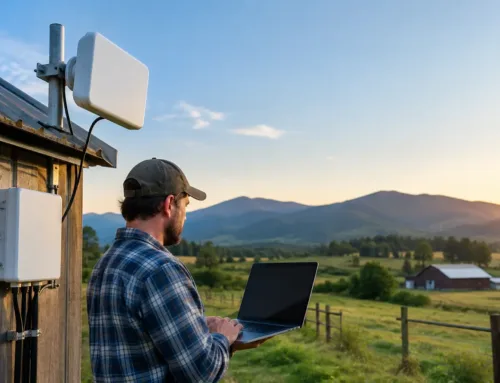
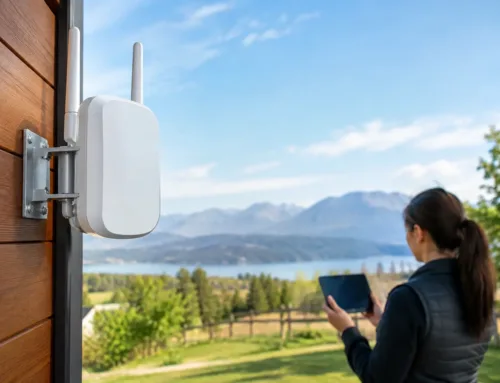
At many rural sites, an external 5G antenna mounted high on a suitable building can make a substantial difference. It may receive a cleaner signal than a router sitting on a windowsill, particularly where thick stone walls, metal cladding or surrounding ground interrupt reception. The router can then feed a wired network and properly positioned Wi-Fi access points, rather than expecting one indoor unit to cover a farmhouse, yard and outbuildings.
The trade-offs with 5G
5G performance is shared with other users on the mobile network. Speeds can change by time of day, and a connection that tests well in the morning may slow when the local mast is busy. This is not always a problem, but it matters for sites that need predictable capacity for several HD cameras or business-critical systems.
Terrain has a major effect too. Hills, woodland and valleys can block or reflect signal. A nearby mast is not necessarily the best mast, and an apparently distant one may offer a better path across open ground. Heavy rain does not usually stop 5G working, but foliage, building changes and interference can all influence a marginal signal.
Mobile services can also have networking limitations. Some use carrier-grade network address translation, which means devices do not receive a public-facing IP address. This can affect certain forms of remote access, although reputable CCTV and alarm platforms are designed to provide secure app-based access without opening ports. For specialist equipment or business systems, it is worth checking the requirement before selecting the connection.
Think about the systems behind the broadband
The best connection is only part of the job. A fast service will still disappoint if poor Wi-Fi coverage, unsuitable switches or overloaded hardware create bottlenecks inside the property.
For a farm or estate, it helps to separate the question into two parts: how internet reaches the main building, and how it reaches the places that need it. Fibre, 5G or satellite may supply the first part. Wired network infrastructure, external wireless links and managed Wi-Fi provide the second.
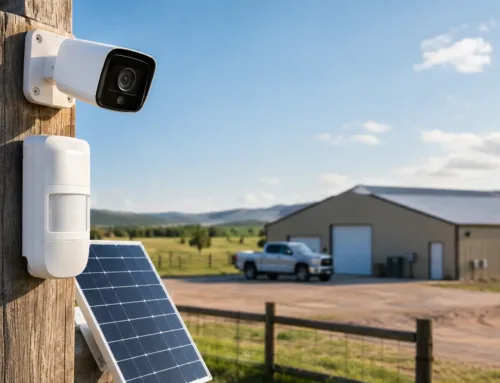
Security systems benefit from this approach. Cameras in a yard or shed should not be competing with family streaming devices over weak domestic Wi-Fi. A properly designed network can give priority to essential equipment, use wired connections where possible and create separate access for visitors, staff or holiday accommodation. It also makes future expansion easier when another camera, office or building is added.
Power resilience deserves attention as well. Fibre and 5G equipment both need electricity. If a power cut is common, a suitable uninterruptible power supply can keep the router, network equipment and selected cameras operating for a period. For higher-risk premises, a backup connection can provide added reassurance.
A primary connection and a backup are not the same thing
For a home, choosing one good connection may be sufficient. For a business handling payments, remote access or security monitoring, the cost of losing internet can be far greater than the cost of a secondary service.
A practical arrangement might use full fibre as the main connection, with 4G or 5G ready to take over if the fixed line fails. At a site where 5G is the only viable primary option, a second SIM on another network, or a satellite connection for selected uses, may be worth considering. The right setup depends on the critical systems and the level of continuity required.
Automatic failover can switch traffic to the backup service when the primary line drops. It will not always preserve every call or live session, but it can keep alarms, remote access, card payments and day-to-day work moving while the fault is investigated.
How to choose for your property
Start with the work the connection must do, not the maximum speed quoted on a leaflet. Count the cameras that need remote viewing, the people using the network, the buildings that need coverage and the systems that must remain available. Then assess the services that can genuinely be delivered to the site.
If full fibre is available, it is usually the preferred long-term connection. If it is unavailable, delayed or disproportionately expensive, a surveyed 5G installation can be a highly capable solution. In some cases, the sensible answer is both: fibre for day-to-day capacity and 5G as protection against faults.
A site survey turns assumptions into a workable plan. CUBTECH can assess available connectivity, test the practical options and design the network around the buildings, security systems and working areas that matter most. The aim is not simply to get internet into a property, but to make sure it reaches the people, equipment and places that depend on it.