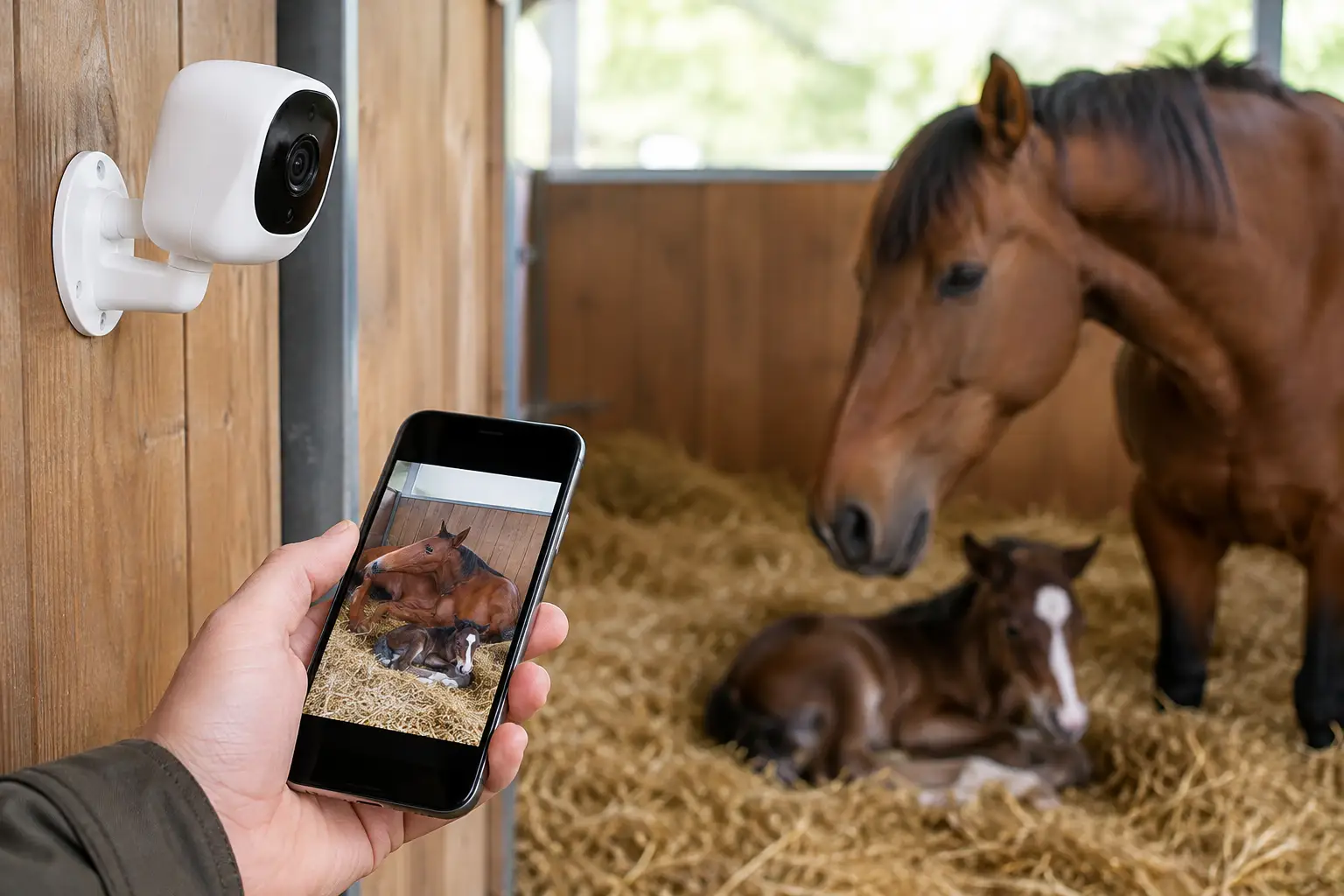
A mare can look settled at the last check, then foal quickly and quietly an hour later. That is why a well-planned camera system earns its place in the foaling yard. This guide to foaling cameras explains what matters in practice: seeing the stable clearly at night, receiving a reliable feed where you need it, and avoiding technology that creates more work during an already demanding season.
A foaling camera does not replace experienced stockmanship or regular checks. It gives you better visibility between them. Used properly, it can reduce unnecessary trips to the yard, help you spot changes in behaviour sooner and provide welcome reassurance when a mare is close.
Start with the stable, not the camera
The best system begins with an honest look at the foaling box. Camera choice is secondary to whether the position will give a useful, uninterrupted view. You need to see the mare’s full body when she is standing and lying down, plus the area where she is most likely to foal.
Mounting a camera high in a corner is often effective, provided beams, doors and partitions do not create blind spots. A wide-angle view is useful in a standard box, but an excessively wide lens can make the mare appear too small on screen. In larger loose boxes, two viewpoints may be more useful than one expensive camera, particularly where a partition, feed area or deep bedding obscures part of the floor.
Think about daily life in the stable as well. The camera and cable route must be out of reach of inquisitive horses and protected from dust, moisture and the occasional knock from equipment. A professional installation should keep equipment tidy and serviceable rather than leaving vulnerable leads across rafters or walls.
What a foaling camera needs to show at night
Most foaling happens when light is low, so night performance is central to any guide to foaling cameras. Infrared night vision allows the camera to produce a black-and-white image without illuminating the stable in a way that may disturb the mare. The useful question is not simply whether a camera has night vision, but whether it delivers a clear image across the full depth of your box.
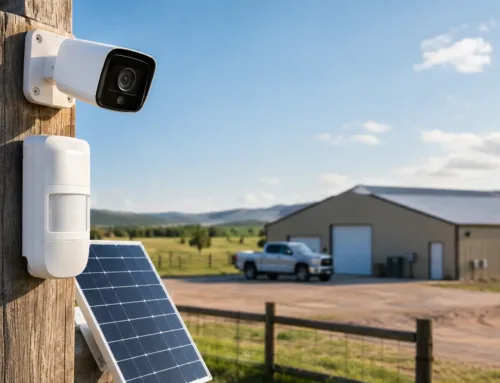
Cheap indoor cameras can work in a small, bright stable, but they often struggle with contrast, shadows and detail once conditions are less forgiving. A purpose-selected CCTV camera can offer stronger infrared coverage, a more stable image and better performance in dusty agricultural buildings.
Avoid placing the camera directly opposite a doorway, window or bright security light. Strong backlighting can leave the mare as a dark outline. During commissioning, test the picture in daylight, with stable lighting on, and in complete darkness. It is far better to correct an angle before a mare is due than at two o’clock in the morning.
Audio can be helpful, particularly for hearing movement or a restless mare, but it should be treated as an extra rather than the main reason to choose a system. A clear picture remains the priority.
Choose connectivity for the reality of the yard
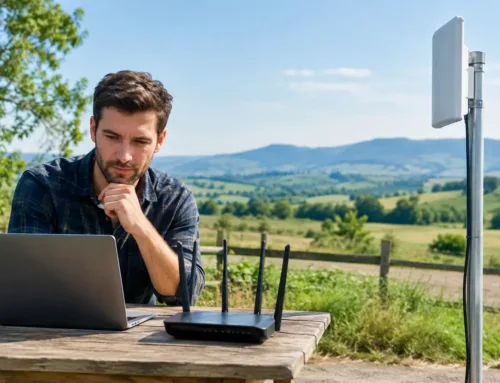
A camera is only useful if you can view it reliably from the house, office or when you are away from the farm. Rural sites often have the right camera but the wrong network plan. Thick stone walls, metal-clad sheds, distance between buildings and weak fixed-line broadband can all affect the result.
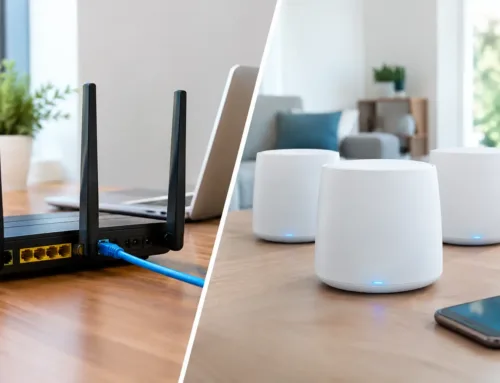
Where the foaling boxes are close to the main property, a wired network connection is usually the most dependable option. Network cable provides a stable route for the camera feed and can often supply power to the camera at the same time. It is particularly suitable for new builds, refurbished stables and sites where cable routes can be installed properly.
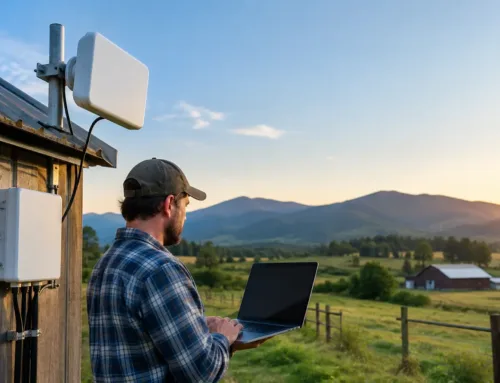
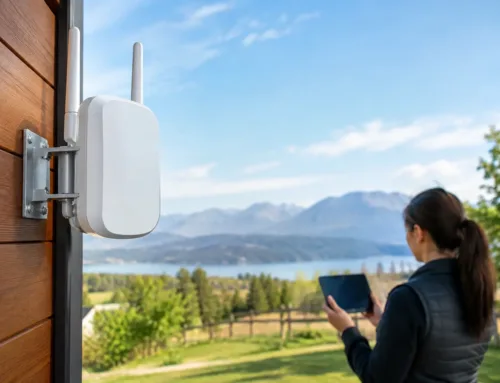
For more distant buildings, a point-to-point wireless link can carry the network across a yard or field without trenching long cable runs. It needs a clear enough path between buildings and equipment selected for the distance and environment. Wireless does not mean unreliable when it is designed and installed correctly, but domestic Wi-Fi extenders are rarely the answer for a separate stable block.
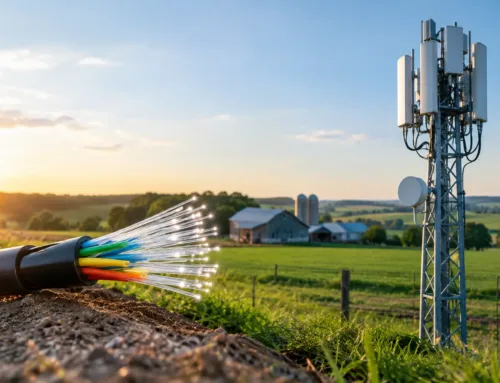
If the existing broadband is poor, 4G, 5G or Starlink may provide the connection needed for remote viewing. The right approach depends on mobile signal, data use, line of sight, the number of cameras and whether the connection will also support farm office work, household internet or other security systems. A site survey helps establish where the real constraint sits.
Live viewing, recording and alerts
Live viewing is the feature most owners expect, but recording is equally worthwhile. A local recorder gives you a continuous record of activity in the box and means that footage does not depend entirely on a cloud subscription or an internet connection remaining available. It can also help you review behaviour leading up to foaling or check an event that was missed overnight.
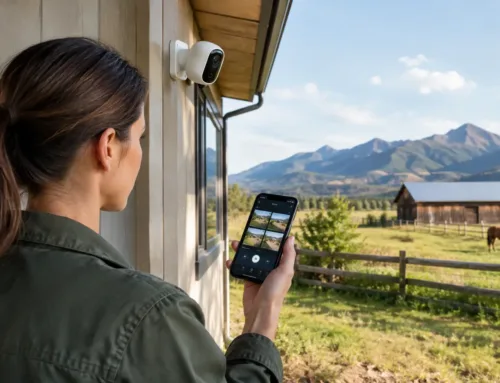
Remote access should be simple enough for the people who will actually use it. The ideal setup lets you view a clear live image on a mobile phone, tablet or computer without changing settings every evening. Make sure more than one trusted person has access if responsibility is shared.
Alerts need a measured approach. Motion notifications inside a stable can become tiresome because a mare shifts, lies down, gets up and bedding moves constantly. If alerts are used, they should be configured carefully and tested. In some setups, a camera’s intelligent detection features can be more valuable for monitoring activity around the stable yard than for sending constant notifications from inside the box.
Power, resilience and sensible backups
Foaling season has an awkward habit of exposing weak points. Power cuts, an overloaded router or an accidentally unplugged extension lead can take a camera offline just when it is needed. Fixed, professionally installed power and network equipment is safer and more reliable than relying on temporary plugs and consumer-grade adapters.
For sites where continuity is especially important, consider a small battery backup for the recorder, network switch and broadband equipment. It will not keep a system running through every lengthy outage, but it can bridge short interruptions and prevent a restart from leaving the system inaccessible. If mobile or satellite connectivity is used, check what equipment also needs backup power.
It is also worth agreeing a simple fallback routine. If the feed drops, who checks the mare, and how quickly? Technology should support your foaling plan, not create uncertainty when something changes.
A practical pre-season check
Before mares come in, run the system as if it were a busy night. Check the image on every device likely to be used, walk into the box after dark and make sure the camera still shows useful detail. Clean the lens and check that spiders, dust or cobwebs have not softened the image.
Use this short checklist before the season starts:
- Confirm the camera view covers the whole foaling area, including when the mare lies down.
- Test infrared night vision with stable lights switched off.
- Check remote viewing on both home Wi-Fi and mobile data.
- Confirm recording is active and that the recorder has enough storage space.
- Make sure nominated family members or staff can log in and know the fallback plan.
Do not wait until the first mare is close to term to test passwords, app permissions or signal strength. A calm ten-minute test in advance is worth much more than troubleshooting during a late-night check.
When a tailored installation makes sense
A single camera in a nearby stable may be straightforward. The picture changes when you have multiple foaling boxes, a detached yard, weak broadband or a need to integrate cameras with wider CCTV coverage, gate monitoring and reliable farm connectivity.
In these cases, the value is in system design as much as equipment. CUBTECH can survey the stable layout, identify practical cable or wireless routes, assess connectivity and set up viewing and recording around how the yard operates. That means one accountable installer for the camera, network and the support behind it.
The right foaling camera system should fade into the background once installed. You should be able to glance at a clear picture, make a better decision about whether to go to the yard, and keep your attention where it belongs: on the mare and foal in front of you.