A break-in at a workshop, machinery shed or rural office rarely happens at a convenient time. Buildings can be spread across a farm or estate, staff may leave at different times, and the nearest neighbour could be half a mile away. The right commercial alarm options give you a clear warning when something is wrong, without creating a system that is difficult to use or constantly triggering false alerts.
For rural businesses, farms and larger properties, an alarm should be designed around how the site operates. That means considering building layout, valuable equipment, access routes, staff routines, connectivity and the response needed when an alarm activates. A small retail unit and a 500-acre estate do not need the same approach.
Start with the risks on your site
Before choosing equipment, look at what needs protecting and when it is most exposed. A farm may have a machinery building full of high-value kit, a fuel tank in an open yard, a workshop with tools and a calving shed that needs to remain accessible at all hours. A commercial yard may have several units, gates, offices and stock stored outside.
The question is not simply whether an intruder can enter a building. It is whether they can do so unnoticed, how quickly you need to know, and what evidence or response will be available afterwards.
A site survey is particularly useful where buildings are detached, construction varies between old and new, or signal and broadband coverage are uncertain. It allows alarm devices, communications equipment and control panels to be selected for the actual site rather than an assumed floor plan.
Commercial alarm options to consider
Most commercial intruder alarm systems combine several detection methods. The right mix depends on the building, the level of risk and the day-to-day use of the premises.
Wired alarms for permanent buildings
A wired alarm uses cabled sensors connected to a control panel. It is often a strong choice for new builds, refurbishments or premises where cable routes can be installed neatly and protected properly. Wired systems do not rely on batteries in each detector, which can make long-term maintenance more straightforward.
For a main office, workshop, shop, school building or substantial farm building, a wired system can offer dependable coverage and room to expand. The trade-off is installation time. Running cables through an occupied building, a listed property or a large shed with difficult access can be more involved than fitting wireless devices.
Wireless alarms for flexible coverage
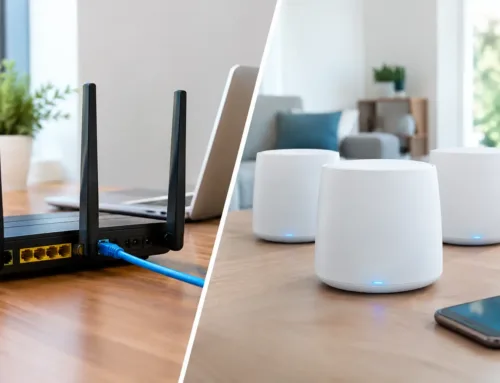
Wireless alarms are useful where running cables would be disruptive, costly or impractical. Detectors, door contacts, keypads and panic buttons communicate with the panel by secure radio signal. This makes them well suited to occupied offices, converted barns, temporary cabins and sites that may change over time.
Modern commercial wireless systems can be highly reliable when they are surveyed and installed correctly. Battery status can be monitored, and devices can be added as a business grows. However, large metal-framed sheds, thick stone walls and long distances between buildings can affect radio performance. These are not reasons to rule out wireless equipment, but they are reasons to plan carefully.
Hybrid systems for mixed sites
Many rural and commercial premises are best served by a hybrid alarm. This combines wired devices in practical areas with wireless detectors in outbuildings, offices or difficult-to-cable spaces.
A hybrid approach can be particularly effective on farms and estates that have developed over decades. A control panel in the main office can protect nearby buildings with wired devices, while separate wireless sections cover a detached workshop or staff area. Where buildings are too far apart for either alarm cabling or direct wireless signal, each may need its own system linked through suitable communications and monitoring arrangements.
Perimeter and external detection
Internal motion detection is essential, but it only activates once somebody is inside. For sites with long approaches, vulnerable yards or high-value equipment stored outdoors, perimeter protection can provide earlier warning.
Options include gate contacts, beam detectors, external motion sensors and monitored access points. Used well, these can tell you when a person or vehicle enters a restricted area before they reach the building. Used poorly, they can lead to nuisance activations from wildlife, wind-blown vegetation or normal site activity.
External detection needs careful positioning, appropriate sensor technology and sensible zoning. On a working farm, for example, a detector covering the route used by staff and livestock is unlikely to be useful unless it can be set differently at particular times.
Panic alarms and staff protection
An intruder alarm is not only about protecting property after hours. Reception staff, lone workers, yard teams and people working late may benefit from fixed or portable panic devices. These can raise an immediate alert without requiring someone to make a call in a difficult situation.
The right response should be agreed in advance. A panic button that only sounds a local bell may suit one setting, while another business may need an alert sent to keyholders, a monitoring centre or security staff. The system should support your procedures, not replace them.
Communication matters as much as detection
An alarm is only useful if the alert reaches the right person. Traditional phone-line signalling is no longer suitable for many premises, particularly where fixed lines are unreliable or being withdrawn. Commercial systems can use broadband, mobile data or a combination of both to communicate alarm events.
For rural sites, a dual-path communicator is often worth considering. This uses two separate routes, such as broadband and 4G or 5G, so that an alarm can still report if one service fails. It is not necessary for every building, but it makes sense where the consequences of an undetected incident are significant.
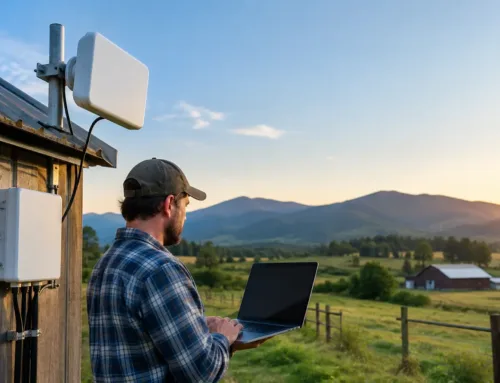
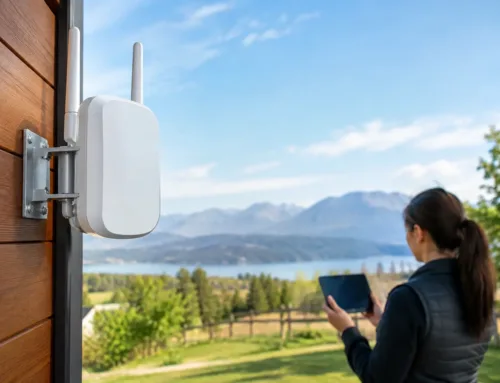
Poor fixed-line broadband does not automatically prevent remote alarm management. Mobile connectivity or a professionally installed Starlink connection may provide the reliable route needed for alarms, CCTV and wider site networking. The suitability depends on coverage, available power, data requirements and the number of devices sharing the connection.
Choose the response that fits the risk
When an alarm activates, there are several possible actions. At a basic level, an external sounder and internal siren can deter an intruder and alert anyone nearby. App notifications and calls to nominated keyholders provide a fast warning, especially for owner-managed businesses.
For higher-risk sites, monitored signalling can pass verified alarm information to an alarm receiving centre. Depending on the service and police response eligibility, this may support a more formal response process. Monitoring adds ongoing cost, and keyholders still need clear instructions, but it can be valuable when a property is remote or frequently unattended.
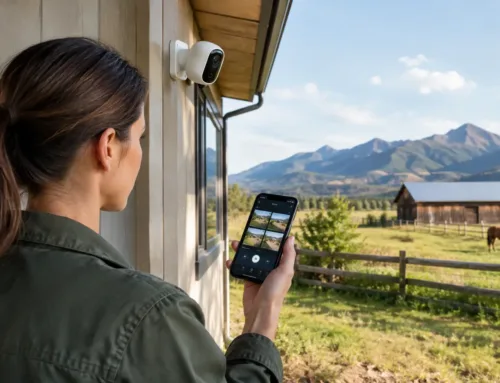
CCTV can strengthen the decision-making process. An alarm notification paired with a camera view lets an authorised user see whether there is a person on site, a vehicle at the gate or an issue caused by routine activity. AI-enabled people and vehicle detection can reduce irrelevant notifications in suitable locations. It should be configured carefully, particularly around public rights of way, access tracks and livestock areas.
Design around daily use, not just closing time
The best system is one people can set correctly. If staff need to walk through a building before dawn, if a cleaner works late, or if different tenants occupy separate units, the alarm needs sensible areas and permissions.
Partitioning allows one section of a site to be armed while another remains in use. A farm office might be set overnight while a nearby welfare room remains accessible. A multi-unit yard may allow each occupier to arm their own area without controlling the whole site. Keypads, fobs, proximity tags and app access can all be used, but access should be reviewed when staff leave or responsibilities change.
False alarms are usually a design or process issue rather than an unavoidable inconvenience. Correct detector selection, sensible placement, staff training and routine maintenance make a noticeable difference. Warehouses with moving machinery, buildings with resident animals and sheds exposed to rapid temperature changes all need particular consideration.
Plan for maintenance and future expansion
Commercial alarm systems need periodic testing, battery checks where wireless devices are used, and a clear record of users, codes and keyholders. A system that has not been maintained may still make noise, but that does not guarantee it will communicate correctly when needed.
It is also worth thinking ahead. You may later add another unit, extend a workshop, install CCTV at a gate or bring an outbuilding onto the same network. Selecting a scalable alarm platform and allowing for suitable network infrastructure can avoid unnecessary replacement work later.
CUBTECH approaches commercial alarm installations as part of the wider site picture. That may mean integrating alarm coverage with CCTV, wireless links between buildings, 4G, 5G or Starlink connectivity, and practical support once the system is in place.
A good alarm does not need to be complicated. It needs to fit the way your business, farm or estate works, report reliably when something matters, and give the right people the confidence to act.