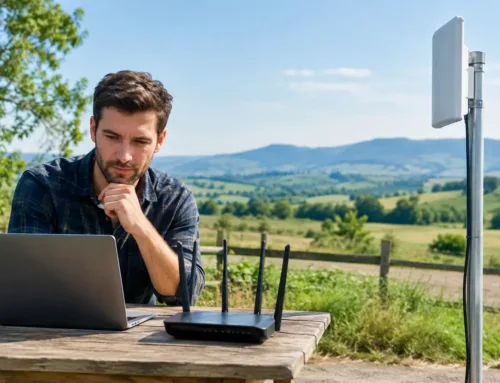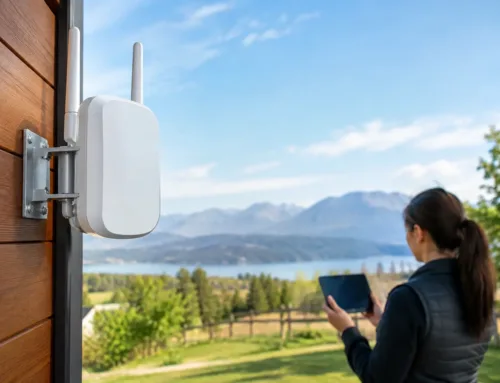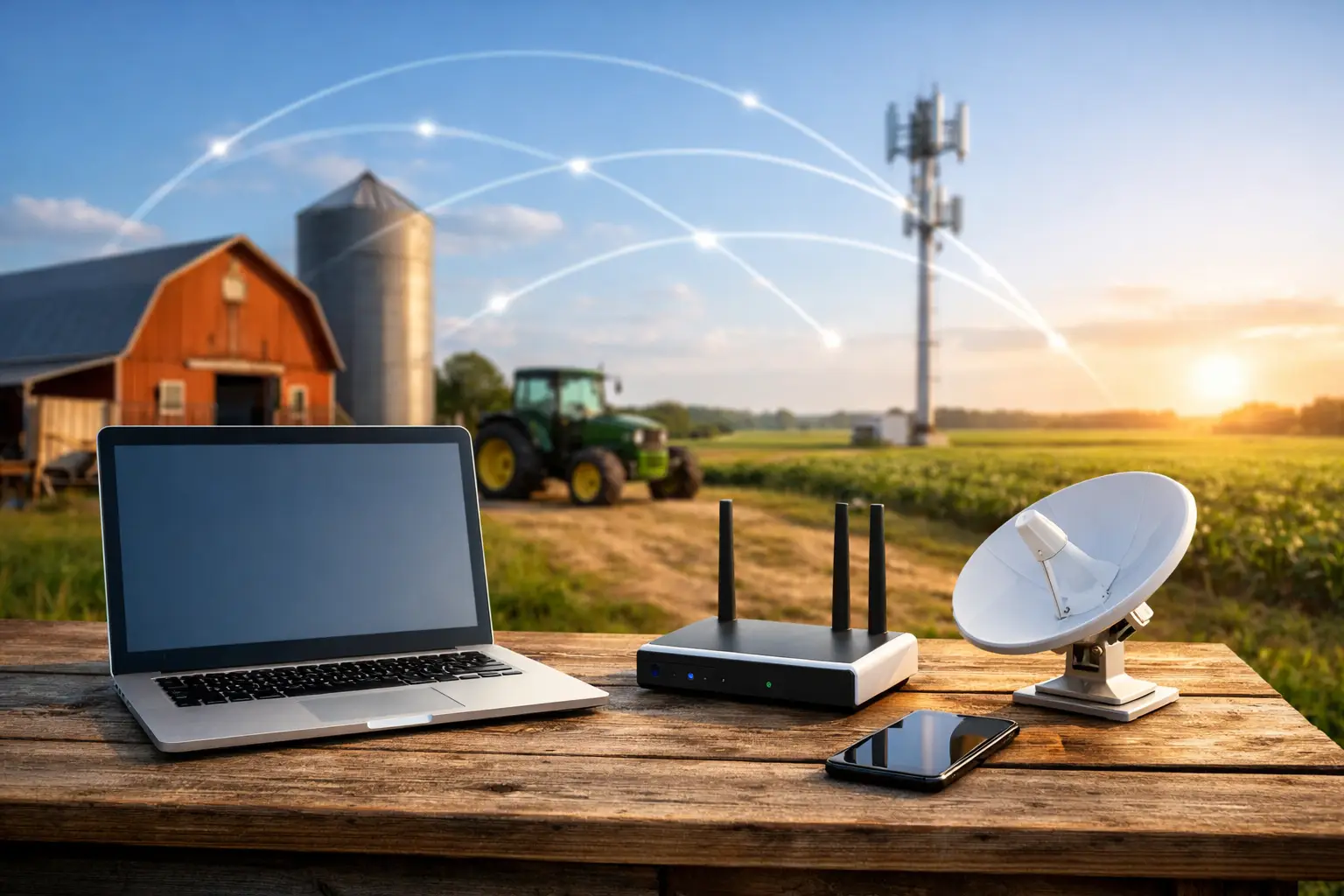
A camera in the lambing shed, a card terminal in the farm shop and office systems in the farmhouse all depend on the same thing: a connection that does not fall over when it matters. The best broadband for farms is rarely chosen by postcode alone. It depends on what is available at the gate, where coverage reaches across the holding, how many people and devices rely on it, and what needs to keep working after dark.
For many farms, the right answer is not a single off-the-shelf package. It is a properly planned connection supported by a network that carries Wi-Fi, CCTV and monitoring to the buildings, yards and remote areas that need it.
What makes the best broadband for farms?
A farm broadband connection needs to do more than load emails. It may support cloud bookkeeping, animal monitoring cameras, security systems, machinery updates, staff devices, guest Wi-Fi, online sales and video calls. Upload speed matters as much as download speed when cameras are sending footage away from site or when staff are sharing files.
Reliability also needs to be considered at site level. A good service entering the farmhouse is of limited use if the workshop, grain store or calving shed is still on a weak mobile signal. Long distances, stone walls, metal-clad buildings, mature trees and changes in ground level can all affect how a connection is distributed.
Start by separating two questions: how will the internet reach the farm, and how will it reach the places that need it? Fibre, 4G, 5G, Starlink and fixed wireless can provide the incoming connection. Wired cabling, outdoor wireless links and managed Wi-Fi then extend it around the site.
Fibre broadband: the first choice where available
Full-fibre broadband, often called FTTP, is usually the strongest option when it is genuinely available at the required property. It generally offers low latency, good consistency and enough capacity for busy homes, farm offices, cloud services and multiple camera systems. Symmetrical or near-symmetrical services can be particularly useful where a large amount of CCTV footage is viewed remotely or stored off site.
The complication is availability. A fibre checker may show a service for one building but not another, or quote a future build date that does not help an immediate problem. On larger estates, the cost and practicalities of getting fibre to an outlying building can also be very different from connecting the farmhouse.
Where fibre is already in place, it makes sense to build the site network around it. Use a wired backbone where practical, especially between key buildings, then use professionally installed point-to-point wireless links for locations where digging ducts is disruptive or uneconomical.
4G and 5G: effective when the signal is proven
Mobile broadband can be an excellent rural solution, particularly where a nearby mast provides a strong, stable signal. A properly positioned external antenna and industrial-grade router can make a considerable difference compared with placing a standard router on a windowsill. In the right location, 4G is more than capable of supporting day-to-day farm use, while 5G can provide very high speeds.
The key phrase is ‘in the right location’. Coverage maps are useful as an initial guide, but they do not account for every dip in the land, tree line, building material or mast load. Mobile performance can also vary between networks, at different times of day and through seasonal changes in foliage.
A site survey should establish which networks are usable, the likely speeds, the best antenna position and whether the service is suitable for the intended workload. For a small office and general browsing, a good 4G connection may be entirely sufficient. For several high-resolution cameras, cloud backups and multiple users, capacity and upload performance need more careful assessment.
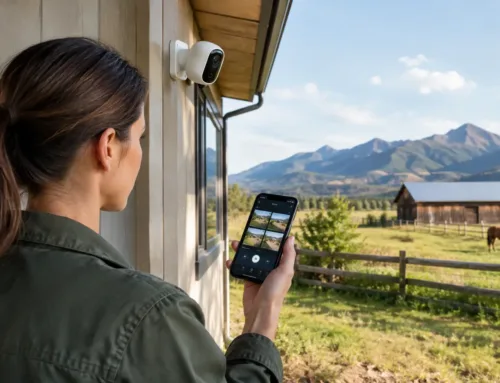
Mobile broadband is often valuable as a backup as well. If the primary fibre service fails, an automatic 4G or 5G failover can keep essential internet access, remote alarm communication and selected cameras online.
Starlink for remote farms and temporary sites
For farms beyond the reach of usable fibre and mobile coverage, Starlink has changed what is possible. It uses a satellite dish with a clear view of the sky and can deliver strong broadband performance in many hard-to-serve rural locations. It is often well suited to isolated farmhouses, construction projects, temporary livestock units, estate offices and sites where waiting for a fixed-line upgrade is not realistic.
Starlink is not entirely free of site considerations. The dish needs a suitable mounting point with minimal obstruction from trees, buildings or hills. The equipment must be installed securely, with cable routes and power provision planned properly. Like any shared service, performance can vary, and satellite latency is typically higher than a good fibre connection, though it is generally workable for business use, video calls and remote monitoring.
It can be a particularly practical answer where a farm needs connectivity quickly. Short- or long-term rental can also make sense for seasonal operations, events or a temporary site office rather than committing to infrastructure that will not be needed year-round.
Fixed wireless broadband: worth checking locally
Fixed wireless access delivers broadband from a local transmitter to an antenna at the property. In parts of rural North Yorkshire and elsewhere, it can offer a capable alternative to slow copper-based lines. It usually requires a clear or near-clear path towards the provider’s mast, so local terrain and obstructions are central to whether it is viable.
Where it works, fixed wireless can be a dependable option with more predictable performance than a weak mobile signal. It is often overlooked because availability is highly local. A survey remains the sensible way to establish whether there is a suitable service and where equipment should be mounted.
Do not confuse broadband with farm-wide Wi-Fi
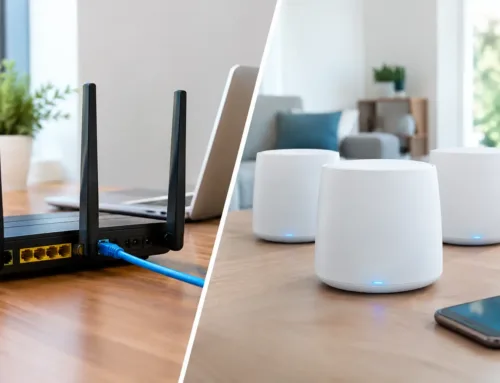
A common frustration is paying for a faster connection but seeing little improvement in the places where people work. This usually points to an internal network problem, not an internet supply problem. A domestic Wi-Fi router was not designed to cover a farmhouse, office, workshop, yard and several agricultural buildings.
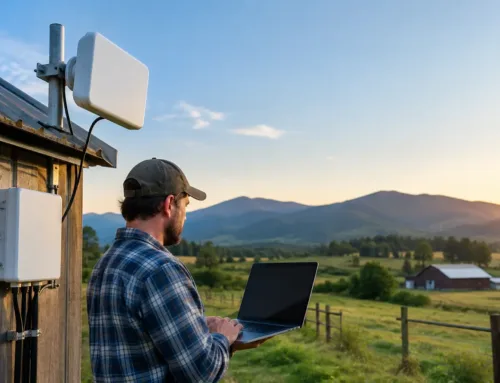
Farm-wide connectivity is normally created with a mixture of wired network infrastructure, weatherproof wireless access points and long-range point-to-point links. A wireless link can carry a connection from the farmhouse to a shed hundreds of metres away without relying on a poor signal repeating through walls. Once there, a local access point can provide Wi-Fi for staff devices, telemetry equipment or cameras.
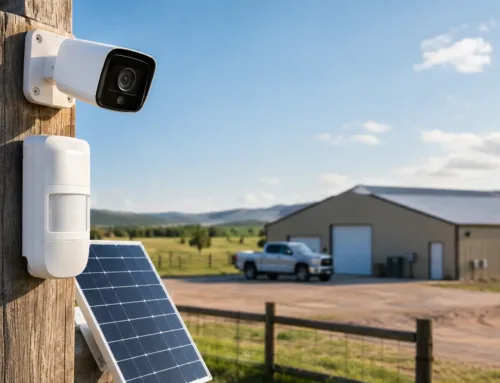
This approach also helps keep security systems reliable. CCTV cameras need sufficient bandwidth and sensible network design, particularly if several cameras record in high resolution or are viewed remotely. Security traffic can be separated from general staff and guest Wi-Fi, reducing congestion and making systems easier to manage.
Choose based on the farm’s real workload
There is no universal speed that defines good farm broadband. A small holding with two people, occasional video calls and a few cameras may work well on a carefully installed 4G service. A dairy unit with multiple offices, remote viewing, livestock cameras, cloud systems and staff accommodation will need more capacity, coverage and resilience.
Think about peak use rather than average use. Consider how many cameras might be viewed at once, whether footage is uploaded to cloud storage, how many staff are online during the day, and whether poor connectivity could affect livestock welfare, trading or site security. Also consider future needs. Installing the right cabling and network equipment now is often more cost-effective than repeatedly patching weak coverage later.
For an estate or multi-building site, a phased approach can be sensible. Establish a reliable primary connection first, link the most important buildings, then extend coverage as budgets and priorities allow. The design should leave room for more cameras, access points or remote buildings without starting again from scratch.
A practical route to a reliable installation
The most useful starting point is a survey of the whole site rather than an online speed checker. This should review fixed-line availability, mobile signal on relevant networks, possible Starlink dish positions, building-to-building distances, power, cable routes and the locations of critical systems.
From there, the recommendation should be based on evidence. That may mean fibre as the primary service with 4G backup, Starlink feeding a wireless network to remote sheds, or a strong mobile connection combined with external antennas and wired distribution. Each option has trade-offs in cost, speed, latency, installation work and ongoing resilience.
CUBTECH can bring those elements together, from surveying rural connectivity through to installing the broadband equipment, farm-wide network and the CCTV or livestock-monitoring systems that rely on it. The aim is straightforward: make sure the connection works where the farm actually operates, not only beside the router in the farmhouse.
A reliable farm connection is best treated as working infrastructure, much like gates, water supply or power. Choose the service around the site’s demands, test assumptions on the ground, and build a network that reaches the buildings and systems you cannot afford to lose sight of.