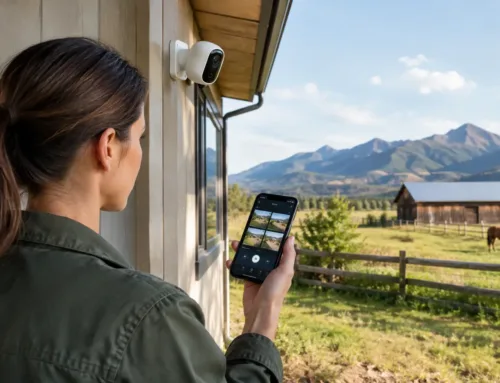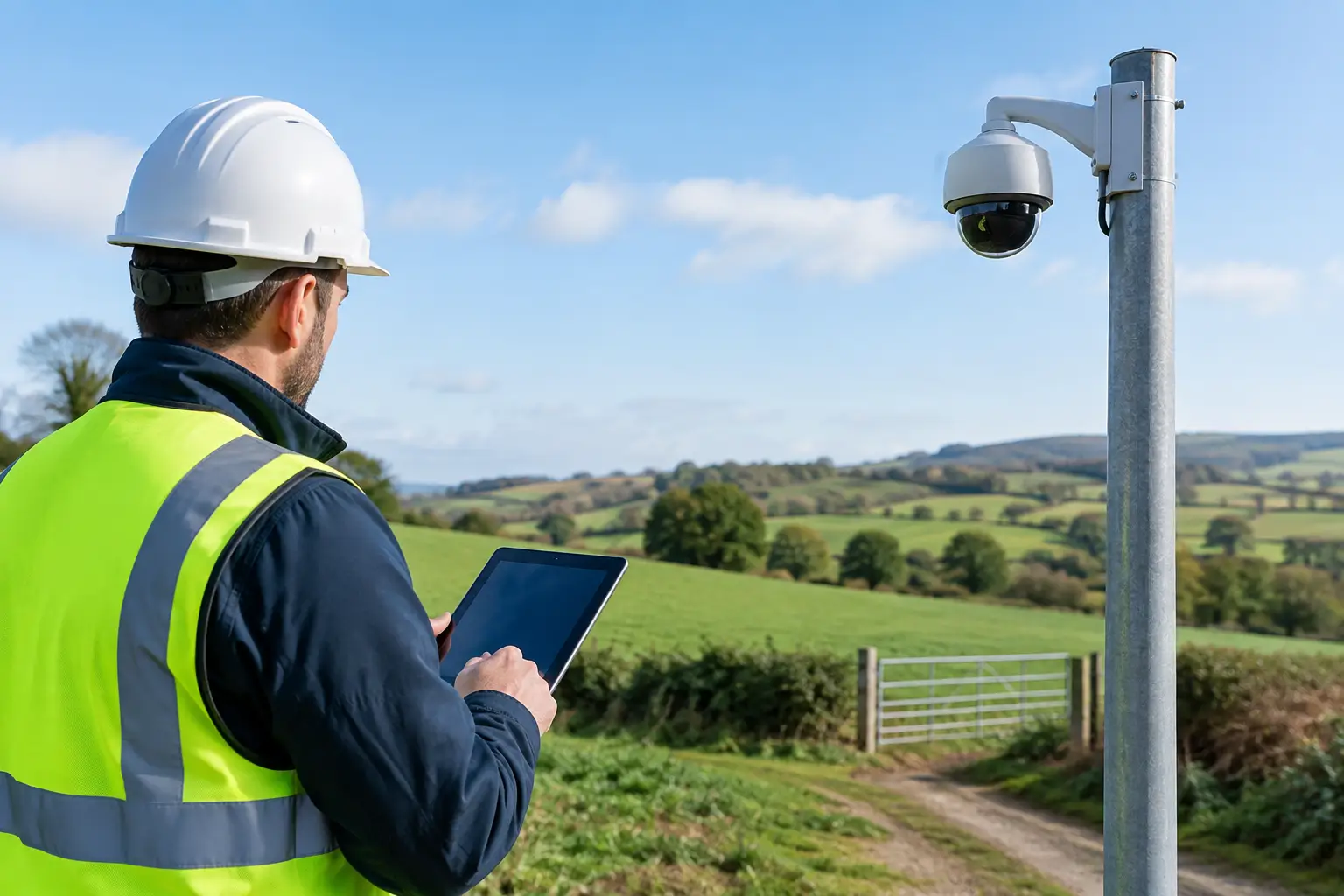
A camera mounted in the wrong place can be more than an expensive blind spot. On a farm, it may miss a gate used after dark. At a business unit, it may capture only the top of a visitor’s head. At a rural home, a tree that looks harmless in winter can block the view by summer. A proper CCTV site survey is where these practical details are identified before equipment is chosen or cables are run.
For farms, estates, homes and commercial premises, the survey is not simply a walk around with a camera catalogue. It establishes what needs protecting or monitoring, how far the coverage must reach, where power and internet are available, and what will continue to work reliably in poor weather and weak broadband areas.
Why a CCTV site survey comes first
It is tempting to start with a camera type: a dome for the yard, a bullet camera for the drive, perhaps a pan-tilt-zoom camera for a wider area. That can lead to a system built around hardware rather than the site. The better starting point is the outcome.
A machinery yard may need clear identification at a vehicle entrance, not a broad view of every corner. A lambing shed may need dependable live monitoring at night, with enough detail to check animal welfare without creating unnecessary alerts. A workshop may need cameras linked to alarm events, while an estate could require coverage across gateways, outbuildings and remote tracks.
The survey turns those needs into a workable design. It also avoids common disappointments: cameras looking into low sun, Wi-Fi cameras dropping offline at the far end of a yard, recordings filling up too quickly, or a useful view becoming unusable once security lighting switches on.
What happens during a CCTV site survey
The first part is a conversation about the property and how it operates. This matters as much as the physical inspection. A site that is busy from 6am to 8pm has different risks from one that is empty overnight. Seasonal changes matter too. Calving sheds, harvest traffic, holiday lets, temporary livestock pens and event sites can all alter where coverage is needed.
The survey then follows the routes people, vehicles and animals actually use. Entrances, gateways, car parks, fuel tanks, machinery stores, barns, offices and perimeter boundaries are assessed in context. Rather than promising blanket coverage, a good design prioritises areas where a camera can provide useful evidence, early warning or day-to-day visibility.
Camera position and usable image quality
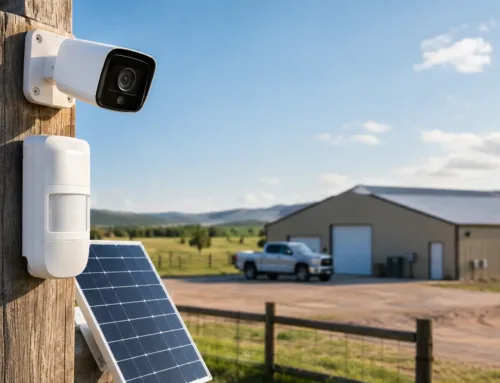
Height, angle and distance determine whether footage is genuinely useful. A high-mounted camera can give a strong overview of a yard, but it may not provide the face or number plate detail required at an entrance. Conversely, a camera positioned for identification covers a narrower area.
This is why most well-planned systems use a mixture of views. One camera may watch general movement across a yard, while another is positioned specifically to capture vehicles entering through a gate. The survey checks likely lines of sight, including obstructions such as mature trees, parked machinery, roof overhangs, feed trailers and opening doors.
Lighting is assessed at the same time. Infrared night vision is valuable, but reflective surfaces, dust, rain and cobwebs can affect it. Existing floodlights, stable lighting and vehicle headlights may help or hinder the image. In some cases, a carefully placed external light produces clearer colour footage than relying on infrared alone. The right choice depends on the location and how the area is used after dark.
Power, cables and practical installation routes
Every camera needs a reliable power route, whether through network cabling with Power over Ethernet or a separate supply. The survey identifies where equipment can be mounted safely, how cables can be protected, and whether a long run is practical without compromising performance.
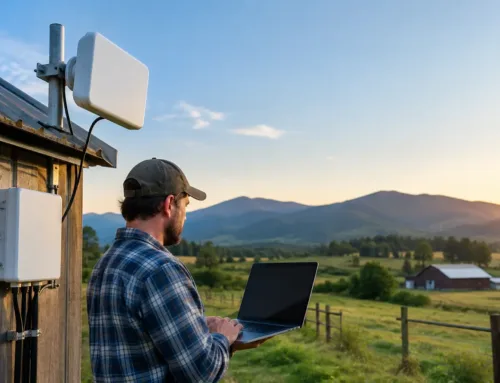
On a rural site, the nearest building is not always the best connection point. A camera on a distant gateway may be hundreds of metres from the farmhouse or office. Digging a trench for cable can be sensible for a permanent route, particularly where other services are being installed. On the other hand, a point-to-point wireless link may be more cost-effective where groundworks would disturb tracks, fields or established landscaping.
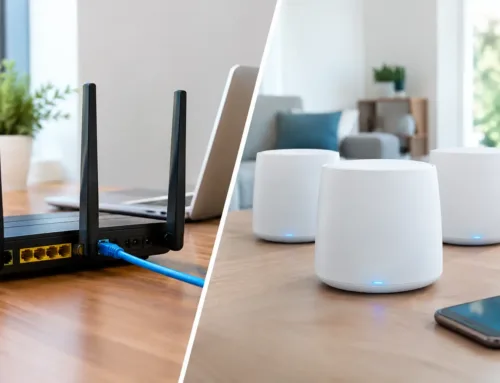
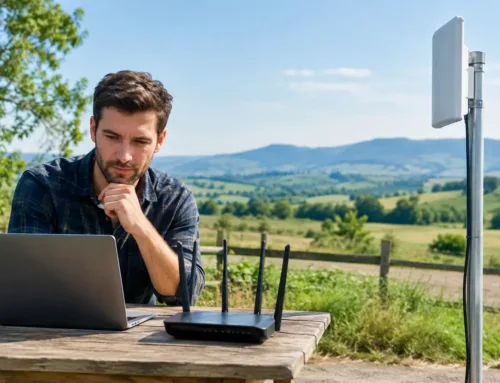
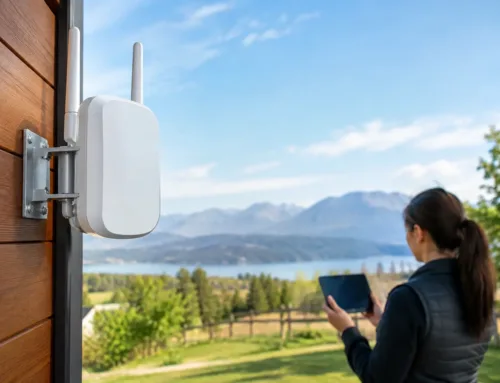
Wireless is not a shortcut that works in every setting. It needs a clear, stable path between points and suitable mounting positions. Trees in leaf, metal-clad sheds, changes in terrain and future building work can all affect a link. These considerations are far easier to resolve during the survey than after installation.
Internet access, recording and remote viewing
Remote viewing is often expected, but the quality of the experience depends on the site’s connection. Many rural premises have limited fixed-line broadband, variable mobile signal or no suitable connection in an outbuilding. The survey checks what is available and whether the CCTV system should rely on local recording, mobile connectivity, a wireless bridge or an alternative service such as 4G, 5G or Starlink.
A system does not need fast broadband to record locally. However, broadband speed affects how smoothly footage can be viewed from a mobile phone or computer away from site, particularly when several cameras are being accessed at once. Upload speed is often the limiting factor, not download speed.
Recording requirements are also agreed at this stage. Retention time depends on the number of cameras, image quality, activity levels and whether recording is continuous or event-based. A quiet store may benefit from motion or AI-triggered recording, while a busy yard may require continuous coverage in key areas. The aim is to retain meaningful footage without paying for storage that does not serve a clear purpose.
Using AI detection without creating alert fatigue
AI-enabled cameras can distinguish between people, vehicles and, in some systems, selected types of movement. Used well, this reduces the nuisance notifications caused by rain, livestock, branches or passing wildlife. It can make a large site far easier to manage, especially when owners are not on the premises all day.
It still needs careful setup. A camera overlooking a farm track may need to ignore vehicles on a public road while alerting when someone enters the yard. A camera near livestock must be configured so normal animal movement does not produce constant notifications. The survey helps define detection zones and the activities that genuinely warrant an alert.
There is a trade-off between sensitivity and convenience. Set alerts too tightly and an intruder could be missed at the edge of the scene. Set them too broadly and the mobile phone becomes noisy enough that warnings are ignored. The best settings reflect the actual risk at each camera position.
Privacy, neighbours and lawful use
CCTV should protect a property without unnecessarily recording areas beyond it. During the survey, camera views should be planned to avoid neighbouring gardens, private windows or public areas where possible. Privacy masking can be used where a fixed feature must be excluded from the image.
Business and estate sites may also need clear signage, defined access to recordings and sensible retention arrangements. If cameras monitor staff areas or public-facing spaces, the operator has additional data protection responsibilities. A competent installer can design around these requirements, but responsibility for how a system is used remains with the owner or business.
Surveying large, remote and changing sites
Wide rural sites demand a joined-up approach. A camera system may need a network extension to a shed, a wireless link across a yard, and a dependable internet connection at the main building before remote monitoring becomes realistic. Treating these as separate jobs can create gaps between the CCTV, network and broadband arrangements.
This is where a local, end-to-end approach is useful. CUBTECH can assess security, cabling, wireless coverage and connectivity together, so the proposed system suits the whole site rather than one building in isolation. It is particularly relevant where long distances, metal-clad buildings or poor broadband make standard domestic-style CCTV unsuitable.
Temporary requirements deserve the same care. Construction work, rural events, vacant properties and seasonal operations may only need coverage for a few weeks or months. The survey establishes whether temporary cameras, rental connectivity and mobile mounting positions can provide the right level of protection without committing to unnecessary permanent works.
The result should be a clear, tailored plan
After a useful survey, the recommendation should explain what each camera is for, where it will be positioned, how it connects, where recordings are held and what can be viewed remotely. It should also identify limitations honestly. Dense woodland, a steep bank, an exposed gateway or poor mobile coverage may affect the options, but knowing that early allows for a better decision.
The most valuable CCTV systems are not necessarily the ones with the highest camera count. They are the ones that provide a clear view when something happens, reliable access when it is needed, and coverage that reflects how the property works every day. Start with the site, not the specification, and the finished system has a far better chance of doing its job quietly for years.