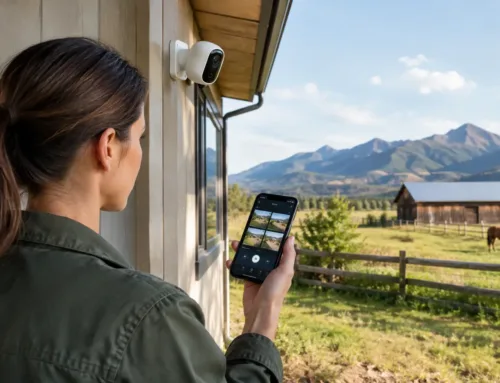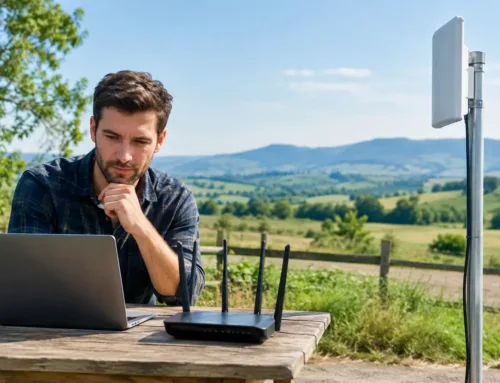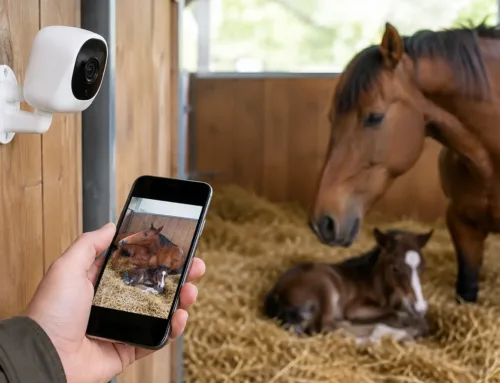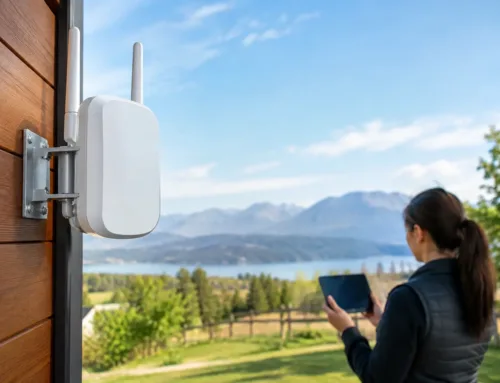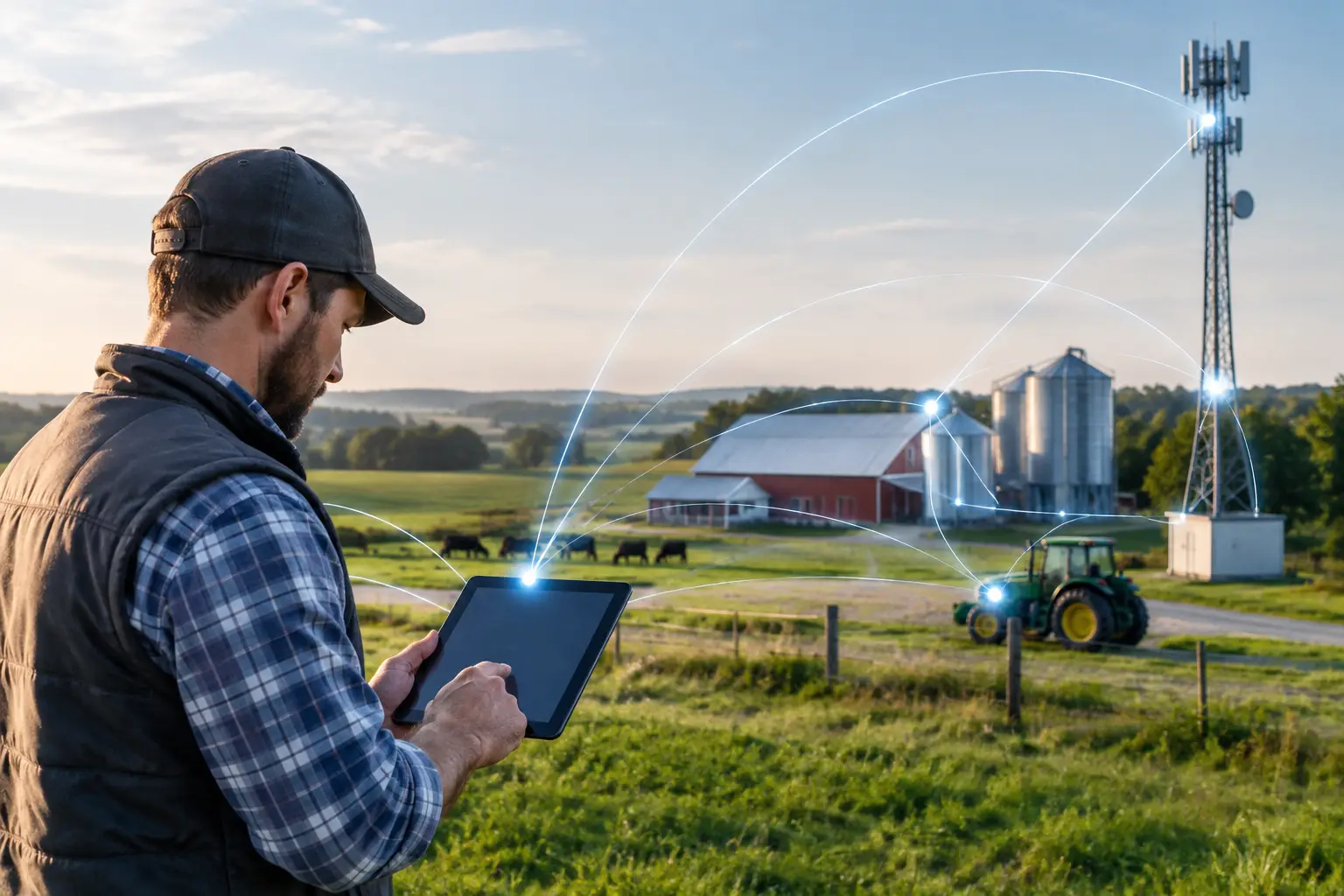
A camera at the calving shed is only useful if the picture reaches the farmhouse. Wi-Fi in the office is of limited value if the workshop, grain store and holiday cottage remain offline. Effective farm network design turns separate buildings, security systems and internet connections into one practical working system – built around how the holding operates, not around where a standard domestic router happens to reach.
For farms and estates, the challenge is rarely choosing a single piece of equipment. It is understanding the distances between buildings, what sits in the way, where power is available, how each area will be used and what must keep working when weather, machinery and daily activity put the site under pressure.
Start farm network design with the working site
A good network begins with a proper site survey. Farm buildings have thick stone walls, steel cladding, machinery, trees, changes in ground level and yards that can all affect wireless coverage. A plan drawn from satellite imagery can be useful, but it cannot show every obstruction, cable route or source of interference.
The first question is usually where the internet enters the site. This may be the farmhouse, office, dairy, workshop or a remote cabinet. From there, the design needs to map every place that needs a connection: fixed CCTV cameras, livestock cameras, alarm equipment, staff devices, point-of-sale systems, machinery diagnostics, office computers, guest accommodation and gateways for gates or access control.
Not every building needs the same service. A lambing shed may need enough reliable bandwidth for several high-definition cameras and notifications. A machinery store may only need a camera, alarm communicator and occasional Wi-Fi access. The farmhouse may need strong indoor Wi-Fi for everyday use, while an estate office may require wired connections for greater consistency.
This is why copying a neighbour’s setup often disappoints. Similar-looking farms can have very different terrain, building construction, broadband availability and operational needs.
Choose the right connection between buildings
There are two main ways to extend a network across a farm: cable and wireless. The best answer is often a mixture of both.
Wired infrastructure where permanence matters
Fibre or external-grade network cable can provide a highly dependable connection between buildings. It is well suited to fixed routes where ducts are available or where trenching is already planned alongside power, water or drainage works. Fibre is particularly useful over longer distances and between buildings with separate electrical supplies, as it avoids the electrical issues that can affect copper cabling.
The trade-off is civil work. Installing cable across yards, tracks or fields requires careful route planning, suitable protection and consideration for future access. It costs more at the outset than placing a pair of wireless radios on buildings, but it can be the sensible long-term choice for a frequently used office, dairy, workshop or high-traffic accommodation block.
Point-to-point wireless links for distance and flexibility
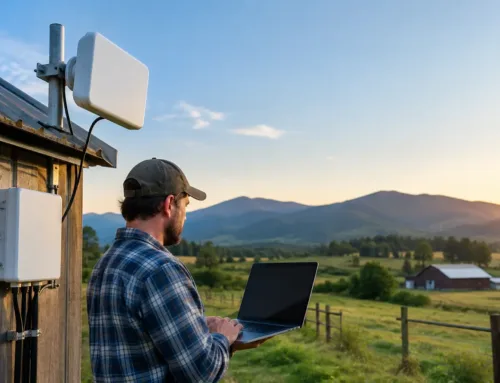
A properly specified point-to-point wireless link can carry a network from one building to another without digging a trench. These links use directional aerials, normally mounted high enough to maintain a clear path between locations. They are a practical option for yards, barns and outbuildings where cable routes would be disruptive or uneconomical.
Line of sight matters. A link that looks clear in winter may be affected by summer tree growth. A roofline, silo, grain store or rising ground can also block the path. Height, mounting position and alignment therefore need to be assessed properly rather than guessed from a ladder.
Wireless links are not simply outdoor Wi-Fi extenders. When designed and installed correctly, they act as a dedicated bridge between buildings, allowing a remote shed or yard to have its own Wi-Fi access point, wired devices and cameras. They can also be expanded as the site grows.
Build coverage around tasks, not a coverage map
Large green areas on a Wi-Fi heat map can look impressive, but usable coverage is what matters. Staff may need reliable connectivity at the parlour, workshop bench, loading area, farm office or yard entrance. A worker checking cameras or using a tablet beside a livestock shed needs a stable connection, not a signal that appears briefly on a phone screen.
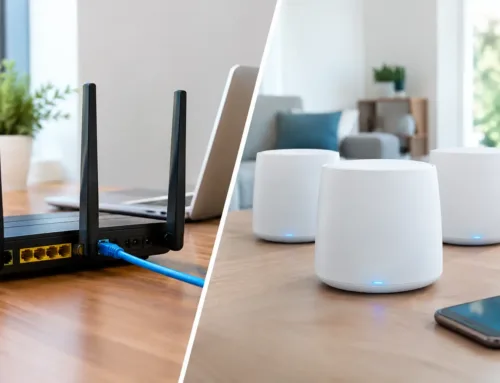
Outdoor access points can extend Wi-Fi around yards and working areas, while indoor access points serve homes, offices and staff spaces. Their location should account for the materials around them. Metal-clad sheds and machinery can reflect or absorb wireless signals, and placing equipment inside the wrong corner of a building can leave the useful area without coverage.
It also helps to separate different uses of the network. CCTV, alarms, office devices, guest Wi-Fi and smart equipment do not all need to sit on the same network segment. Separating them improves security, limits unnecessary traffic and makes faults easier to diagnose. If visitor devices slow the connection, they should not affect a livestock camera or an alarm communicator.
Plan broadband for the reality of rural locations
The network is only as useful as the connection feeding it. Some sites have workable fixed-line broadband, while others need 4G, 5G or Starlink to deliver a usable service. In some cases, combining connections provides better resilience than relying on one line alone.
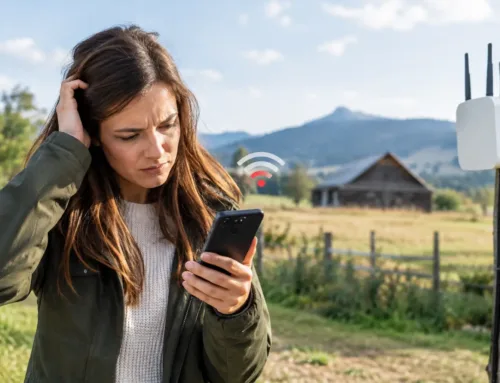
Mobile broadband can work very well where local signal is strong and a suitably positioned external aerial can be fitted. However, signal readings at ground level do not always reflect performance on a roof or high mounting point. Capacity can also vary by time of day, especially in areas where the same mobile mast serves a busy village or tourist route.
Starlink can be a strong option for rural sites with poor fixed-line service, provided there is a clear view of the sky and the service matches expected usage. It can support everyday business activity, remote monitoring and multiple connected buildings when distributed through a well-designed local network. Temporary works, seasonal accommodation and events may benefit from a rental arrangement rather than a permanent installation.
The right choice depends on available services, data requirements, budget and how much downtime the operation can tolerate. A farm relying on cameras for livestock monitoring and security needs a different level of contingency from a building that only requires occasional guest Wi-Fi.
Design CCTV and alarms into the network from the beginning
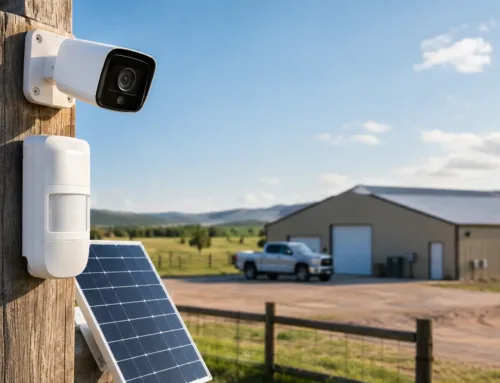
Security systems should not be treated as an afterthought. AI-enabled CCTV can distinguish people and vehicles from general movement, helping reduce unwanted alerts around yards, driveways and livestock areas. But camera positions, recording capacity and network bandwidth need to be considered together.
A cluster of high-resolution cameras can generate significant traffic, especially when several users view live footage remotely. Wired camera connections are often preferable where practical, while wireless bridges can provide a reliable route to more distant buildings or gateways. Recording equipment should be placed where it is protected, accessible for maintenance and supported by suitable backup power where required.
For livestock monitoring, camera placement is as important as the network itself. The aim is a clear view of pens, calving areas or stable boxes without creating blind spots or relying on weak wireless coverage inside a difficult building. A dependable system gives the farmer useful visibility when it matters, rather than more equipment to manage.
Allow for power, weather and future changes
Farm technology lives in a harder environment than a typical office network. Outdoor equipment needs suitable enclosures, weather-rated fittings, proper cable protection and careful earthing. Power interruptions should be considered too, particularly where security, connectivity or monitoring must continue through a short outage.
It is also worth planning capacity ahead. A network installed for four cameras may later need ten, plus an additional shed, electric gate, staff accommodation or a new office. Leaving room in cabinets, allowing spare cable capacity and choosing equipment that can be expanded is usually less costly than rebuilding the system later.
Support matters after installation. Network faults on a farm are rarely convenient, and the cause may sit anywhere between the broadband service, wireless link, power supply, camera or local device. Working with one provider that understands the whole installation avoids the familiar problem of each supplier blaming the next.
A practical route to a dependable connected farm
The most effective approach is to survey first, identify what each area genuinely needs, then design the backbone before selecting individual cameras or Wi-Fi points. That creates a system with a clear purpose: safer property, better livestock visibility, connected staff and dependable access to the services that keep the farm moving.
CUBTECH takes this joined-up approach from site survey and tailored recommendation through installation, commissioning and ongoing support. For a growing holding or a remote estate, the right network is not the one with the most equipment. It is the one that still does its job on a wet February evening when you need to see the yard, check the livestock shed or get online without walking back to the farmhouse.