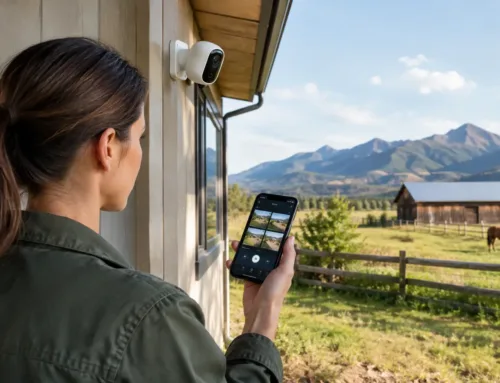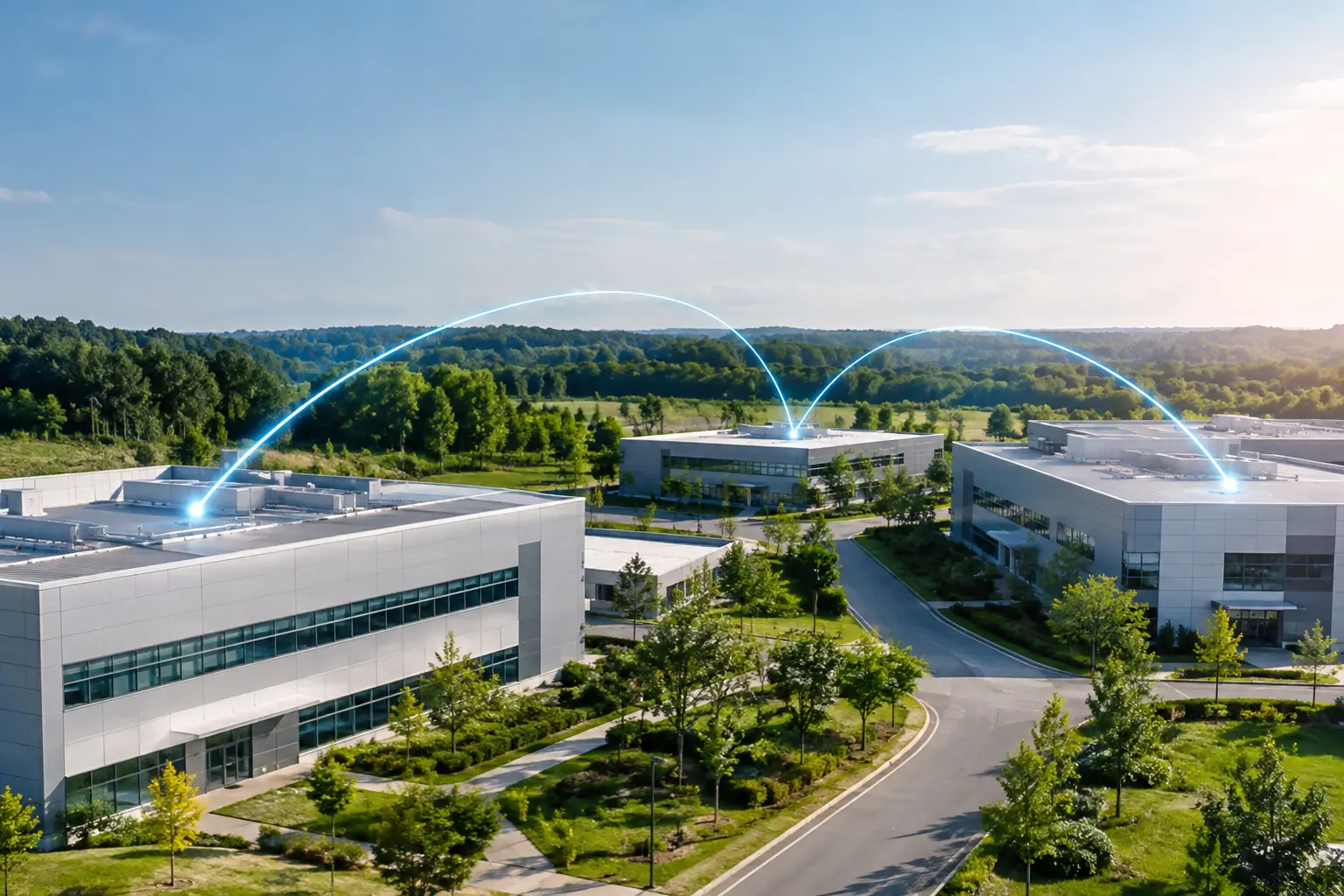
A calving shed half a mile from the farmhouse, a workshop beyond the yard, or holiday cottages on the far side of an estate can all create the same problem: the internet and security systems stop where the main building ends. Knowing how to link remote buildings properly means more than getting a faint Wi-Fi signal outdoors. It means creating a dependable connection that supports the work happening there, whether that is CCTV, livestock cameras, card terminals, office access or everyday broadband.
For rural properties, distance is only part of the picture. Trees grow, ground levels change, machinery moves through yards and old buildings can be difficult to cable. The right answer depends on the site, the service required and how much reliability matters when conditions are poor.
Start with what the remote building needs
Before choosing cable, wireless equipment or a new broadband service, establish what needs to work in the second building. A simple Wi-Fi connection for a workshop has different requirements from a livestock shed running several high-definition cameras, or an occupied cottage needing its own secure internet access.
Consider the number of devices, the quality of the connection required and whether the building needs to be available at all times. CCTV footage uses more capacity than a temperature sensor. Video calls and cloud backups can create heavy demand. If an intruder alarm, access control system or fire alarm communicator relies on the network, the connection should be planned as operational infrastructure rather than a convenience.
It is also worth deciding whether users in the remote building need access to the same network as the main house or office. Farm staff may need printers, shared files and management systems. Guests in cottages should normally be separated from business devices and security equipment. A properly designed network can do both without mixing traffic that should remain private.
How to link remote buildings: the main options
Most sites are linked using a buried fibre cable, a point-to-point wireless bridge or, in some cases, a separate mobile or satellite broadband connection. Each method has a sensible use case.
Fibre is the long-term wired option
Fibre is usually the strongest choice where a route can be installed safely and the budget allows. It carries high speeds over substantial distances, is not affected by electrical interference and is particularly useful between buildings with separate electrical supplies. Unlike copper network cable, fibre does not conduct electricity between buildings, which helps avoid issues caused by differing earth potentials and lightning-related surges.
A fibre run is well suited to a new build, a yard being resurfaced or any site where trenches are already planned. It can support multiple cameras, office systems, Wi-Fi access points and future expansion without becoming a bottleneck.
The trade-off is civil work. Ducting, trenching, protective installation and appropriate termination all need to be considered. On an established farmyard or listed estate, digging may be disruptive or impractical. Fibre is excellent infrastructure, but it is not automatically the best first answer.
Point-to-point wireless is often ideal across yards and fields
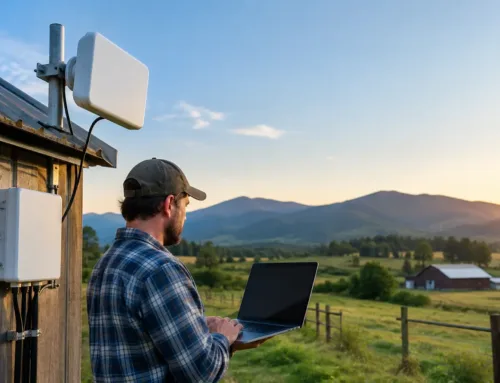
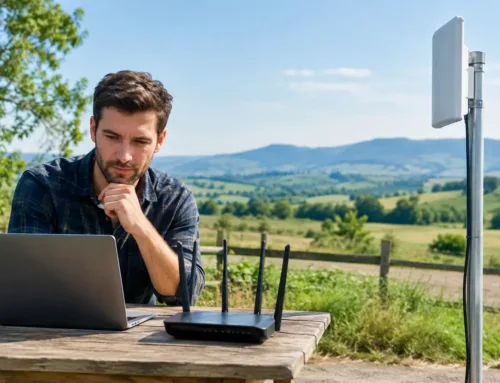
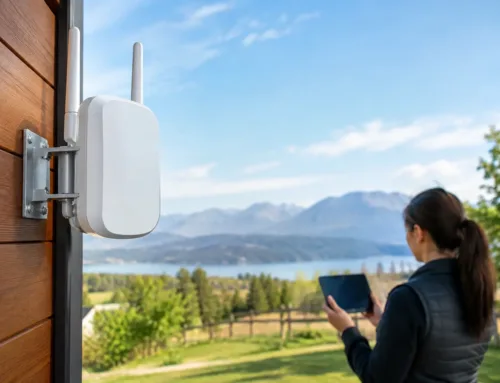
A point-to-point wireless link uses a matched pair of outdoor radios. One is fitted to the main building and one to the remote building, creating a dedicated network connection between them. It is not the same as extending domestic Wi-Fi with repeaters. When specified and aligned correctly, it can carry a reliable connection across a farmyard, field, drive or estate road.
This approach is often the practical choice where buildings have a clear line of sight. It avoids the cost and disruption of excavation while providing the capacity needed for IP cameras, Wi-Fi, alarm signalling and general internet use.
The key phrase is clear line of sight. A wireless link may look fine in winter and become unreliable when trees are in leaf. A roof ridge, grain store, silo or even a parked telehandler can interfere with the path. Terrain also matters: a modest dip between two buildings can block a link that appears straightforward from ground level.
A site survey should check mounting positions, height, cable routes, power availability and likely obstructions throughout the year. It should also allow for the wind loading of equipment and ensure antennas can be installed safely without compromising the building fabric.
4G, 5G and Starlink suit independent remote sites
Some buildings are too distant, too obstructed or too temporary to connect back to the main property. A field office, lambing unit, construction compound or event site may be better served by its own internet connection using 4G, 5G or Starlink.
This does not technically link the building to the main broadband connection, but it gives the building an independent route online. Secure network equipment can then provide remote access to cameras or business systems. It is particularly useful where there is no viable line of sight and trenching is not justified.
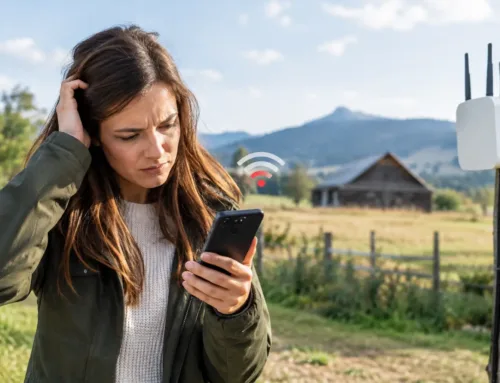
Mobile broadband depends heavily on local signal, antenna placement and network congestion. Starlink can be an effective answer in poorly served areas, provided the dish has a clear view of the sky. Both options need sensible data planning and power protection, particularly where cameras are recording continuously.
Do not treat Wi-Fi extenders as a site-wide solution
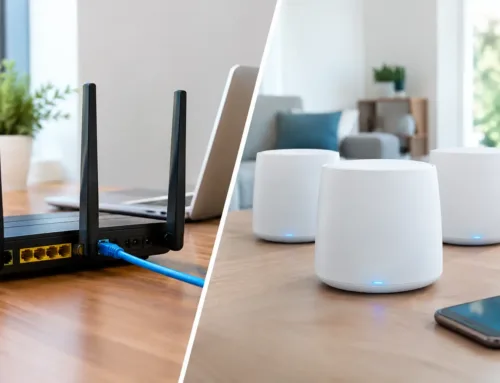
A plug-in Wi-Fi extender can help cover a weak room inside a house, but it is rarely the right way to connect a separate building. Thick stone walls, steel cladding and distance quickly reduce its usefulness. Each repeated wireless hop can also reduce performance and make faults harder to diagnose.
Once a remote building has a proper backhaul connection through fibre, point-to-point wireless or its own broadband service, Wi-Fi can be installed inside it where people and devices actually need coverage. This gives better performance and makes the system easier to manage.
For a workshop or barn, that may mean one or more professionally positioned access points. For cottages or offices, it may mean separate secure networks for staff, visitors and operational equipment. The aim is coverage where it is needed, not a weak signal reaching as far as possible.
Plan power, security and resilience at the same time
Remote buildings need more than a network cable or radio. The equipment needs safe, stable power, weatherproof enclosures where appropriate, surge protection and a clear plan for what happens during a power cut.
Power over Ethernet can simplify the installation of cameras, wireless radios and access points by carrying power and data through one cable. However, cable routes between buildings must be selected carefully. Electrical protection and the use of fibre instead of copper may be necessary depending on the layout.
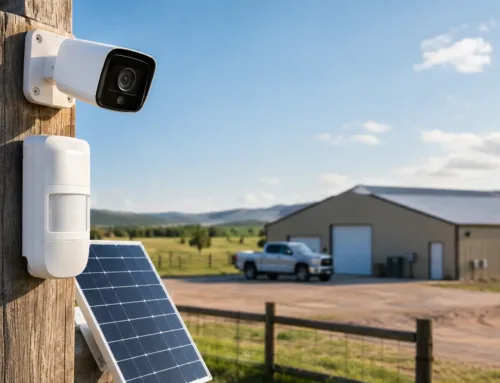
Security should be designed into the connection. CCTV cameras, alarm panels, smart gates and office computers should not all sit on an unrestricted network. Network separation helps limit exposure and keeps guest devices away from critical systems. Remote management also matters: when a camera at a distant shed goes offline, the cause should be easy to identify without repeatedly travelling across the site.
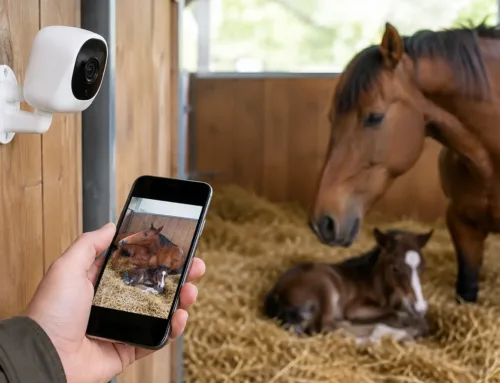
For high-priority locations, resilience may be justified. That could include a battery backup for networking equipment, a mobile broadband failover connection, or local camera recording that continues during an internet outage. The right level depends on the cost of downtime. Missing a few hours of guest Wi-Fi is different from losing visibility of a high-value yard or a foaling camera.
A survey prevents expensive assumptions
Two sites with the same distance between buildings can need entirely different solutions. A 300-metre link across open ground may be simple with wireless equipment. A 50-metre connection across a busy yard, behind dense trees and through stone walls may need fibre or an alternative route.
A professional survey turns assumptions into a workable design. It identifies line of sight, tests available mobile services, assesses existing broadband, checks cable paths and considers the systems that will share the network. It also creates an opportunity to plan ahead. If a trench is being dug for one building, installing suitable ducting for future buildings can save considerable disruption later.
CUBTECH designs linked-building systems around the realities of farms, estates, homes and business sites, from the initial survey through installation, configuration and ongoing support. That joined-up approach is useful when connectivity and security need to work together rather than as separate projects.
The best connection is not necessarily the fastest on paper. It is the one that continues to serve the people, buildings and equipment that rely on it, through changing seasons, working days and the occasional difficult rural broadband problem.