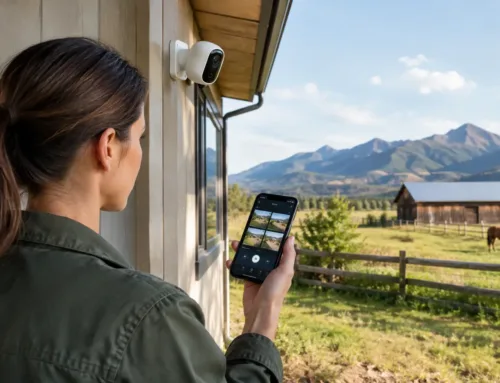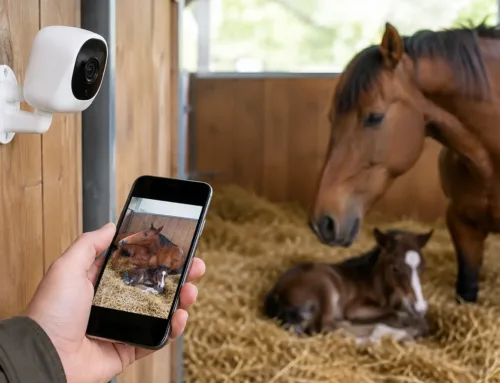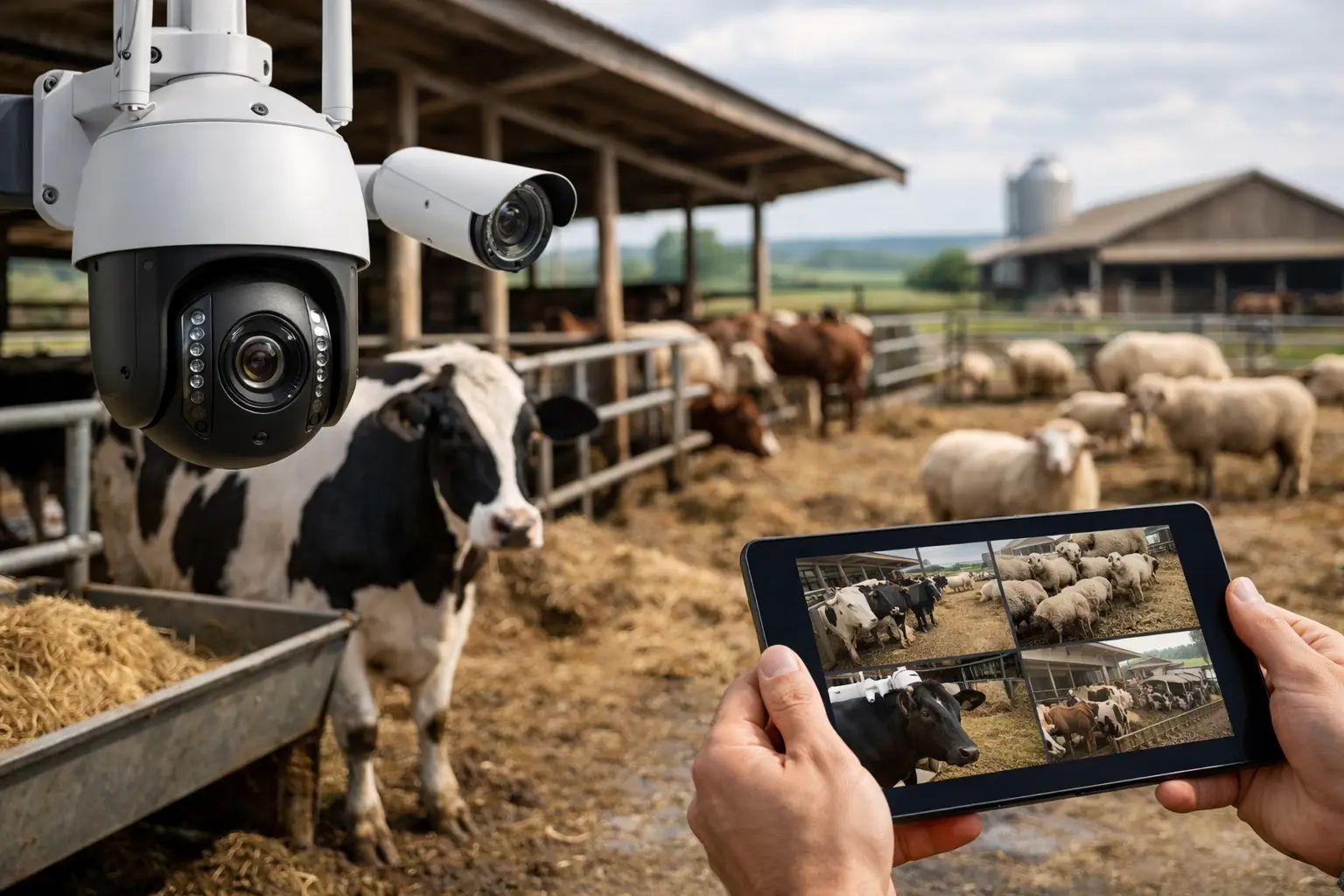
A ewe close to lambing, a heifer showing early signs of calving, or a mare due to foal does not always wait for daylight or a convenient time. Livestock monitoring cameras for farms give you a useful view of the shed, stable or field shelter without repeated disturbance, unnecessary trips across the yard or relying on guesswork. The right system helps you decide when to go and look properly. It does not replace stockmanship, but it can make those crucial checks more timely and less intrusive.
For farms and estates, the camera itself is only one part of the answer. Distance from the farmhouse, steel-framed buildings, limited mains power and weak broadband can all affect whether the view on your mobile phone is dependable when you need it most. A well-planned installation considers the whole route from camera to screen.
What livestock monitoring cameras need to do
A useful livestock camera system should provide a clear, stable image where it matters, including after dark. In a lambing shed, that may mean covering individual pens or a run of mothering pens. In a calving building, it may mean a wider view of loose housing alongside a closer angle on a calving pen. Foaling cameras are usually positioned to give a clear view of the stable while avoiding a location where a horse can reach, knock or damage the equipment.
The aim is not to record every corner of a building for the sake of it. It is to make the animal visible enough for practical decisions: whether she is settled, whether labour appears to be progressing, whether a newborn is up and suckling, or whether someone needs to attend.
Cameras support observation, not intervention
Remote viewing is particularly valuable during busy lambing or calving periods, when staff are balancing checks across several sheds and other jobs around the holding. It can reduce disturbance, especially for nervous animals, and may prevent wasted journeys in poor weather or through the night.
There are limits. A camera can show behaviour, but it cannot assess an animal fully. It cannot replace checks for temperature, presentation, hydration or the condition of a newborn. Treat it as an extra pair of eyes that helps you prioritise attention, rather than as a substitute for experienced husbandry.
Camera placement matters more than the specification sheet
The best camera on paper will disappoint if it is pointed at a gate, blocked by a feed barrier or affected by glare from a doorway. Before choosing equipment, consider the animal areas that need to be seen, the movement of people and machinery, and where lighting changes through the day.
In sheds, a high-mounted camera can give a useful overview, but mounting too high may make it hard to judge what is happening on the ground. A second camera is often more useful than trying to make one wide-angle camera cover every pen. This is particularly true in long buildings, where animals at the far end may appear too small for meaningful observation.
Night vision also needs careful thought. Infrared illumination allows cameras to see in darkness without using bright visible light that could disrupt animals. However, dust, cobwebs, steam and reflective surfaces can affect the image. In livestock buildings, cameras should be positioned away from the worst of the dust and moisture where possible, with a practical plan for cleaning the lens cover during the season.
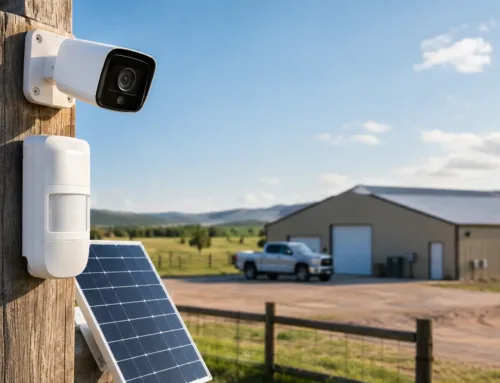
External cameras can be useful for watching access routes, gathering areas and the approach to remote buildings. They need weatherproof housings, sensible mounting heights and protection from curious cattle, machinery and livestock trailers. The route for any cable should be protected too. A system that works perfectly on installation day but is vulnerable to a tugging animal or a pressure washer is not a dependable farm system.
Connectivity is often the real challenge
Many farms have buildings spread over a large area, with the house or office some distance from lambing sheds, calving units or stables. A camera needs a connection to send a live image to a recorder, monitor or mobile phone. If the camera is in an outbuilding, that connection may be harder to arrange than the camera installation itself.
Running a wired network cable can be the right solution where routes are practical and protected. It is stable and can often carry both data and power to suitable cameras. On larger sites, though, trenching cables across yards, tracks or fields may be disruptive and expensive.
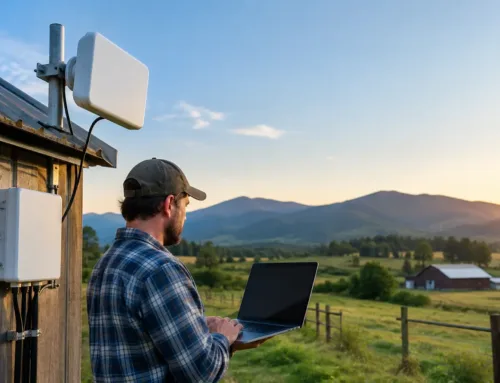
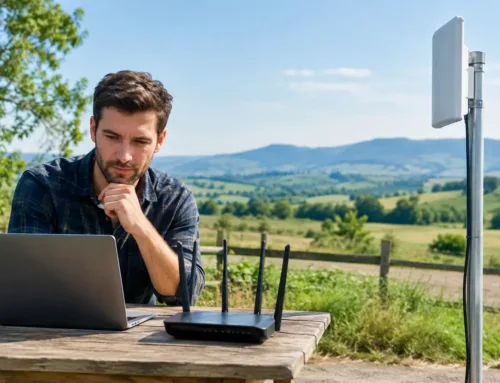
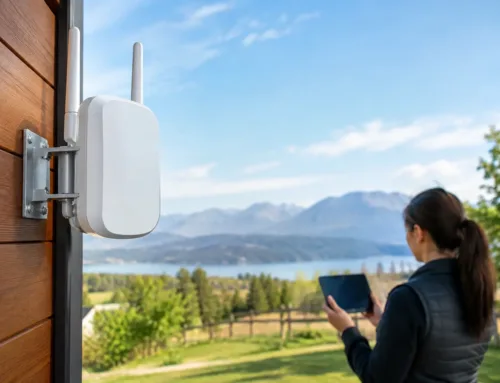
A properly designed wireless link can bridge the gap between buildings without relying on domestic Wi-Fi reaching across the yard. These links use dedicated outdoor equipment and require a clear enough path between locations. Trees, building corners, grain stores and changes in ground level can all affect performance, so a site survey is valuable before making assumptions.
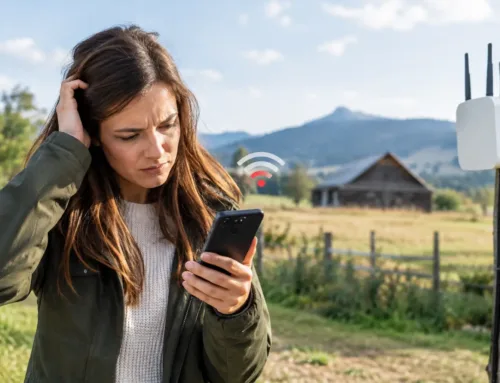
Where the farm broadband connection is poor, 4G, 5G or Starlink can provide the internet connection required for remote viewing. The right option depends on local mobile coverage, the location of the buildings, data needs and whether a suitable mounting position is available. Starlink can be particularly useful in rural locations with limited fixed-line options, but it still needs a clear view of the sky and a sensible plan for distributing that connection around the site.
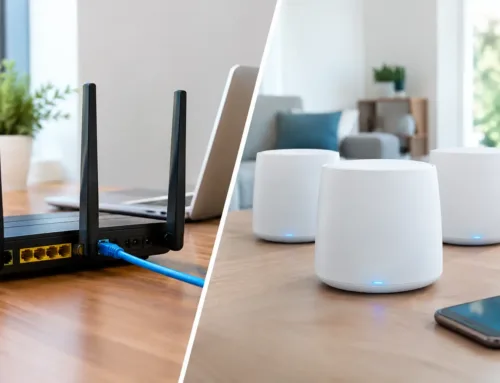
It is worth separating two questions: can the cameras communicate across the farm, and can you view them remotely away from the farm? A local wireless network may provide excellent coverage between buildings, while the internet connection determines how well you can access the system from home, at market or when away on business.
Features that make day-to-day monitoring easier
A clear live view is the priority, but recording is useful when you need to review events or establish when behaviour changed. A recorder located in a secure area can retain footage locally, reducing dependence on cloud storage or high internet speeds. Remote access can then be configured for authorised users on mobile phones, tablets or computers.
Audio may be useful in selected situations, although it should not be treated as essential for every shed. Hearing a distressed animal, activity in a stable or an alarm can add context to an image. In noisy buildings, however, audio may offer little value. Two-way audio should also be considered carefully around livestock, as unexpected sounds can unsettle animals.
Pan, tilt and zoom cameras can cover a broad area and allow closer inspection, but they are not always the best answer. A fixed camera offers a constant view of the key location, whereas a moving camera can be pointing in the wrong direction when something happens. A combination can work well: fixed cameras on priority pens or stables, with a controllable camera for the wider building.
Notifications should be used with restraint. Motion alerts in a busy shed can become a distraction, triggered by stock movement, birds, staff or changing light. AI detection is generally more useful for security around yards, gates and buildings, where it can identify people or vehicles and reduce false alerts. For livestock welfare monitoring, reliable live views and well-positioned recording are usually more valuable than a stream of notifications.
Build livestock cameras into the wider farm system
Livestock cameras often sit alongside security CCTV, intruder alarms, farm Wi-Fi and long-range wireless links. Bringing these elements together can make the site easier to manage. For example, the same network infrastructure that connects a calving shed may also extend internet access to a workshop, office or staff accommodation. External CCTV can protect fuel, machinery and remote buildings, while internal cameras remain focused on stock welfare.
There is a sensible balance to strike. Livestock areas should not be designed around security requirements alone, and security cameras should not be compromised just because they share a network with shed cameras. Each camera needs a defined purpose, with the network and power provision sized for the full system rather than added piecemeal over time.
Power resilience is another consideration. If a power cut is common, a backup power supply can keep key networking equipment and cameras running for a period. The appropriate level of backup depends on the farm’s risk, the frequency of outages and whether remote viewing is critical during lambing, calving or foaling.
Start with the building and the working routine
The most reliable livestock monitoring camera systems begin with a site survey. This identifies where animals are housed, which viewpoints matter, what power is available and how a connection can be delivered across the farm. It also reveals practical issues that are easy to miss from photographs, such as metal cladding, changing light, unsuitable mounting points and obstructions between buildings.
A tailored design may be as simple as one stable camera connected to existing broadband, or it may involve several cameras, a recorder, a wireless bridge and a new rural internet connection. The right scale depends on the holding, not on a standard package.
CUBTECH approaches these installations as part of the working farm: surveying the site, designing the camera and connectivity solution, installing and setting up the system, then providing support when it is needed. The best outcome is straightforward – a clear view of the animals that matters, available when you need to make a decision.
When the next lambing, calving or foaling season approaches, assess the places where a timely check would make the greatest difference. Start there, plan the connection properly, and choose equipment that will remain useful long after the busiest nights have passed.