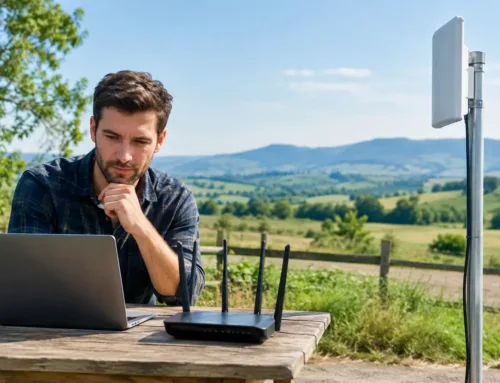
A broadband connection that drops whenever the household is online, the office is busy or a CCTV camera starts recording is not much use on a working rural site. A professional Starlink installation service is designed to solve more than the problem of getting a dish onto a roof. It should establish a reliable connection where it is needed, distribute it properly across the property and make sure the system supports the work you actually need it to do.
For farms, estates, rural homes and outbuildings across North Yorkshire, that can mean dependable access in a farmhouse, a workshop, a holiday let, a yard office or a livestock shed that has always been beyond the reach of fixed-line broadband. The right installation begins with the site, not with a box of equipment.
Why Starlink needs proper siting
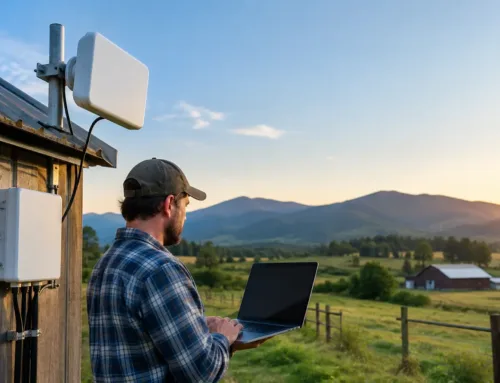
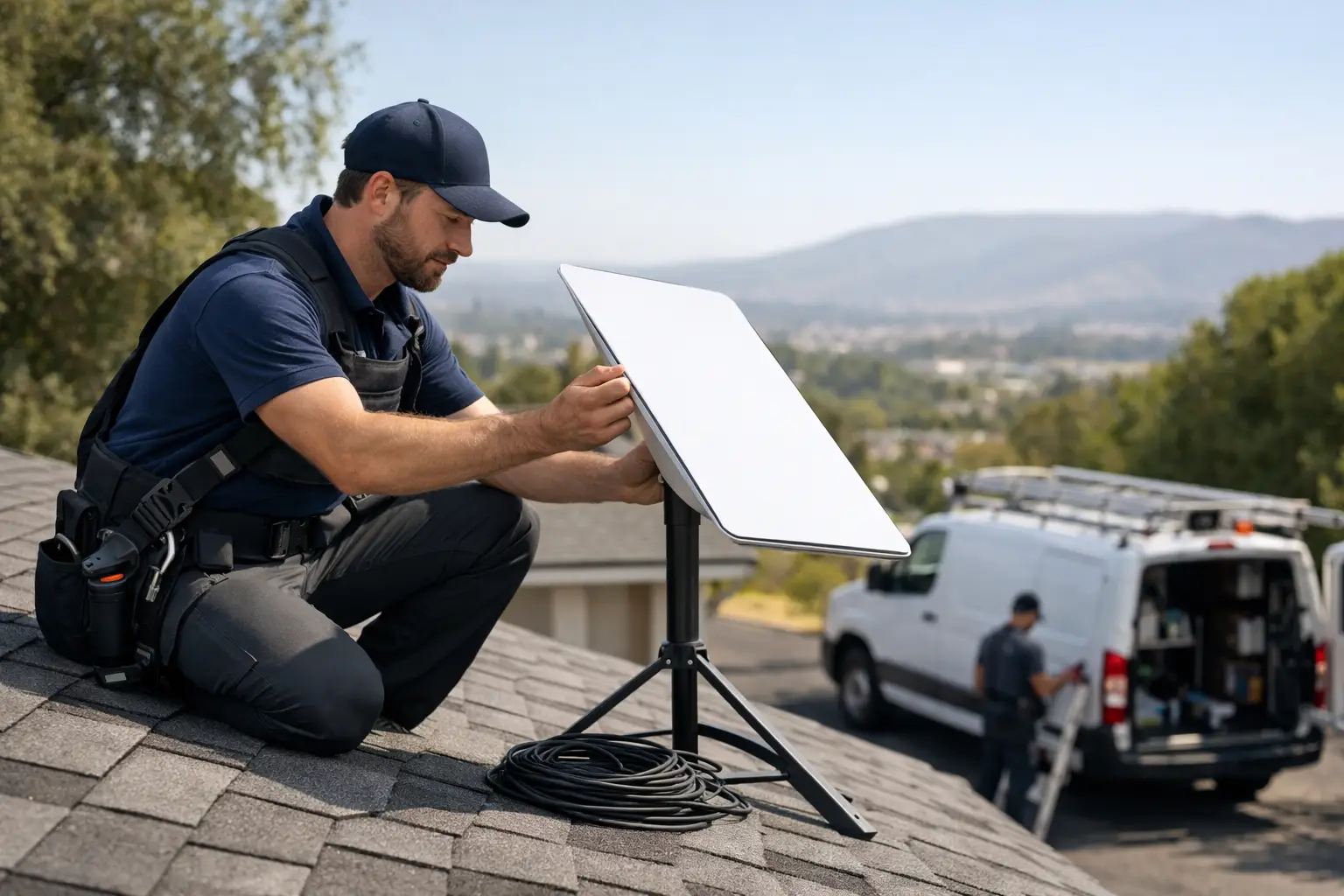
Starlink works by communicating with satellites overhead, so the dish needs a clear, wide view of the sky. Trees, nearby buildings, hillsides, chimneys and silos can all affect performance if they obstruct that view. A location that looks convenient from ground level is not always the location that will give the connection its best chance.
This is why a site survey matters. The installer needs to assess possible mounting positions, the route for cables, access for safe installation and where the router and network equipment will sit indoors. On a farm, the best position may be a high point on a barn, workshop or mast rather than the house. On an estate, it may need to be located away from mature trees, then linked back to the main building over a wired or wireless network connection.
There is a balance to strike. Mounting higher can improve the sky view, but it can also make access, cable routing and future maintenance more involved. A good recommendation considers both performance and practicality rather than simply choosing the tallest available roof.
A Starlink installation service is about the whole network
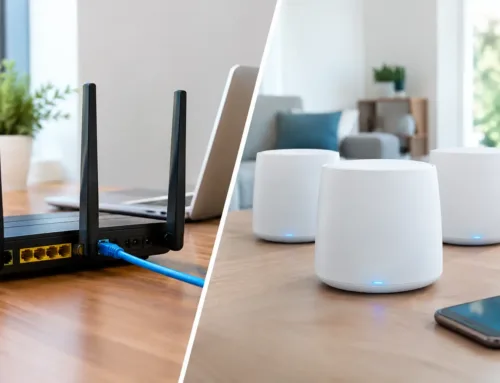
Starlink provides the internet connection, but it does not automatically create good Wi-Fi throughout a large or complicated property. This is where many rural installations fall short. The dish may be working well, while the office, bedrooms, workshop or yard still suffer from patchy signal because the local network has not been designed around the building.
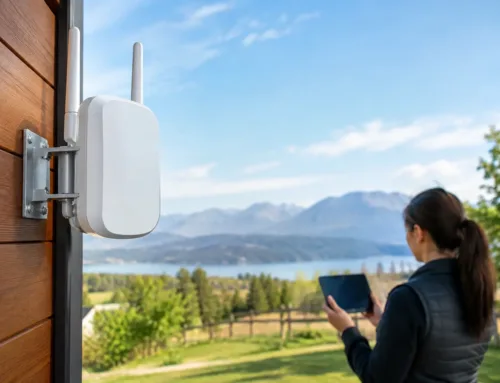
Thick stone walls, steel-clad sheds, long properties and separate buildings all present challenges. In many cases, a single router in a utility room will not cover the areas that matter. Properly placed wired wireless access points can provide stronger coverage indoors, while point-to-point wireless links can carry connectivity to a shed, stable block, gatehouse or distant office without the disruption and cost of digging in a long cable run.
For a working farm, this joined-up approach can support office systems, card terminals, cloud records, staff devices and guest access while also providing the connection needed for security cameras or livestock-monitoring equipment. It avoids having separate systems that compete for a weak connection or are difficult to manage when something goes wrong.
Where Starlink can be the right answer
Starlink is particularly useful where fixed broadband is slow, unreliable or unavailable. It can provide a practical primary connection for a remote home or business, and it can also act as a backup route where downtime would cause real disruption.
It is well suited to temporary requirements too. Construction compounds, rural events, seasonal yards, pop-up offices and short-term projects often need internet before a permanent service is possible. In these situations, rental can make more sense than buying equipment outright, especially where the requirement has a clear end date.
That said, Starlink is not automatically the best choice for every property. If full-fibre broadband is available and meets the site’s needs, it will often be the simpler long-term option. A strong 4G or 5G signal may also be suitable for smaller premises or as a resilient secondary connection. The sensible route depends on coverage, expected usage, the number of users, the importance of uptime and whether buildings need to be connected across the site.
Supporting security and livestock monitoring
For many rural customers, connectivity is not just about streaming, browsing or video calls. It is a key part of protecting property and keeping an eye on operations when nobody is on site.
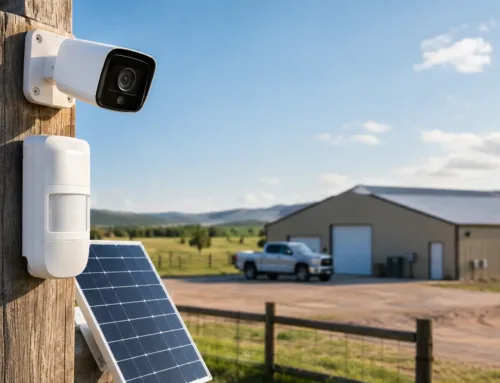
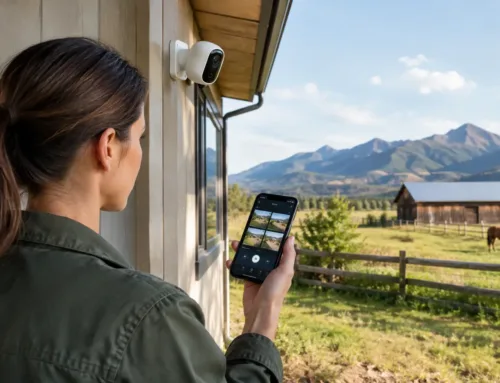
A stable connection can allow remote viewing of CCTV at a farmyard, workshop, fuel store or estate entrance. It can support notifications from an intruder alarm, let a manager check AI-detected people or vehicles and give owners visibility of a site while they are away. The installation still needs to be designed carefully. Camera quality, recording method, bandwidth use and the placement of wireless links all affect how well the system performs.
Livestock monitoring is another clear application. Cameras used for calving, lambing or foaling need a dependable route back to the viewing device, whether that is in the farmhouse, an office or off site. In a distant shed, the answer may be a long-range wireless link connected to the Starlink-backed network. In another location, a 4G or 5G solution may be more appropriate. The aim is not to force one technology everywhere, but to choose a practical connection for each part of the site.
What a professional installation should include
A worthwhile installation is planned around the property and its day-to-day use. Before work begins, clarify where the service is required, which buildings need coverage, what equipment will rely on it and whether security or business systems need priority.
The process should normally include a site assessment, a recommendation on dish position and mounting method, safe external cable routing, internal equipment placement, connection setup and testing. Where required, it should also include Wi-Fi design, network switching, outdoor wireless links and the configuration of connected CCTV or other devices.
A professional installer should also leave the system understandable. You should know which equipment provides the internet connection, what to check first if there is a problem and who to contact for support. This is especially valuable at sites with several buildings, staff users or a mix of home and business activity.
At CUBTECH, the focus is on treating connectivity as part of the wider site infrastructure. That can mean installing Starlink as the primary connection, using it to support a security system, or extending it across a yard with properly planned wireless links and access points.
Questions to settle before installation
There are a few practical decisions worth making early. First, consider whether the connection is for a single building or a wider site. A farmhouse and a workshop 150 metres apart need a different plan from a home with a small office in the next room.
Next, think about usage at busy times. A connection used by one household has different demands from a farm office running cloud software, several CCTV cameras, staff phones and guest Wi-Fi. Starlink can provide strong performance for many rural settings, but available bandwidth is shared between the activities on the local network. Sensible network setup helps ensure essential systems are not affected by less important traffic.
Finally, consider resilience. If the internet supports an alarm, remote cameras, payments or business operations, a backup connection may be worthwhile. A 4G or 5G failover service can keep critical equipment connected if the primary route is interrupted. No internet service is immune to faults, weather-related issues or local power loss, so it pays to plan for the consequences rather than assume they will never happen.
Getting a rural connection that works beyond the house
The most successful installations are rarely just about the dish. They are about clear siting, safe mounting, a network that reaches the places people work and a support plan that does not leave you trying to diagnose a problem alone from a ladder or a plant room.
If poor broadband is holding back security, livestock monitoring, office work or reliable Wi-Fi around your property, start with a survey of the whole site. The right answer may be Starlink, 4G, 5G, fixed broadband or a combination of them – but it should leave you with a connection that is useful where the work happens.