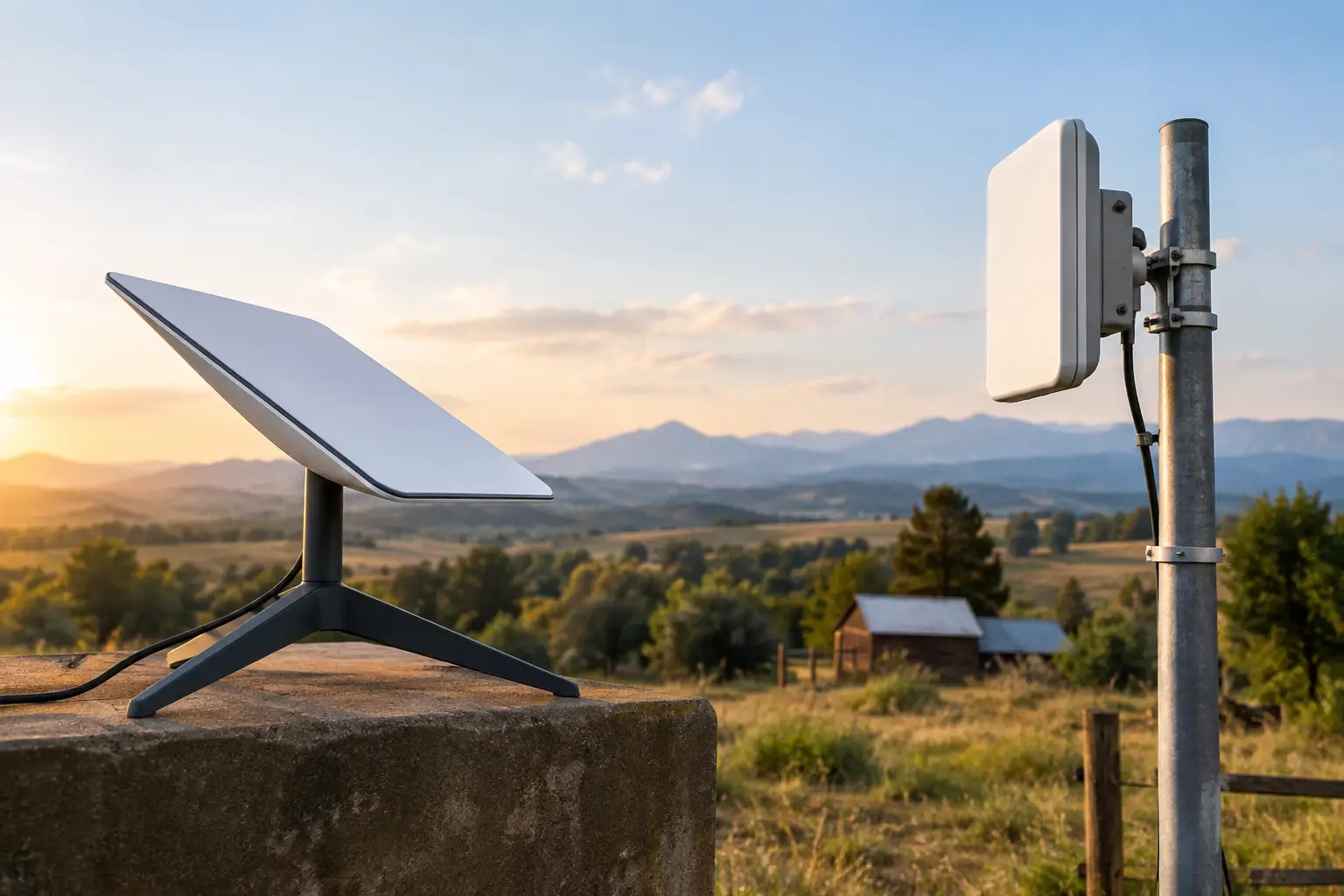
A farm office can have a usable phone signal yet no practical fibre option. A holiday cottage may need dependable Wi-Fi for guests, while a grain store or livestock shed sits too far away to serve with a conventional cable. In these situations, Starlink versus fixed wireless is not simply a question of which service advertises the fastest speed. The right choice depends on what is available at the property, what must stay connected and how the connection will support the wider site.
For rural homes, farms, estates and businesses, both options can be a major improvement on slow copper broadband. They work in different ways, however, and each has strengths that matter when internet access also supports CCTV, alarms, monitoring cameras, card payments, remote working or a guest network.
How Starlink and fixed wireless differ
Starlink provides internet through a low Earth orbit satellite network. A dish installed at the property communicates with satellites overhead, then feeds a router or existing network. Because it does not rely on a nearby telephone exchange, fibre cabinet or local mast, it can reach locations where conventional broadband has always been poor.
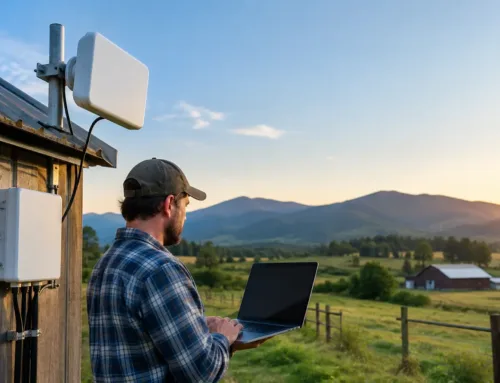
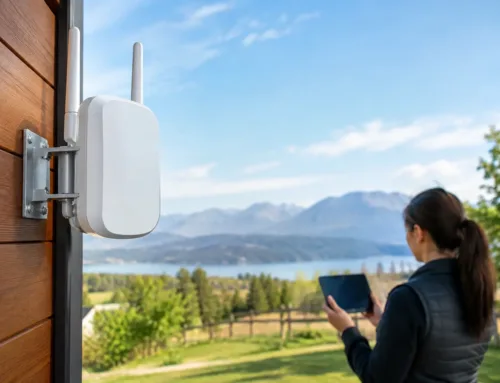
Fixed wireless internet is delivered from a terrestrial mast or high point to an antenna at the customer’s property. It normally requires a clear or workable radio path between the two. From there, the service is connected into the building’s router and network in much the same way as other broadband services.
The practical distinction is simple. Starlink looks skywards; fixed wireless looks towards a local transmission point. That affects availability, performance, installation requirements and the best use case.
Starlink versus fixed wireless on a rural property
Availability and site constraints
Starlink is often the stronger option where a site is isolated, surrounded by poor broadband infrastructure or beyond the reach of a local fixed wireless provider. If there is a suitably open view of the sky, it can make a viable connection possible on a remote smallholding, construction compound, caravan site or temporary event location.
Trees, rooflines and nearby buildings still matter. The dish needs an unobstructed view across a broad area of the sky. A site survey should identify the best mounting position, especially where mature woodland, valleys or heritage buildings make placement less straightforward.
Fixed wireless can be an excellent answer where coverage exists and a signal path can be achieved. It may require an antenna on a roof, gable end, pole or elevated outbuilding. Hills, woodland and the distance to the serving mast can all affect whether the service is suitable. On the right site, though, a fixed wireless connection can be very consistent.
Speed, latency and daily use
Both services can support ordinary home and business activity, including video calls, cloud applications, online banking, streaming and multiple connected devices. Actual speeds are affected by the specific provider, package, local demand, weather conditions, network design and the equipment installed on site.
Starlink generally offers strong download capacity for locations that previously struggled to load basic webpages. Its latency is much lower than older satellite broadband, making it practical for video meetings, remote support and many cloud-based systems. Performance can vary as the network is shared and satellite conditions change, so it is sensible to consider real operational needs rather than focus on a headline speed.
A well-designed fixed wireless service can offer very good latency and stable performance, particularly if the provider operates a well-maintained local network with adequate capacity. For a business relying heavily on voice services, remote desktop access or cloud systems, this consistency may be attractive. The available package and service level are as important as the technology itself.
Weather and resilience
Neither option is entirely unaffected by the British weather. Heavy rain, snow and high winds can influence satellite or radio links, although professionally installed equipment is designed for outdoor use. The greater risk is often not the weather itself, but poor siting, loose mounting, vegetation growth or an internal network that was never designed to carry the site’s demand.
For farms and estates, resilience should be considered beyond the broadband connection. If internet access supports AI CCTV alerts, livestock cameras, access control or remote alarms, a power cut can be just as disruptive as an outage. A suitable uninterruptible power supply, correctly positioned network equipment and, where justified, a backup 4G or 5G connection can keep critical systems operating for longer.
Where Starlink is usually the better fit
Starlink is particularly useful when geography is the main problem. A remote farmhouse at the end of a long lane, a holiday let without a viable fixed line, or a project site that needs connectivity quickly may all suit satellite internet. It is also valuable for temporary requirements, such as agricultural shows, field operations, pop-up offices and events where installing a permanent line would be impractical.
It can be a sensible starting point for a rural property that needs reliable basic connectivity now, rather than waiting for a future fibre rollout. Once installed, the connection can support a properly designed Wi-Fi network, extending coverage to offices, workshops and nearby buildings through wired infrastructure or point-to-point wireless links.
Starlink should not be treated as a complete site network on its own. A router placed in one room will not reliably cover a thick-walled farmhouse, a yard, several stone barns and a distant calving shed. The broadband feed is only the first stage. Distribution across the property needs its own plan.
Where fixed wireless can be the better choice
Fixed wireless is often worth prioritising where a reputable local provider serves the area and the site has a clear route to its mast. It can offer a more conventional, fixed broadband experience without the delays and cost of new civil works or lengthy cable runs.
For an established business premises, estate office or farm with steady demand, fixed wireless may be especially appealing if the provider can offer appropriate support, a business-grade package or a clear route for fault handling. The local nature of the network can also make it easier to understand coverage and installation requirements before committing.
It is not automatically the answer for every rural address. A property can be only a few miles from a mast yet be screened by a ridge, trees or buildings. Seasonal foliage is worth considering too. A connection that looks clear in winter may face more obstruction once trees are in leaf.
Think beyond the broadband router
The most common mistake on large rural sites is judging a connection only by a speed test at the main building. The real question is whether the network reaches the places where work happens.
A farm may need reliable connectivity at the farmhouse, office, workshop, livestock buildings, entrance gates and CCTV poles. An estate may need separate networks for staff, guests, security devices and smart heating controls. A rural business may require dependable Wi-Fi across a yard, warehouse or customer area without allowing visitors onto operational equipment.
This is where a planned installation makes a difference. Wired cabling is usually the most dependable way to serve buildings where it is practical. For long distances, properly specified wireless bridges can carry connectivity between buildings without digging extensive trenches. Network switches, outdoor access points and separate Wi-Fi networks can then be configured around how the site actually operates.
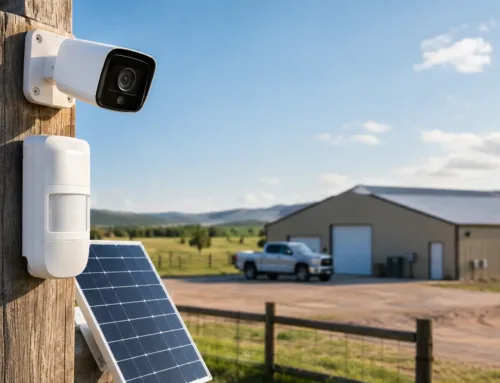
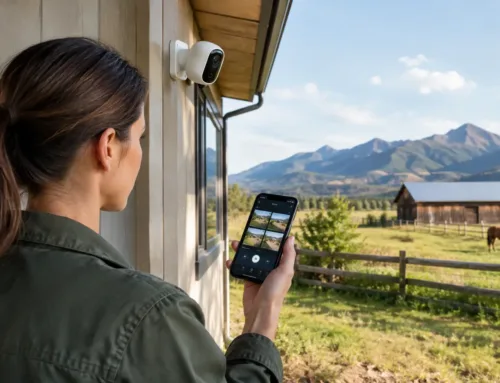
Security systems deserve particular attention. A camera may show a good image locally but be of limited value if the internet connection or wireless link cannot send footage and alerts reliably. For livestock monitoring, the priority may be stable viewing from a calving, lambing or foaling shed rather than maximum broadband speed. For perimeter CCTV, it may be dependable coverage across gates, tracks and remote yard areas.
The questions that lead to the right choice
Before choosing between Starlink and fixed wireless, establish whether a fixed wireless provider can serve the address and whether a survey confirms a viable signal path. Then look at the property’s sky visibility for Starlink, including trees that may cause intermittent obstruction.
It is also worth identifying how many people and systems will use the connection. A household browsing and streaming in the evening has different needs from a business running cloud software, VoIP phones, CCTV recording and guest Wi-Fi. Consider upload demand as well as download speed, particularly where multiple cameras send footage off site.
Finally, decide whether the connection is permanent, temporary or part of a wider resilience plan. A remote site may benefit from Starlink as its primary service. Another may use fixed wireless as the main connection and mobile broadband as a failover. There is no single answer that suits every farm, home or business.
For North Yorkshire sites, CUBTECH can assess the connection options alongside the practical demands of the buildings, security systems and outdoor coverage. A considered survey can prevent the false economy of buying a broadband service that reaches the property but fails to reach the places that matter. The best next step is to map what needs to stay connected, from the office desk to the furthest shed, then choose the service and network design around that reality.