A camera at a farm gate, calving shed or isolated workshop has one job: provide a clear, dependable view when no one is standing there. The wired versus wireless CCTV decision affects how reliably it does that job, how far the system can reach and what it will cost to maintain over time.
For many rural properties, the answer is not simply one or the other. A house may suit a fully wired system, while a camera at a distant cattle shed is better served by a professional wireless link. The right design starts with the site itself: buildings, power, distance, terrain, internet connection and the events you need to capture.
What wired CCTV means in practice
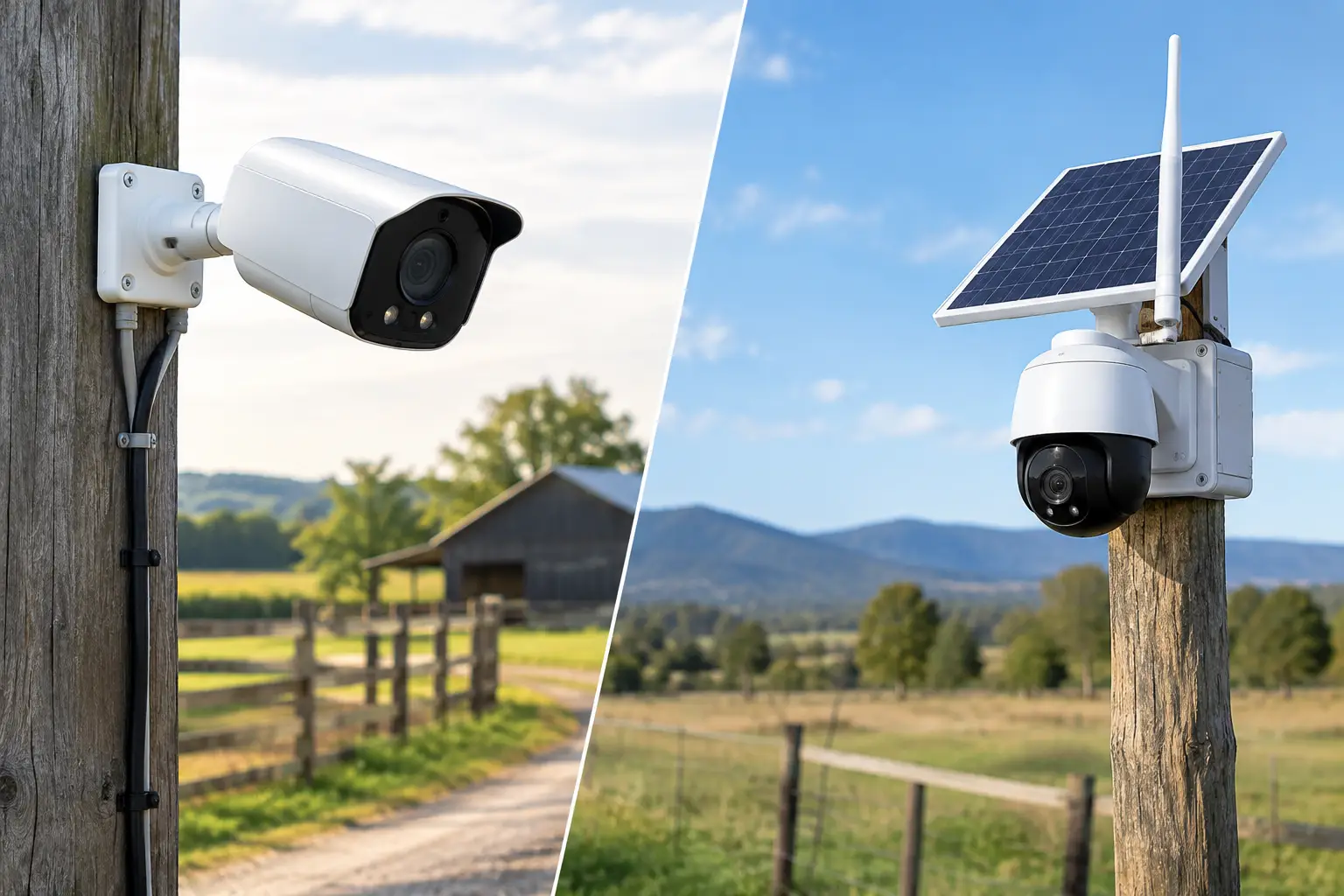
Wired CCTV normally means each camera is connected back to a network video recorder, network switch or central location by a physical cable. On modern IP systems, a single Cat5e or Cat6 cable can often carry both data and power using Power over Ethernet, known as PoE. This keeps the camera installation tidy and avoids relying on a separate plug socket at every mounting position.
A wired connection is generally the most consistent option for cameras close to the main building. It provides stable bandwidth for high-resolution footage, multiple cameras and continuous recording. There is no radio signal to be weakened by thick stone walls, steel cladding, trees or changing weather conditions.
For a home, shop, yard or commercial unit where cable routes are accessible, wiring cameras back to a recorder is often the sensible long-term choice. Footage remains on the local recorder even if the broadband connection drops, while remote viewing returns once the internet is restored.
The trade-off is installation work. Cables need careful routing through lofts, roof spaces, ducts, underground trenches or external containment. On an established farm or listed property, those routes may be difficult, disruptive or costly. A cable run that looks straightforward on a plan can become less so when it crosses a yard used by machinery, passes a livestock area or needs to reach a building several hundred metres away.
When wireless CCTV is the better route
Wireless CCTV can mean two very different things. Consumer cameras commonly connect to local Wi-Fi and may rely on batteries or mains power. These can have a place for a small domestic area, but they are rarely the best answer for critical coverage on a large rural site.
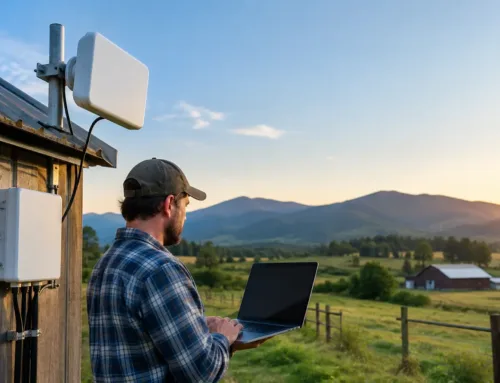
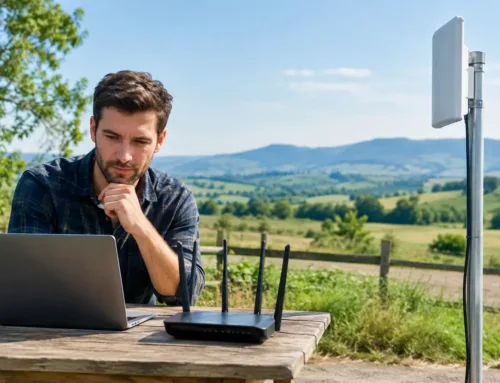
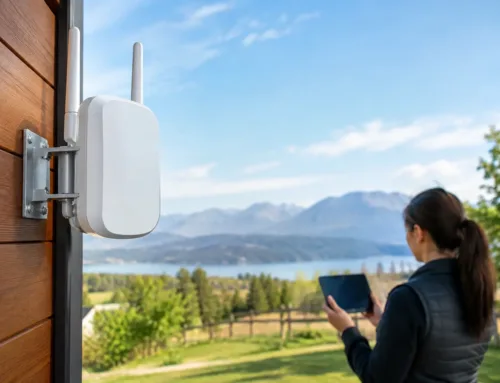
Professional wireless CCTV usually uses a dedicated point-to-point or point-to-multipoint wireless bridge. This creates a network connection between buildings or across a site, avoiding the need to install a long data cable. The camera at the far end still needs a reliable power supply, usually mains power and PoE from a small local network enclosure.
This approach is particularly useful for a remote barn, stable block, entrance gate, grain store, machinery shed or estate building. Where there is a clear line of sight, a correctly specified wireless link can carry CCTV traffic over substantial distances and bring cameras into the same central recording system as the main site.
Wireless links are not a shortcut to ignore site conditions. Trees in leaf, hills, metal-clad buildings and new construction can obstruct or reflect a signal. A link that works from a ladder during a quick test is not necessarily suitable for year-round operation. Proper mounting height, alignment, equipment selection and testing matter.
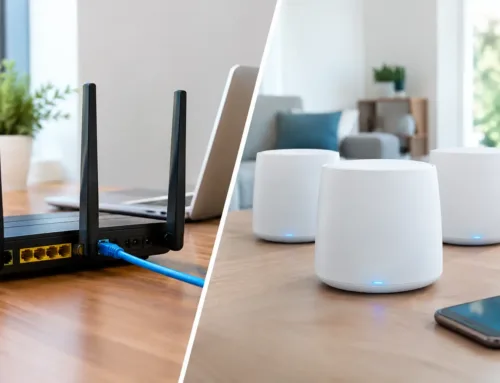
Wired versus wireless CCTV: the key differences
The most useful comparison is not about which technology is newer. It is about where each option is strongest.
Reliability and bandwidth
A physical cable is difficult to beat for predictable performance. It is well suited to high-resolution cameras, several cameras in one location, audio, colour-at-night imaging and continuous recording. It also provides a clear route for troubleshooting if a fault develops.
A professionally installed wireless link can also be highly dependable, particularly when it has clear line of sight and suitable capacity. However, it has more environmental variables than cable. For a remote outbuilding, that trade-off can still be worthwhile because installing cable may involve trenching across fields, tracks or yards.
Power requirements
Wireless does not mean wire-free. Every camera requires power, whether supplied over an Ethernet cable, from a local mains supply, solar equipment or a battery. Dedicated wireless transmitters also need power at both ends.
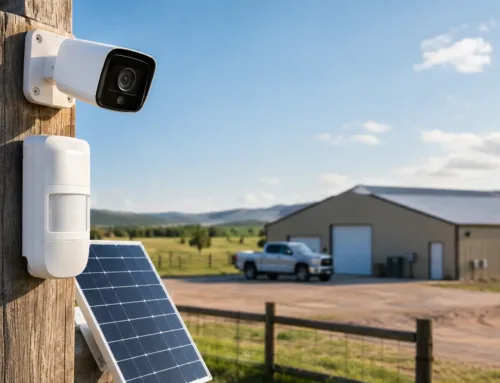
This is a frequent issue at gates and field locations. If there is no power, the project needs to consider solar and battery capacity, camera recording settings, winter daylight levels and the amount of mobile or wireless traffic required. A battery camera may be adequate for occasional activity alerts, but it is not the same as a continuously recording security system.
Coverage across large sites
Cable is usually preferable inside and around the main building. Wireless becomes attractive when the distances grow or when there are separate buildings. A farmyard may use wired cameras around the farmhouse, office and main sheds, then a wireless bridge to extend coverage to a lambing shed or workshop.
This hybrid arrangement is often the most practical design. It keeps core cameras on dependable wired infrastructure while using wireless where it solves a genuine distance or access problem.
Internet and remote access
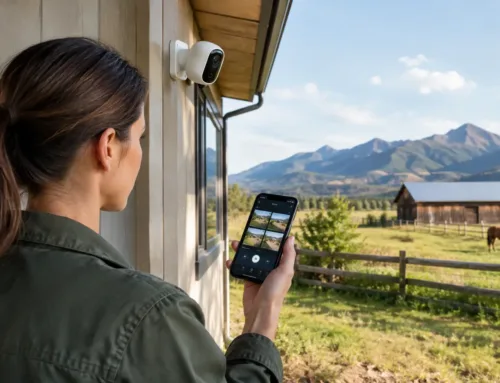
CCTV can record locally without broadband, but remote viewing, app notifications and off-site support depend on an internet connection. In rural locations with poor fixed-line broadband, a 4G, 5G or Starlink connection may provide the route needed for reliable remote access.
The available upload speed matters more than headline download speed. A system can record high-quality footage locally, then provide lower-bandwidth live viewing remotely to avoid overloading the connection. This is especially relevant where several people need access, or where cameras are monitoring livestock around the clock.
Choose the system around the job
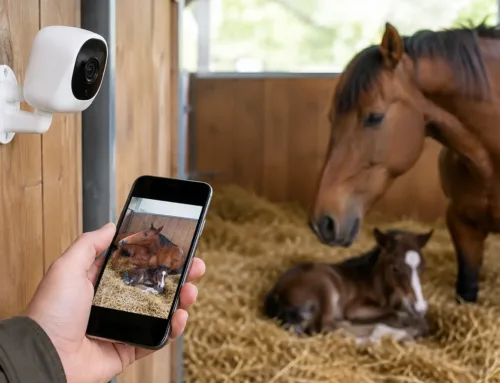
A good CCTV design begins with what needs protecting or monitoring. For example, an entrance camera may need to identify people and vehicles approaching a gate. A livestock camera may need a broad, clear view of a calving, lambing or foaling area, including useful low-light performance. A machinery yard may need coverage that supports investigation after an incident rather than simply showing that something moved.
AI-enabled people and vehicle detection can reduce unwanted alerts from livestock, wildlife, rain or moving vegetation. It works best when the camera position, viewing angle and detection area are set correctly. Placing a camera too high, too wide or directly into strong lighting can limit the value of even good equipment.
For commercial premises, consider how many days of footage must be retained, who can view it and whether the system needs to support additional cameras later. For farms and estates, consider seasonal changes too. A route that is accessible in summer may be busy, muddy or impractical to trench during winter.
Questions worth answering before installation
Before deciding between wired and wireless CCTV, establish whether each proposed camera location has power, whether it has a practical cable route and whether there is clear line of sight to another building. Also consider the likely broadband performance, the distance from the recorder and whether the location may need more cameras in future.
It is worth looking beyond the camera itself. Network switches, recording capacity, surge protection, secure equipment housings and backup power can all affect how well a system performs. Rural sites are exposed to power cuts, lightning risk, dust, livestock activity and hard use. The installation needs to account for those conditions from the start.
A site survey is valuable because it turns assumptions into measurements. It identifies viable cable routes, tests wireless paths, checks power availability and confirms whether the proposed camera view will actually meet the objective. It also prevents a common false economy: buying cameras first, then discovering the network or power infrastructure cannot support them properly.
A practical way forward
For cameras around a main house, business unit or farmyard, wired CCTV is normally the strongest foundation. For buildings separated by distance, tracks or difficult ground, a dedicated wireless link can extend that foundation without unnecessary excavation. Where there is no usable fixed broadband, mobile connectivity or Starlink may complete the system.
CUBTECH designs CCTV around these real site constraints, combining security cameras with the network and connectivity needed to support them. The useful next step is to walk the site with the operational need in mind: where incidents happen, where livestock need observation, which buildings are vulnerable and what information you would need if an alert arrived at night. That usually makes the right mix of wired and wireless equipment much clearer.