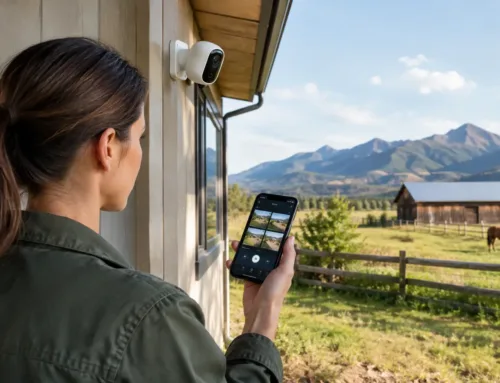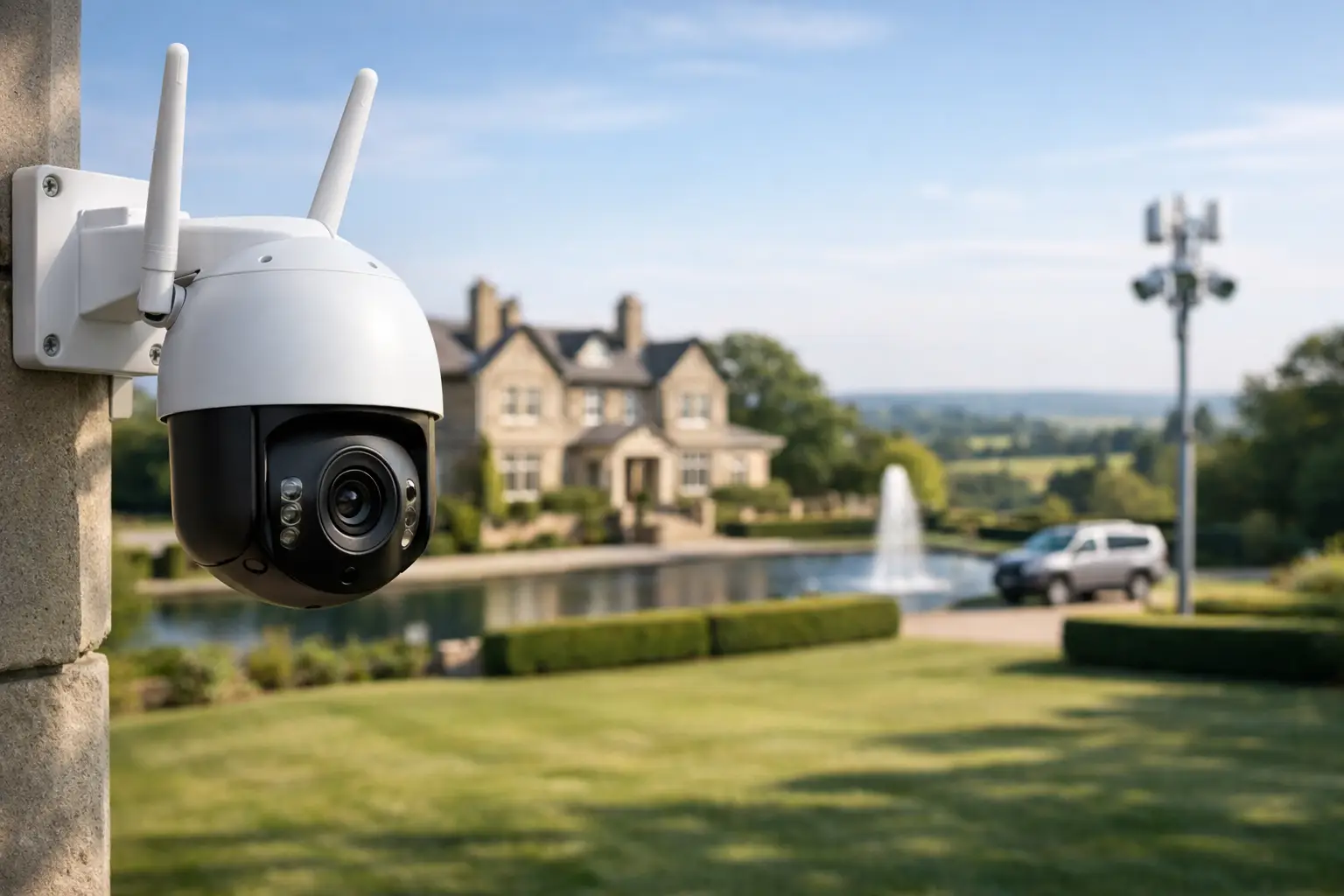
A stolen quad bike, an open field gate or a vehicle arriving at an isolated workshop can quickly become difficult to investigate when the nearest building is half a mile away. Wireless CCTV for large estates gives landowners and managers a practical way to see what is happening across yards, entrances, tracks and outbuildings without digging long cable trenches through fields, drives or established landscaping.
The word wireless can be misleading, though. A dependable estate system is not simply a collection of Wi-Fi cameras. It is a planned combination of cameras, power, long-range wireless links, recording equipment and an internet connection that suits the site. Get those foundations right and CCTV can cover areas that would otherwise be costly or disruptive to reach.
Why large estates need a different CCTV approach
An estate rarely has one neat perimeter or a single building where every camera can return to a recorder. There may be a farmhouse, workshops, machinery sheds, staff accommodation, livestock buildings, gated entrances, holiday lets and woodland tracks spread across substantial distances. Each location has a different risk, different lighting conditions and often a different power and network situation.
Running cable remains the best option in some places, particularly around a main yard or between nearby buildings. A wired connection is stable, direct and not affected by a changing line of sight. But trenching across a long driveway, grazing land or a historic setting can be expensive and inconvenient. It may also involve reinstatement work, road crossings or disruption to day-to-day operations.
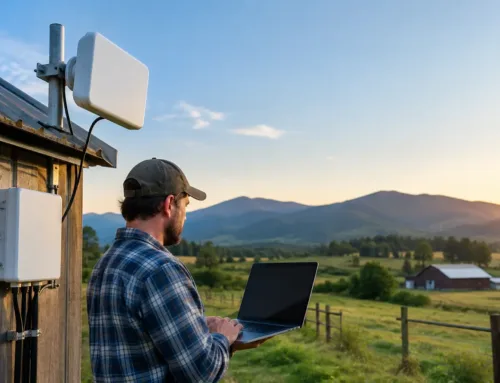
A properly designed wireless bridge can carry the camera network from a remote building back to the main recorder over a long distance. This makes it possible to place cameras where they are useful rather than only where a network cable happens to be available.
Wireless CCTV for large estates starts with the survey
The most useful first step is to walk or assess the whole site, not merely choose camera positions from an aerial image. The survey should establish what needs protecting, who needs to view footage, where power is available and whether there is a clear path between buildings.
Line of sight matters. Trees in full leaf, rising ground, new grain stores, scaffolded buildings and even parked machinery can affect a wireless link. A route that works in winter can become unreliable in summer if it passes through a tree canopy. In some cases, mounting equipment higher or using an intermediate building creates a better path. In others, a cable route or a separate connectivity solution is the sensible choice.
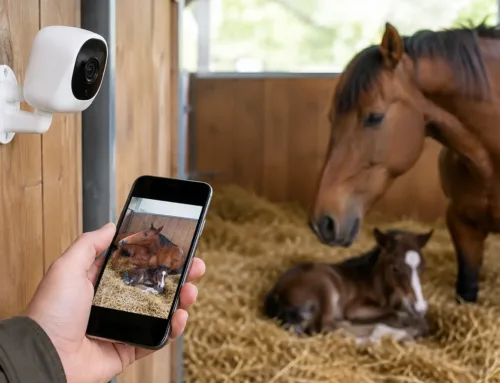
The survey is also where an installer can identify the real purpose of each camera. A camera at a gateway may need to identify vehicles entering the estate. One overlooking a fuel tank may need clear evidence after dark. A camera in a lambing shed may be there for welfare and observation rather than security. These are different jobs and should not be treated as the same specification.
Design coverage around decisions, not camera numbers
More cameras do not automatically mean better protection. The key question is what decision the footage needs to support. Do you need to check whether a gate has been left open? Receive an alert when a person approaches a machinery shed? Identify a number plate at a controlled entrance? Or look in on livestock without repeatedly travelling to the building?
Wide-angle cameras are useful for general oversight of a yard, car park or entrance area, but a wide image can make faces and plates appear too small at distance. A dedicated camera covering a narrower area may be needed at a gate or access road. Pan-tilt-zoom cameras can be useful for watching a broad area, although they can only look in one direction at a time. Fixed cameras are often the better choice for critical approaches.
AI-enabled people and vehicle detection can reduce the number of irrelevant notifications caused by rain, branches, livestock or moving shadows. It should be configured carefully for the environment. A farmyard with staff, deliveries and animals has different alert requirements from an unoccupied woodland store. The aim is useful alerts, not a phone that is constantly buzzing.
Night performance should be considered just as carefully. Infrared illumination can provide black-and-white images in darkness, while carefully planned external lighting may give better colour detail in key locations. Any lighting needs to be positioned so it helps the camera rather than creating glare, reflections or a bright subject against a dark background.
The wireless link is only one part of the system
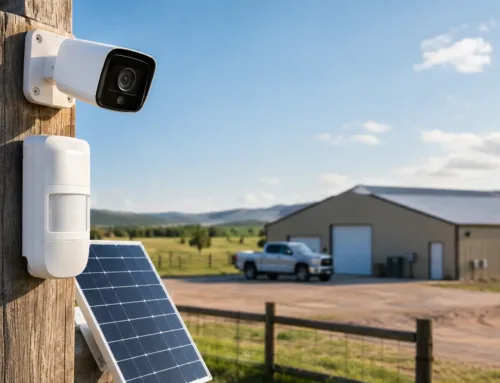
A remote camera still needs power. Where there is mains electricity in an outbuilding, this is usually straightforward. At gates, tracks or field entrances, power can be the deciding factor. Solar-powered camera systems may be appropriate for selected locations, but they need enough daylight, suitable battery capacity and a realistic expectation of activity levels. A high-traffic entrance sending frequent clips through winter needs more careful planning than a camera checking an occasional remote gate.
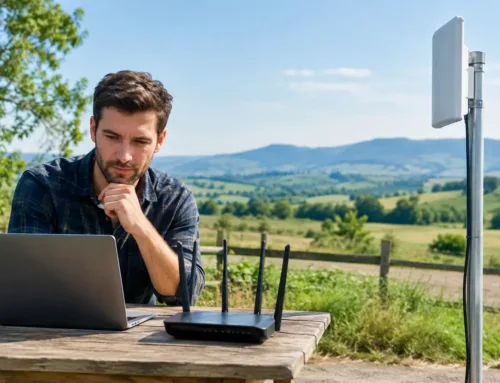
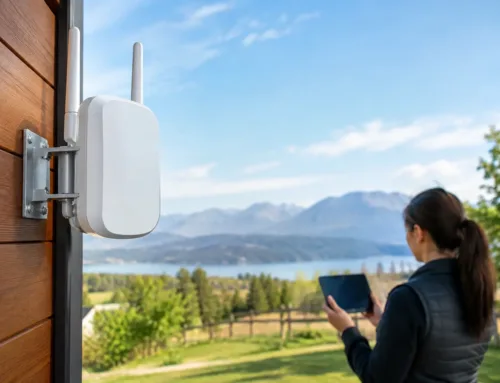
The wireless equipment also needs to be mounted securely and aligned accurately. Directional radios create a private point-to-point link between locations rather than relying on the same Wi-Fi used by phones and tablets. They should be protected from weather, connected through suitable network equipment and configured with proper security settings.
Recording should normally remain local to the estate, using a network video recorder sized for the number of cameras, image quality and required retention period. This avoids relying entirely on an internet connection to capture footage. If broadband drops out, local recording can continue. Remote viewing may be unavailable temporarily, but the evidence remains on site.
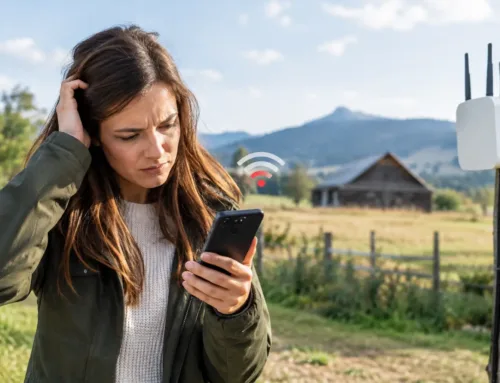
Internet access is still valuable for viewing cameras remotely and receiving alerts. Where fixed broadband is weak, 4G, 5G or Starlink can provide the connection needed for remote access. The right option depends on signal availability, data use, local obstructions and how many people need to use the connection for other work. A CCTV system should not be allowed to consume all available bandwidth during busy periods.
Plan for the estate as it will operate next year
Large sites change. A new shed is built, a holiday let opens, machinery moves to another yard or a temporary project needs coverage for several months. Choosing network equipment with spare capacity can make future expansion simpler and avoids starting again when another camera is required.
It is also worth separating operational systems where appropriate. Guest Wi-Fi, office devices, smart home equipment and security cameras should not all compete on one poorly configured network. Good network design helps protect the CCTV system, maintains image quality and makes fault finding far easier.
Maintenance is part of dependable coverage. Camera lenses need occasional cleaning, particularly near livestock buildings, grain drying operations and exposed roads. Vegetation should be kept clear of wireless paths. Recording health, storage capacity and remote access should be checked rather than assumed. A system that has worked quietly for months can otherwise reveal a problem only when footage is needed.
When wireless is not the right answer
Wireless links are highly effective where there is a clear path between buildings and a need to avoid disruptive civil works. They are not a cure for every remote location. Dense woodland, steep ground, no available power and no suitable mounting point may make a wireless route impractical.
Sometimes the best answer is a mix of methods: wired cameras around the main house and yard, a wireless bridge to a distant workshop, and a solar or mobile-connected camera at a remote entrance. The right design reflects the risks and working pattern of the estate rather than forcing every location into one technology.
For estates across North Yorkshire and similar rural settings, CUBTECH can bring security, long-range networking and rural connectivity into one planned installation. That matters because a camera, its wireless path, its power source and the connection used to view it all need to work together.
Before buying cameras, identify the one or two places where better visibility would make the biggest difference to security, safety or daily management. A site survey can then turn that practical need into coverage that remains useful long after the installation day.